
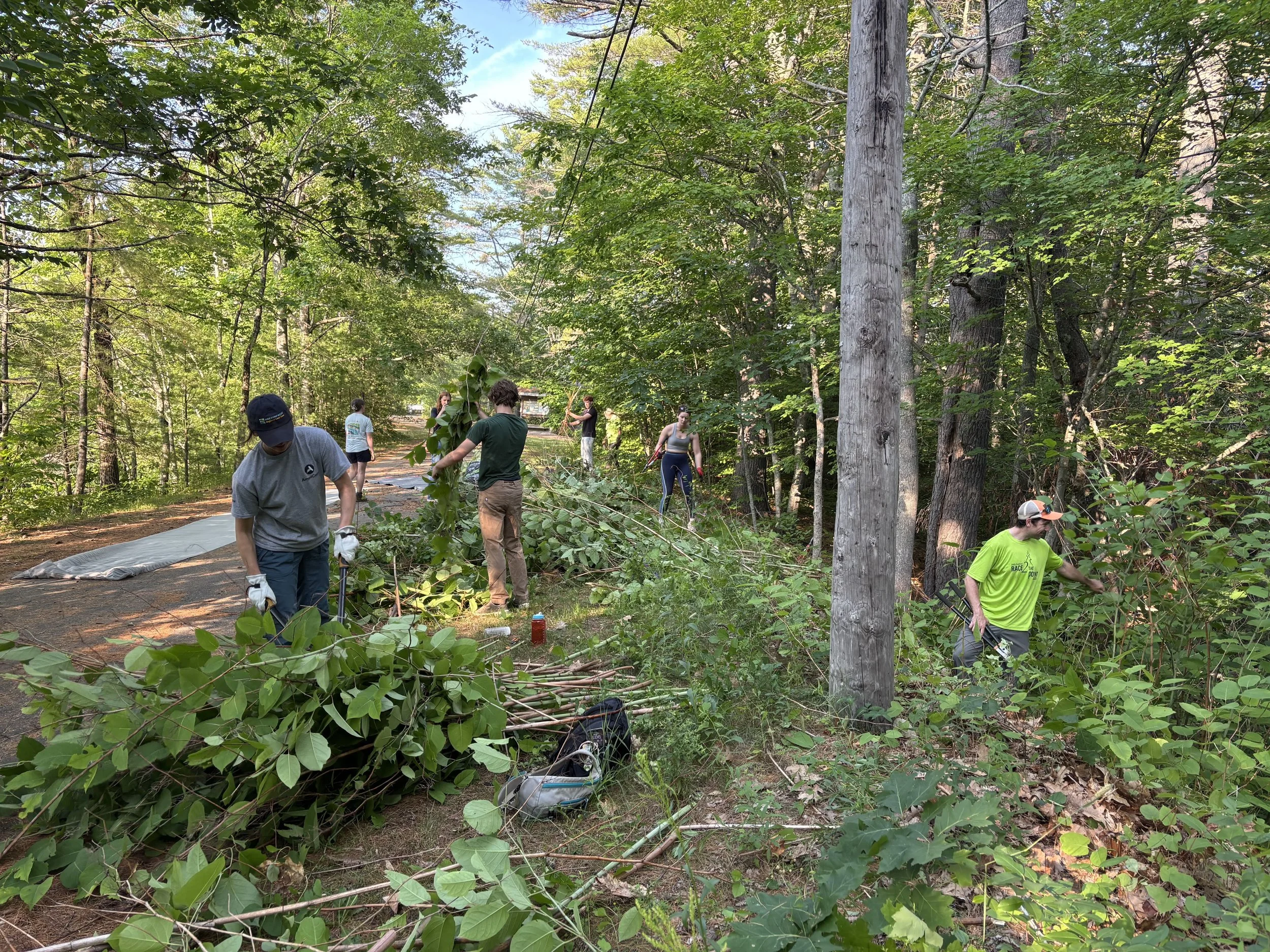
The first invasive plant species are believed to have entered Maine alongside 17th century colonizers. Awareness of the impact that invasive species have on homeowners and communities has been growing since the early 19th century. Invasive species have an unfair advantage in the ecosystem because they have no natural predators when entering a new environment. Not only do aggressive growth tactics help the invasive plant take over, but many have defense mechanisms—such as having an undesirable taste—against local insects and animals. As a result of this aggressive growth, native plants begin to struggle to compete for resources.
Through my invasive removal work with Presumpscot Regional Land Trust, I have learned that many people have invasive plants on their property and are not really sure how to identify them or mitigate the issues they are causing. I thought it would be helpful to write up a quick guide to understand the two most common invasive plants in our area and the best removal methods to help people manage invasive species on their own properties.
Japanese Knotweed
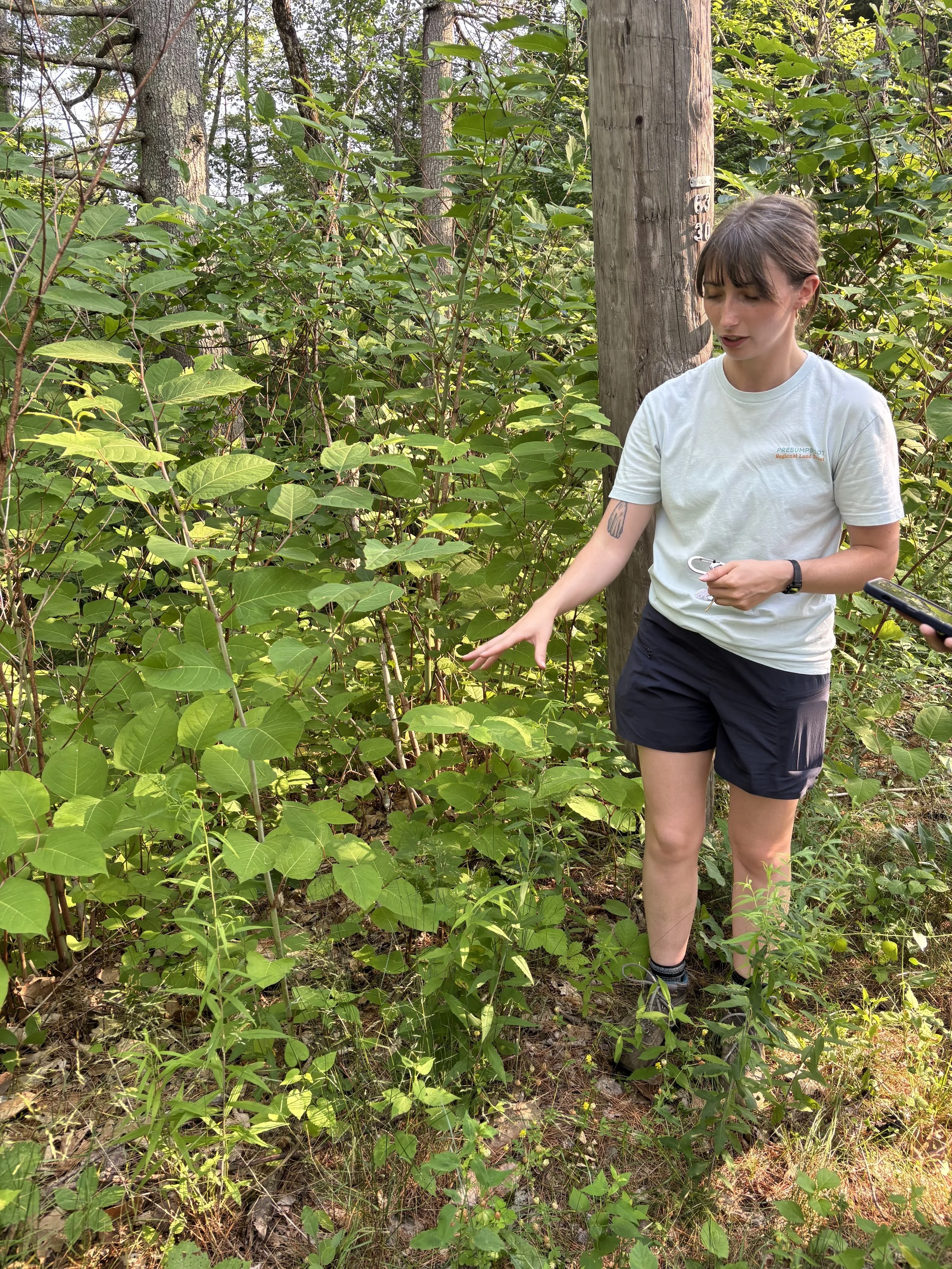
Abigail standing with a clump of Japanese knotweed as she instructs volunteers on how to remove it; Gambo Preserve, July 2026
Japanese knotweed is a perennial plant with a distinct bamboo-like appearance. It is one of the most aggressive invasive plants in the northern regions of the United States and Europe. It was introduced to the United Kingdom in 1850 as an ornamental plant that quickly became popular for the public to decorate the exterior of their homes. In the 1930s, United States nurseries began to sell the plant, unknowing of the consequences.
Once you know what Japanese knotweed looks like, you will notice that it is everywhere! This species requires very meticulous removal methods because it can easily spread without diligent remediation, but since it doesn’t flower you can tackle removal at any time of year. The most efficient way to remove Japanese knotweed is through yearly cycles of herbicide stem injections, but that method is costly and takes nearly as much time as manual methods.
When attempting to counteract a Japanese knotweed infestation, the first step is to understand how the plant propagates. Japanese knotweed has a root system that can expand up to 65 feet wide and extend 10 feet deep, so you will need to attack it at the surface level. Digging around can also cause disturbances that can actually increase the number of weeds it produces by breaking up the root system; every small piece of rooting has the potential to sprout a new stem.
The best at-home removal methods require loppers, tarps, mulch, and a safe area to dry out the plants until they are dormant. Begin by establishing an area to store the cut knotweed to contain possible spread. Use an impervious surface like asphalt, tarps, or sheet plastic to lay stems on to prevent rooting. Once a site is established, begin cutting the knotweed stems at their base with loppers (do not pull the plants out by the roots, as this can break the root system and cause further spread). Collect what you have cut and move it to the storage area. After that, layer mulch directly over the area, then lay the tarp over all the cut stems (with a buffer of three feet on the outward stalks). Using rocks or any heavy object, weigh down the sides of the tarp. Be sure to double check that all stems have been covered or resprouts could start growing.
Now that regrowth is contained, it is time to safely dry out the cut stems. Lay the plants out on the impervious surface until they turn brown, which can range from a few days to two weeks depending on sun exposure. It is best to add a clear plastic layer on top of the stems to ensure that wind does not spread smaller plant fragments. Once browned, the plant is no longer viable and can be disposed of. The tarp and mulch should remain on the affected area for 3-5 years. After that time passes, native replanting can be done to control reinfestations.
You can read about how we used this approach to tackle a stand of Japanese knotweed at Gambo Preserve in this article from the Portland Press Herald!
Glossy Buckthorn
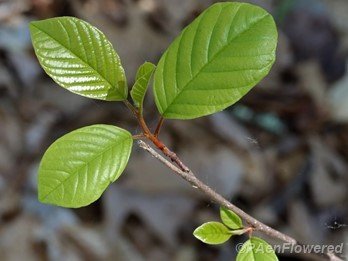
Smooth, rounded leaves of glossy buckthorn; photo source PAEnflowered
Glossy buckthorn is a shrubby, wooded invasive plant that many consider to be the most harmful to native species. They are a plain looking plant with few distinct qualities. They have rounded-smooth and glossy leaves, brown bark with lenticels (a.k.a. white spots), no thorns, and produce deep purple berries in late summer. These plants are extremely aggressive: the root systems choke out nearby plants in order to grow quickly and create a dense overstory to shade out future competitors. Like Japanese knotweed, it is difficult to remove and requires a lot of patience to manage. Unfortunately, without the use of herbicides, it is considered impossible to eradicate. However, there are practices that are effective at mitigating the impact of glossy buckthorn on native species.
The most effective removal strategy is to uproot the seedlings. With larger plants, use hand tools to break up the root system and uproot the plant. Keep in mind: this will heavily disturb the soil, and native plants should be comfortably situated to avoid the digging disturbance stunting their growth. When handling large glossy buckthorn, uprooting is difficult, as the roots can extend up to 12 feet wide. The best method for mitigating a large plant is to cut it at the stump and cover the stump afterwards to prevent resprouts. Thick, black trash bags are great for tying around the stump to keep light out.
To ensure best results, cutting should take place in mid-summer before the berries blossom. Glossy buckthorn primarily spreads through its berries. Birds will eat the berries, but the anthraquinone glycosides found in the berries are stimulant laxatives. This negatively affects the birds as the seeds lack protein and are high in carbohydrates, limiting their nutritional value. As a result of the anthraquinone glycosides, the birds cannot digest the seed fully before it passes through their digestive system, leaving the seed viable and ready to spread glossy buckthorn in another area.
There are many disposal methods once the plants have been cut. I personally recommend burning the branches to ensure they will not spread. There are also recycling facilities that will take bagged buckthorn and dispose of it. Riverside Recycling Facility in Portland will accept the cut plants for a fee, and the Recycling Center & Transfer Station in Harpswell also accepts invasive plants and encourages proper waste disposal. When it comes to invasive plants, composting is not an option as it can actually spread the plant further.
The process of removing buckthorn will take many years of repetitive work, but with persistent effort, native plants can begin to gradually reclaim the land.
Managing invasive plant species is a test of patience. Most plants take many years to become fully eradicated from an area, but it is a worthwhile endeavor.
I host weekly invasive plant removal events at preserves managed by the Presumpscot Regional Land Trust on Wednesday nights from 5:30-7:00 p.m. This season so far we have visited Rivermeadow Nature Preserve, Lowell Preserve, Little River Preserve, Gambo Preserve, and Frazier Preserve to remove Japanese knotweed, glossy buckthorn, Japanese barberry, Asiatic bittersweet, and multi-flora rose. Attending an event is a great way to learn more about invasive plants and get hands-on experience removing them that you can then implement at your own home. You can sign up here to receive weekly updates on where we will be and what invasive plants we are removing.
Please feel free to email me personally if you have any questions on what you can do to help manage invasives in your own community at abigail@prlt.org.