

ALEWIFE MIGRATION
Overview
Mill Brook supports the largest fish migration from Casco Bay. In late May each year, alewives, a type of river herring, enter the Presumpscot River from Casco Bay, then swim up Mill Brook until they reach Highland Lake, their native spawning ground. The journey is almost 11 miles long, and the migration lasts from two to three weeks. About 70,000 fish traveled this route in 2019. In late summer, adult and new juvenile alewives travel back down the rivers in their return trip to the ocean. Adult alewives can make this round-trip three to four times in their lives.
migration timing
The annual fish migration typically takes place from late May to early June, although the exact timing may vary depending on water levels and weather conditions. For the best viewing experience, visit the southern or northern viewing pools along Mill Brook Preserve, where the fish are most easily observed.
Don’t miss the fish migration: sign-up to receive our emails using the button below. We send an email out every May as soon as the fish are seen in Mill Brook to notify all email subscribers that the migration has begun.
When and How to View the Fish:
The alewives migrate from mid-May to early June. In 2025, the first fish were spotted in Mill Brook on May 8, a bit earlier than usual.
-
Which trailheads are the best to view the fish?
The trailheads on Perry Court and just north of 789 Methodist Road are the shortest hikes to the southern fish viewing pool. Please park safely off the road and completely off the pavement along Methodist Road.
Which viewing pool is the best?
They are both wonderful but the southern fish viewing pool is the more likely place to see fish. The northern fish viewing pool is more remote, and if the timing is right, you can watch multiple fish ascending the waterfall at once.
What can I do to be a good neighbor?
All trailheads have limited parking; please be sure not to block driveways or park on neighbors' lawns, and please try and visit during off-peak hours.
-
Yes! If your children are five or older (or younger, if you can carry them) we recommend the 2-mile hiking loop that crosses two bridges, includes nature scavenger hunt cards, and has a fairy and gnome village. The 2-mile loop can be accessed from the two southern trailheads, see the preserve map for more information.
-
The fish can be viewed from our Mill Brook Preserve. These trails follow a beautiful forested valley, so these are hiking trails with steep slopes. Wear solid footwear. Since spring is in full swing, you may want to bring bug spray.
Resources about the Alewife
Guided Walks
Presumpscot Regional Land Trust partners with organizations like the Gulf of Maine Research Institute to host guided educational walks each spring, highlighting the incredible fish migration in our region. The film below was made in 2024 during one of these walks.
Special thanks to the Casco Bay Estuary Project for their support of this film.
Alewife Migration Lecture
Please see below for a video of Dr. Karen Wilson from the University of Maine presenting about alewives in winter 2021:
Digital Alewife guide
We have partnered with the Gulf of Maine Research Institute to create a free downloadable alewife viewing guide! The guide provides information about how to see the alewife migration, viewing protocols, details about the fish themselves, and more. To download your free guide today, click here.
The Gulf of Maine Research Institute (GMRI) has been involved in research and monitoring efforts of the alewife for 10+ years, and we are proud to partner with GMRI annually on educational guided walks around the alewife migration.

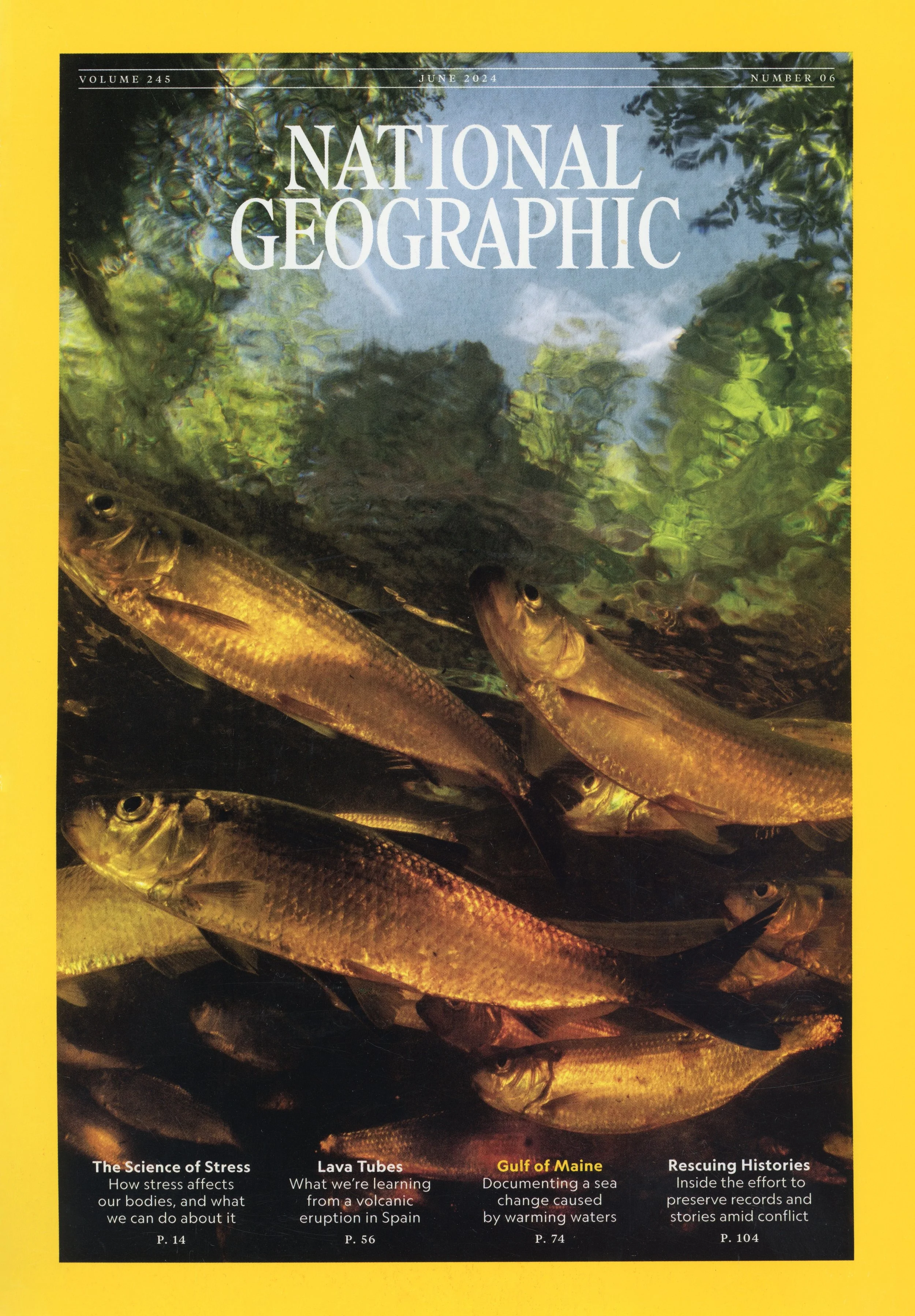
Mill Brook Alewife Migration Featured in National Geographic!
You know who else thinks that this migration is spectacular? National Geographic. Photojournalist Brian Skerry describes his experience witnessing the alewife run at Mill Brook in this National Geographic article. Don’t miss it!
“Alewives had virtually disappeared from the gulf because dams kept them from migrating. The removal of dams in key rivers such as the Penobscot and Presumpscot, done largely in hopes of restoring Atlantic salmon populations, resulted in the revival of the alewife’s ancient migratory route; runs of fish in the millions now occur every spring. One beautiful experience I’ve had in recent years was photographing alewives at the base of a waterfall in Mill Brook Preserve, a tributary of the Presumpscot. The fish gather there to rest before going up the falls. Lying with my camera in only two feet of water, I was surrounded by thousands of alewives swirling around me, the way I imagine the river would have been long ago.”
What is the Land Trust's role in the fish migration, and how can I help?
The protection of Mill Brook Preserve, along with our Water Quality Monitoring program, ensures that these migration waters remain clean and provide excellent habitat for alewives and the countless other plants and animals in and around the brook. Member support is what makes this possible; if you are already a member, thank you, if not, please consider taking a minute to join now online, and you too can be a part of supporting this incredible migration.
As the stewards of the largest fish migration from Casco Bay, we also have over 50 volunteers involved in ensuring the success of the alfewives’ journey from Casco Bay to Highland Lake. You can sign up to volunteer during the run to help with our fish count or be an ambassador at a viewing pool.
-
We are working in collaboration with USM and the Department of Marine Resources to support ongoing research on the largest fish migration from Casco Bay. You can support these efforts by becoming a Fish Count volunteer. Volunteers count fish as they enter Highland Lake in Westbrook for 30 minute at a time mid-May to early June. Sign up to volunteer for the 2025 season here, and if you have questions please email toby@prlt.org
For more volunteer opportunities visit our Get Involved page of the website.
-
Mill Brook supports the largest migratory fish run in Casco Bay, as alewife travel from the ocean through Presumpscot River then Mill Brook to Highland Lake. There are now thousands of visitors who come to see the fish migration at our Mill Brook Preserve. As a result, we have started a new fish migration ambassador program. Ambassadors engage with visitors at the two fish viewing pools, welcoming visitors, answering questions and supporting a successful fish migration. No prior skills are needed and we will provide training. Sign up to volunteer for the 2025 season here, and if you have questions please email toby@prlt.org
For more volunteer opportunities visit our Get Involved page of the website.
Photos of alewives migrating up Mill Brook in both the Northern and Southern viewing pools. Images by former PRLT staff member Brenna Crothers.


