
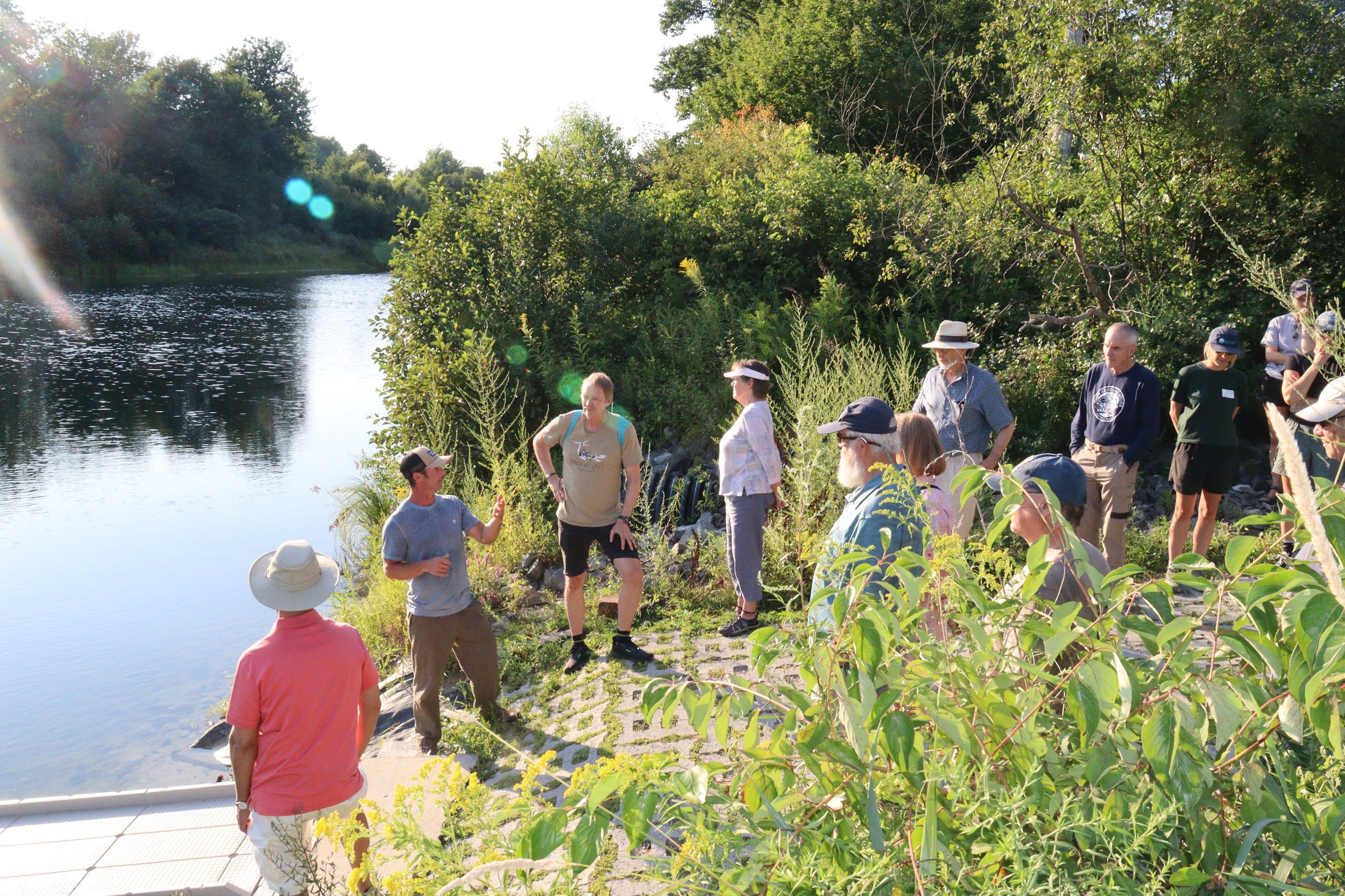
PRLT hosted an event with Friends of Casco Bay (FOCB) on August 11 called “Freshwater Finds: Exploring the Presumpscot River with Water Reporter.” This event provided an opportunity for the public to learn about connections between the Presumpscot River and Casco Bay, ways volunteers can help monitor and support conservation, and a bit of the historical and current threats impacting our local rivers and oceans.
The Presumpscot River drains two-thirds of the Casco Bay watershed, meaning the health of the river and its tributaries and the health of the bay go hand-in-hand. PRLT collaborates with FOCB regularly on collective watershed issues, such as Presumpscot 2040. FOCB has also helped provide insight and support as we work to expand our water quality testing with continuous meters. We were both looking to encourage more active community participation in conservation efforts, so collaborating on a public event seemed like a natural next step.
PRLT’s Water Stewards are a group of dedicated volunteers who help us participate in the Maine Department of Environmental Protection (DEP) Volunteer River Monitoring Program (VRMP). Water Stewards collect field data every two weeks to test the water quality of the Presumpscot River and its tributaries. They use YSI meters to measure parameters like dissolved oxygen using YSI meters and collect water samples to be tested for E. coli bacteria.
Dissolved oxygen is the amount of oxygen present in the water, which can be measured in percent saturation or milligrams per liter (mg/L). Fish, aquatic insects, plants, and many other organisms need dissolved oxygen in the water to survive, just like we need oxygen from the air.
Escherichia coli (a.k.a. E. coli) is a strain of fecal coliform bacteria that’s used as an indicator of fecal contamination in freshwater and potential exposure to pathogens in the water. E.coli is found in the intestines of animals and humans, meaning some sources of E. coli in water come from issues like sewage or animal waste runoff. (Pet waste is a common cause of E. coli presence in water – a good reminder to clean up after our furry friends, especially near waterways!)
Our data is shared through Maine DEP’s system and updated on our website annually.
This year, PRLT has also started weekly invasive plant removal days, offering weekly events to learn how to identify invasives and help us remove them from our preserves. Not only are invasive plants harmful to our ecosystems by outcompeting native species for limited resources, but they can cause long-term issues to riparian zones (the areas of land around a body of water) by eroding banks, reducing drainage that prevents flooding, and degrading habitats, all of which also affects the quality of our water.
Friends of Casco Bay runs the Water Reporter program, where volunteers document changes in the Casco Bay watershed through photos and data shared via the app. Volunteers have shared observations of coastal habitats and species as well as watershed issues like algal blooms, erosion, and stormwater pollution. Volunteers can track conditions specifically after storms or floods, or monitor the same sites to track usual and unusual environmental conditions over time. The program has helped FOCB staff and scientists to monitor threats and advocate for protections around the watershed, which Sara Freshley, the Community Organizer and Volunteer Coordinator at FOCB, discussed at the event.
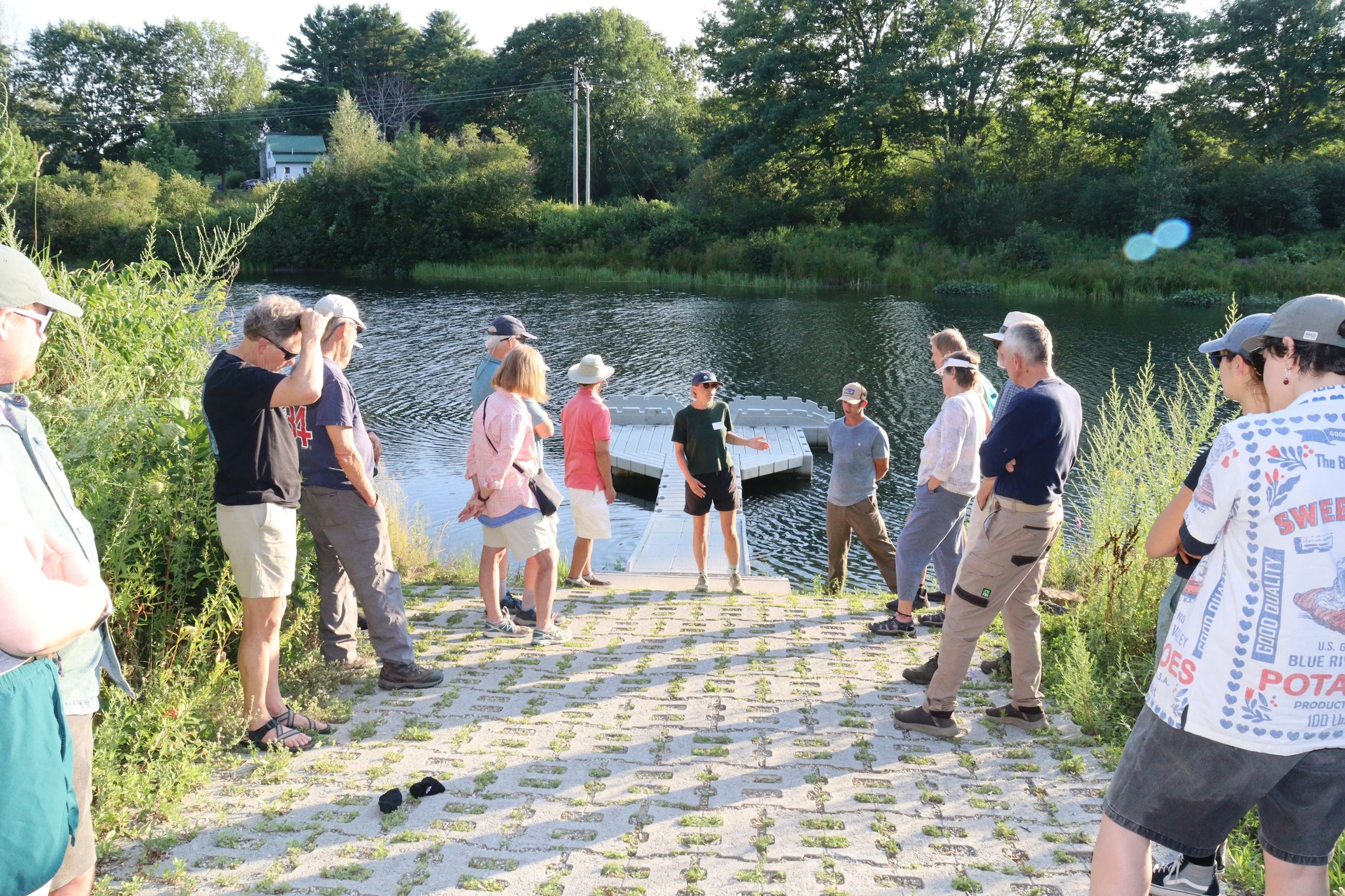
During “Freshwater Finds,” we talked about these opportunities and why volunteer support is so important for conservation, scientific monitoring, and land management. While strolling along the river and standing on the dock by the Cornelia Warren Four Season Rink, Sara pointed out how stormwater (rain or snow runoff from hard surfaces like roads and roofs) can carry harmful pollutants into our waterways and even overwhelm sewage systems. She mentioned that having volunteers who live inland can help FOCB keep an eye on long-term changes and post-storm effects right in their own backyards, expanding data and monitoring efforts for scientific research, advocacy, and responses. Toby Jacobs, our Director of Lands and Water, also spoke to the group about historical development and usage of the river and land in the area, especially since the dock and river overlook the remains of the Saccarappa Dam and the falls.
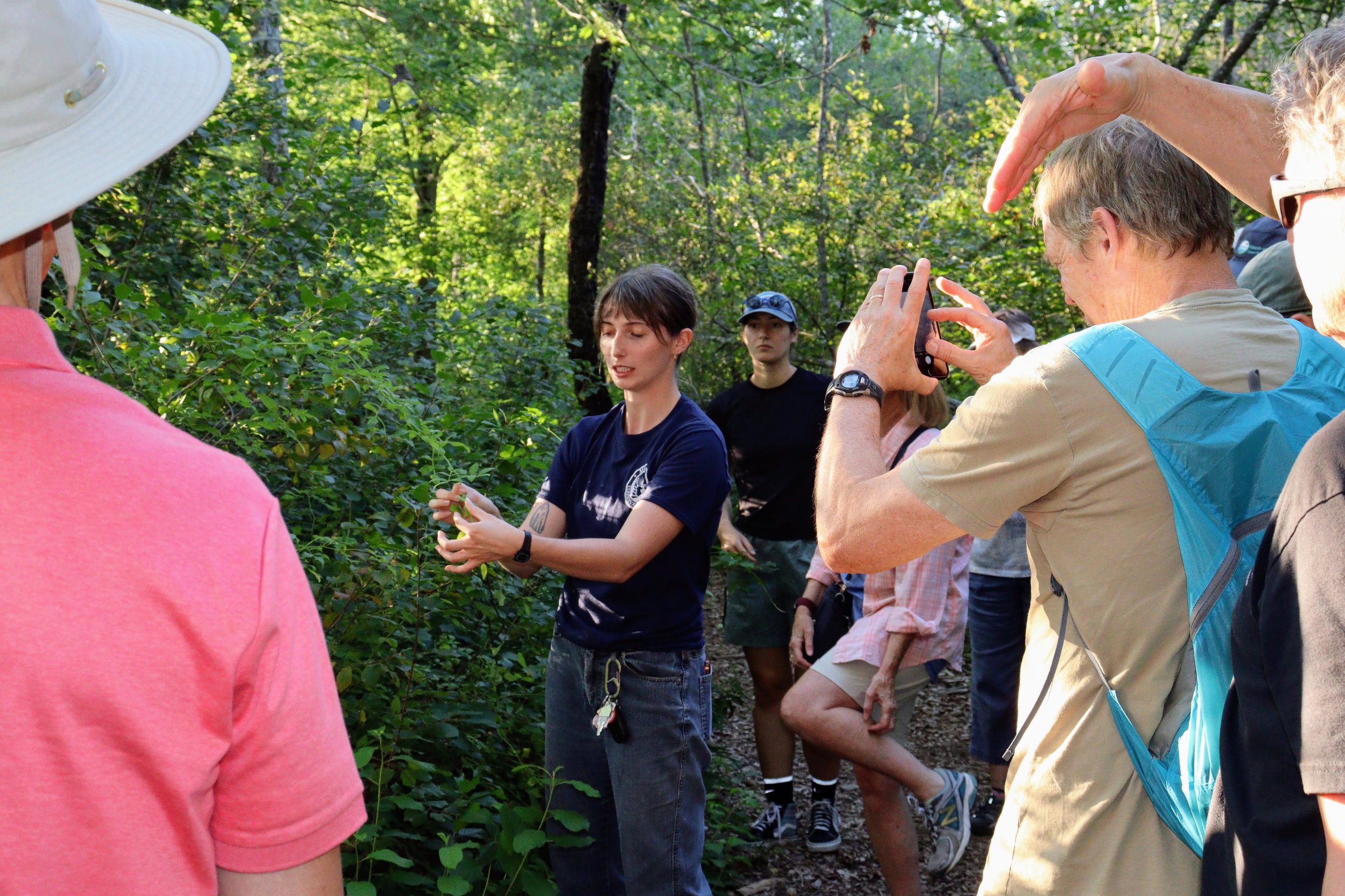
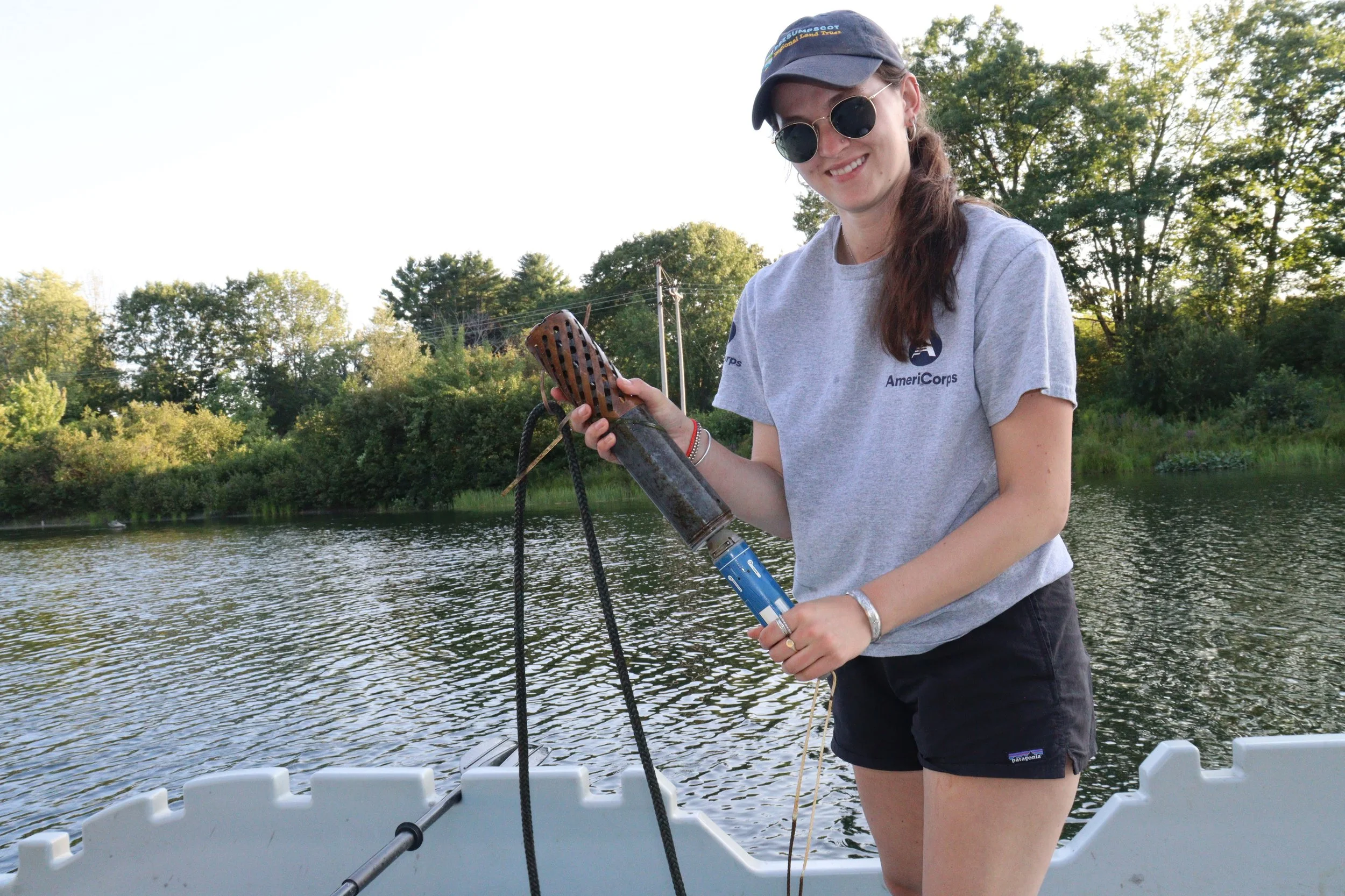
Abigail (at left) ID’ing invasive plants and Clara (at right) displaying a continuous water meter
Abigail Edenfield, our Maine Conservation Corps Environmental Steward, led the group for a walk through Rivermeadow Nature Preserve. She pointed out invasive species and explained how we collaborate with volunteers to manage these at our preserves. We wrapped up the event with Clara Franzoni, PRLT’s Regional Land Trust Fellow, and Toby sharing our history of water quality monitoring, our hopes to enhance monitoring with new technology and continuous meters, and thank yous for the dedication of our Water Stewards and invasive plant removal volunteers.
We hope this event emphasized how freshwater and coastal volunteer observations enhance collective regional data-gathering and how nonprofits are working together for the good of our watershed!
If you're eager to make a positive impact while supporting the Presumpscot River and Casco Bay watersheds, you can sign up to get involved with these opportunities:
To find out more about FOCB’s Water Reporter program and how to participate, visit: https://www.cascobay.org/our-work/community-engagement/water-reporter/
If you're interested in volunteer opportunities with PRLT, including becoming a Water Steward and/or joining our invasive plant removal days, visit: https://www.prlt.org/volunteer.