
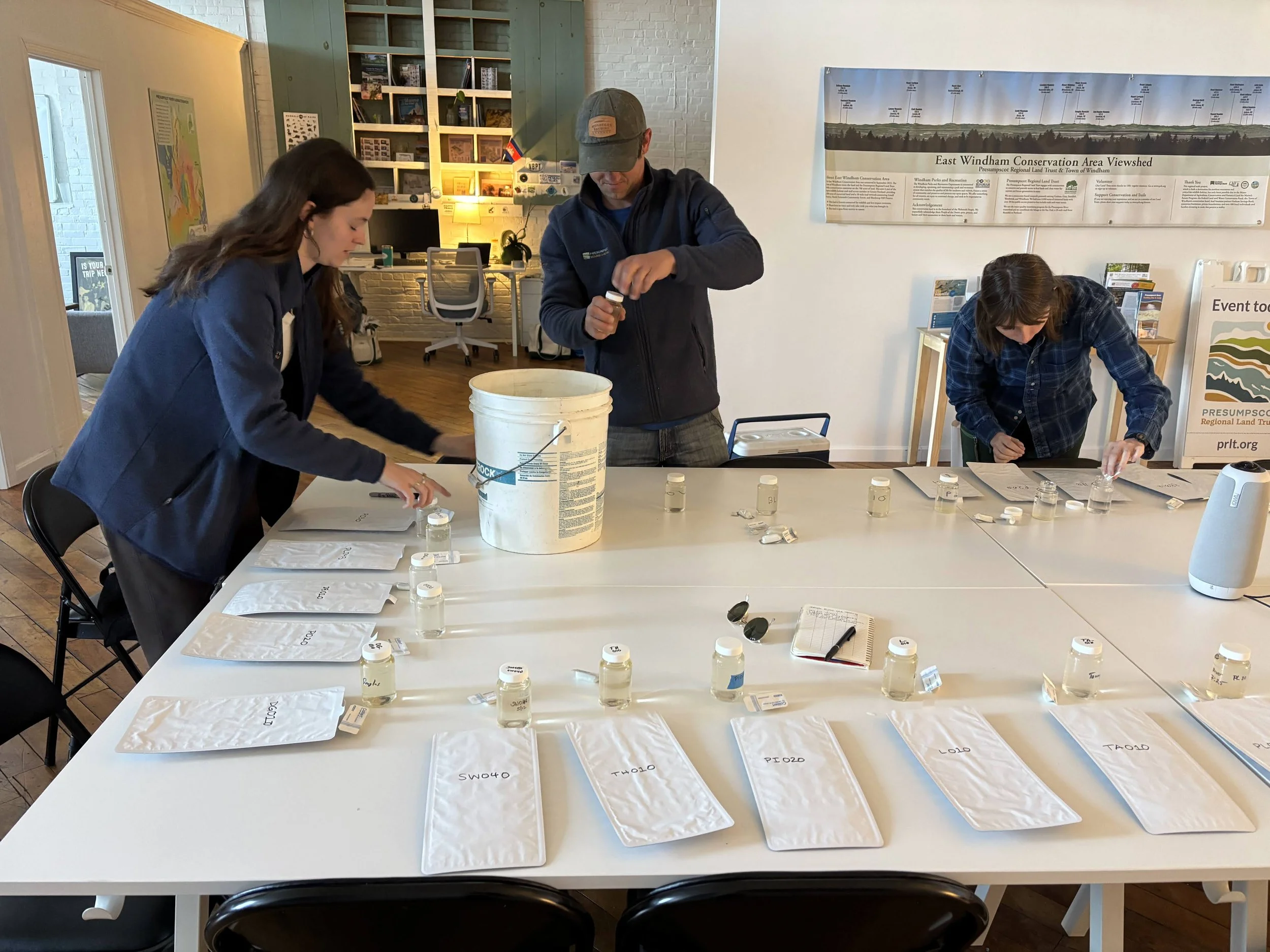
PRLT has been working for nearly a decade to monitor, steward, preserve, and enhance the health of the Presumpscot River and its tributaries for the benefit of recreation, public health, and ecosystem biodiversity.
Last year as part of our strategic planning process, we determined that a top priority was evaluating these efforts and creating a plan for professionally and sustainably improving our water quality monitoring program. Our goal is to make our data collection as rigorous as possible so that the results can affect policy decisions, not just document changes with no impactful outcomes.
As a result, this field season we’re implementing some changes to our program. But first, a bit of history on why monitoring water quality in our watershed is important:
HISTORY OF THE VOLUNTEER SAMPLING PROGRAM
PRLT has participated in the Maine Department of Environmental Protection (DEP) Volunteer River Monitoring Program (VRMP) for nearly a decade, building on the efforts of Presumpscot River Watch, which conducted sampling from 2009 to 2017 before it merged into PRLT. Presumpscot River Watch’s historical data is still part of our database.
Each year, our dedicated volunteer water stewards travel throughout the Presumpscot watershed from May through September. They test river water quality along the Presumpscot and its tributaries by measuring dissolved oxygen, water temperature, and conductivity using YSI meters, as well as collecting water samples to be tested for E. coli bacteria. Through the VRMP, we focus on the Presumpscot River basin, stretching from Sebago Lake to the river’s junction with the Piscataqua River. This includes sampling sites along the mainstem of the river, as well as the Pleasant River, Little River, Piscataqua River, East Branch Piscataqua River, and smaller tributaries that flow directly into the Presumpscot River. These sites were chosen strategically to provide a snapshot of the river’s overall health, including assessing the downstream effects of certain river sections based on dam locations on the main stem.
This program relies on the dedication of our volunteers: each year, more than twenty individuals are organized into teams that collect samples and data from around forty sites every other week during the spring to fall field season.
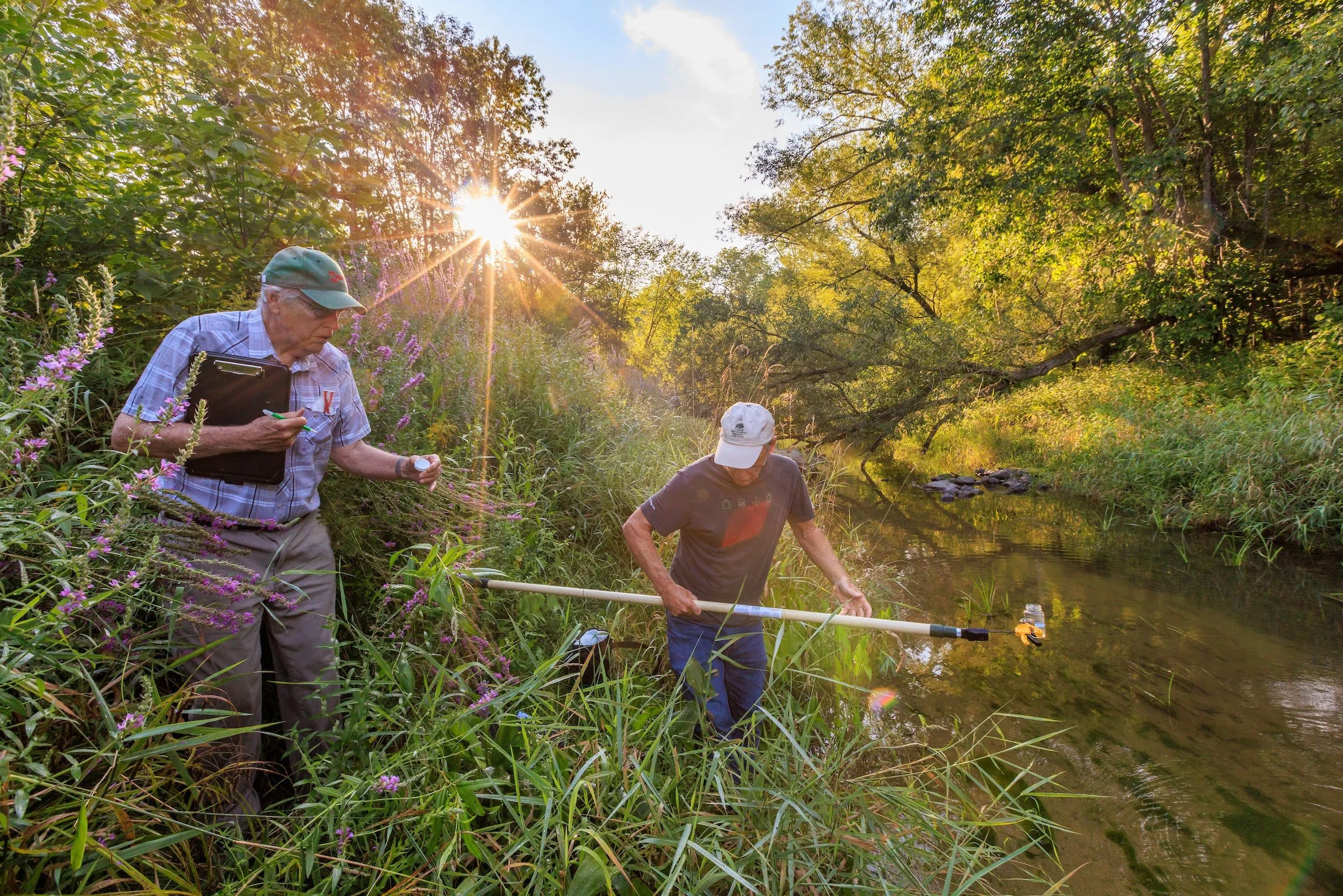
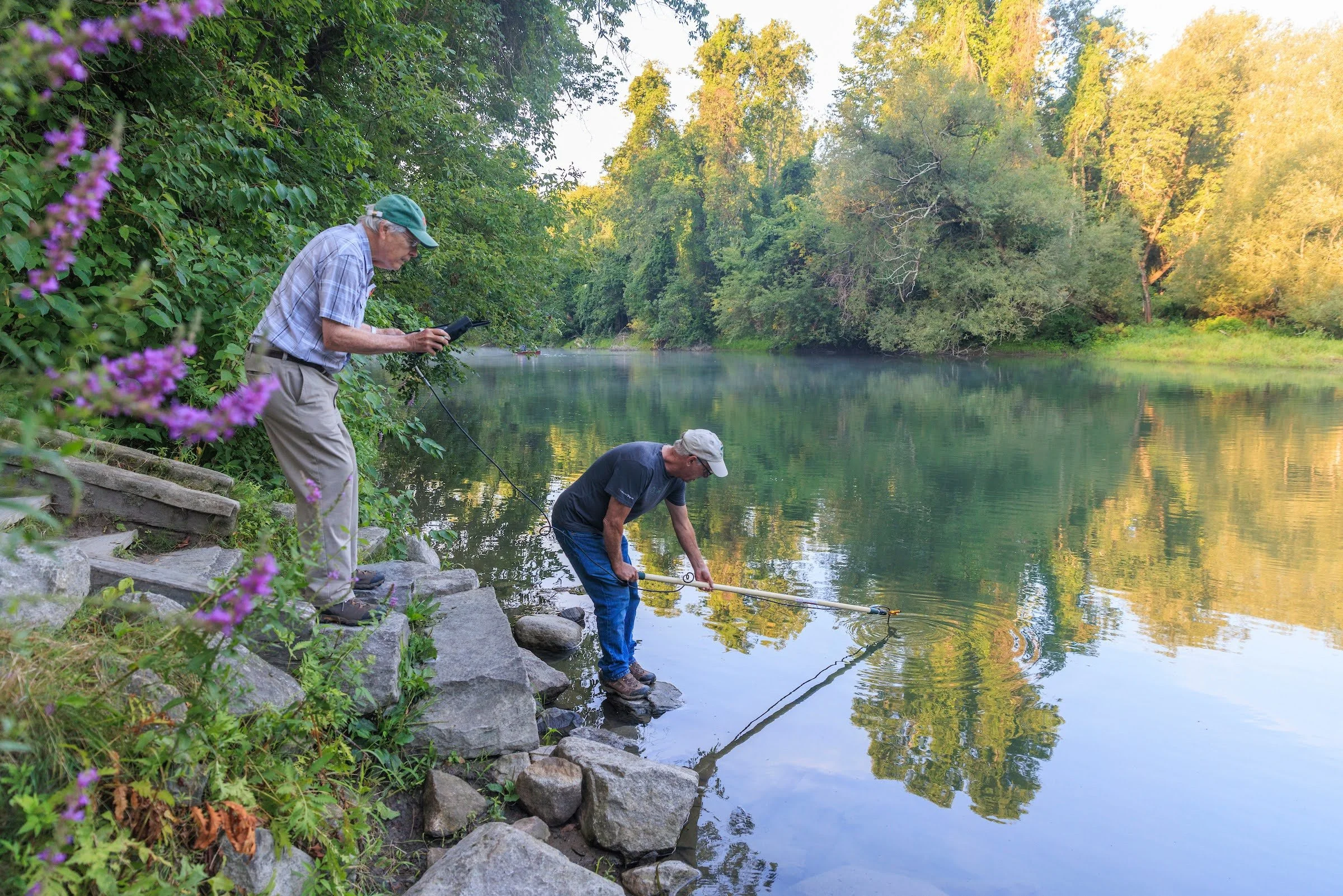
Volunteers Joe McNeil and Bob Sharp sampling during Summer 2022
WHAT THE DATA SHOWED
Our VRMP data allows us to compare annual results and observe historical trends across sampling sites. We post this data on our website at www.prlt.org/water (results from the 2025 sampling season are available now).
The trends and averages revealed through the VRMP show that the main stem of the Presumpscot River consistently meets state standards for both bacteria and dissolved oxygen levels—in fact, the raw measurements of bacteria and dissolved oxygen in the river are among the most favorable in the region. By measuring dissolved oxygen, conductivity, and bacteria levels at various sites each year, we can observe significant disparities in overall water quality between the Presumpscot River and its tributaries. This has sparked our interest in understanding how the flows from these tributaries affect the overall water quality of the main stem each day, as well as the differences in water quality above and below dam locations.
PRLT is grateful for the consistent and discrete data gathered by volunteers over the course of many years, which enables us to share these trends. However, we believe that we may be missing valuable data between our monitoring efforts; with only ten sampling days per season, we are bound to miss some data and important changes between the every-other-week volunteer testing.
To gain a more comprehensive understanding of the watershed’s overall health, we need more extensive scientific data in a way that can also reduce the pressure and commitment on our volunteers. The main stem of the Presumpscot is particularly significant due to its proximity to municipalities and towns, the impact of human activities such as recreation and dam operations, and its habitat and ecological value. Our main goal is to gain a deeper understanding of the state of water quality on the main stem to help:
assess the quality of broad aquatic habitats
pinpoint short- or long-term problem areas
inform recreational users about water quality safety
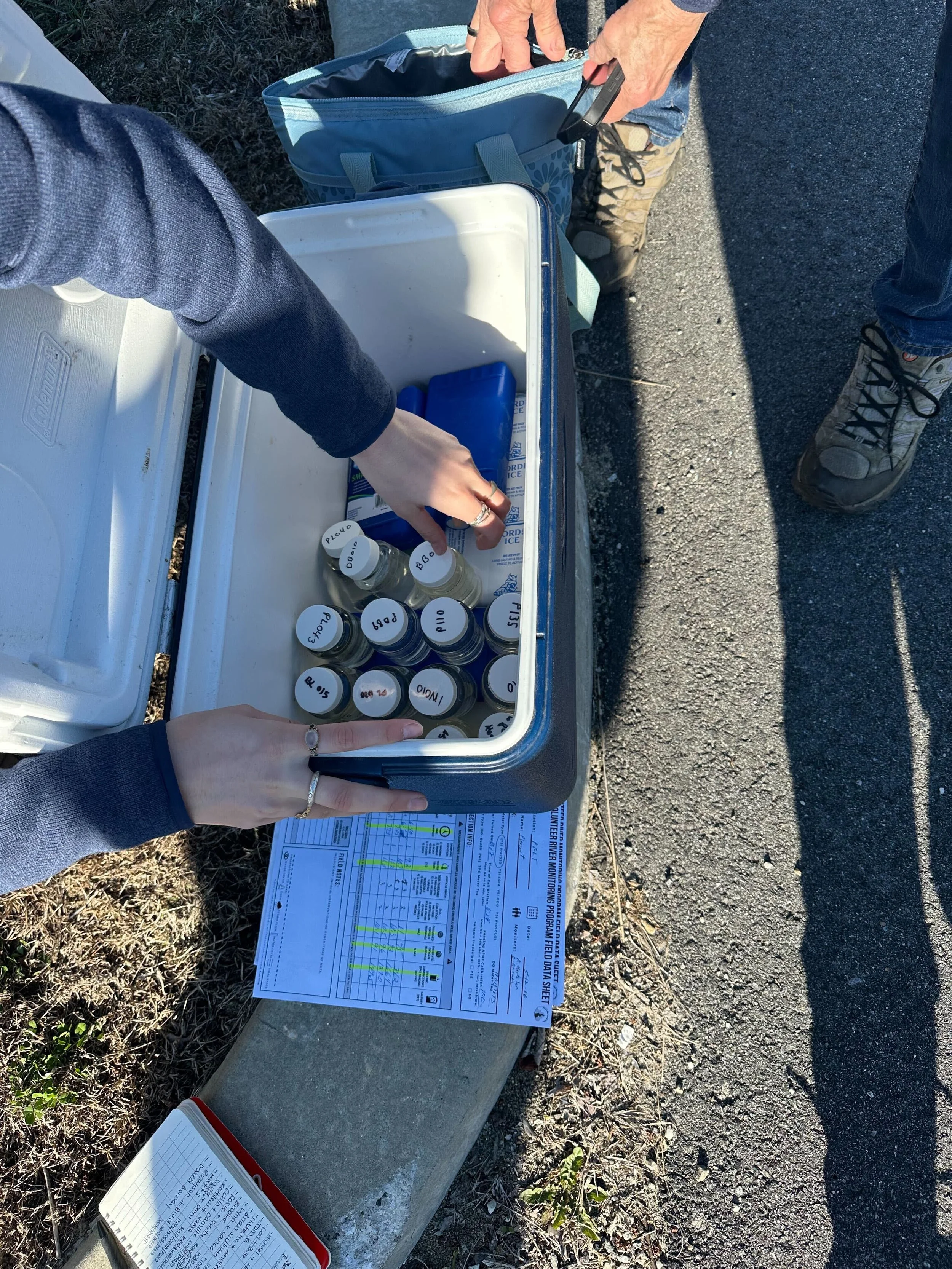
Top: collecting samples and data sheets from volunteers
Bottom: preparing samples for bacteria testing
NEW TESTING UPDATES FOR 2026
Enter: Onset’s HOBO MX801 Series Water Data Loggers.
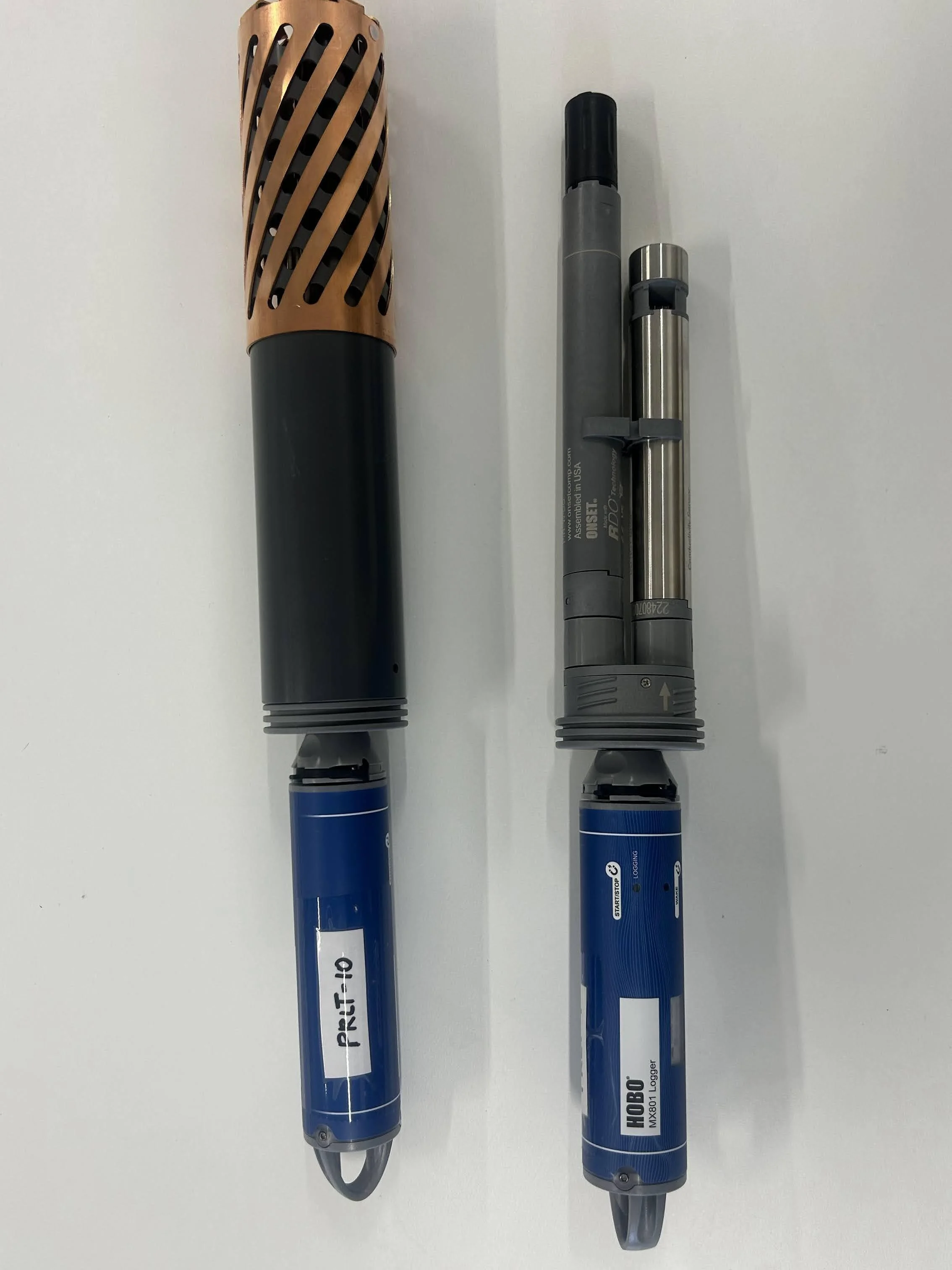
The Onset Loggers! The logger on the right shows the two sensors: one measures dissolved oxygen (DO) and the other measures conductivity. The logger on the left displays the protective and anti-biofouling guards that cover the sensors when submerged in water.
This winter, PRLT received funding and an equipment loan from Casco Bay Estuary Partnership for twelve continuous monitoring loggers that we are deploying this field season!
Casco Bay Estuary Partnership (CBEP) works with local and state organizations to protect and restore Casco Bay. Since the Presumpscot River is the largest freshwater source feeding into Casco Bay, PRLT regularly partners with CBEP. This partnership includes funding and promoting our VRMP water quality data, as well as collaborating on other projects for the health of our watershed, like the Presumpscot 2040 initiative. CBEP has been working on developing continuous monitoring capacities for themselves and partners in order to oversee and establish methods for more long-term data collection.
These Onset Loggers are fully submersible and are equipped with sensors that measure dissolved oxygen, temperature, and conductivity at 15-minute intervals. They’ll be deployed underwater at ten sites along the main stem of the Presumpscot River in mid to late May. This shift alleviates some of the demands on our volunteers and enables us to gather significantly more data at a finer scale, allowing for a more in-depth analysis of conditions in the main stem of the Presumpscot River and effects from tributaries and dams. Volunteers will still be collecting water samples for bacteria testing at these 10 main stem sites, as well as continuing to monitor the 26 tributary sites, as we use this season to explore how the Onset Loggers can best be used to support data collection and monitoring efforts.
In the coming weeks, we will be deploying the Onset Loggers at ten locations along the Presumpscot River. At the surface, an inflatable buoy marked with “PRLT” will identify our sites, while below the water, our meters (attached to a 10-foot line in the middle of the water column) will diligently log and store data every 15 minutes. PRLT staff will kayak to each site on a regular basis for routine monitoring, data retrieval, and to check for any issues or signs of tampering. We utilize the HOBOConnect mobile app to view and download our data, which connects to the device via Bluetooth.
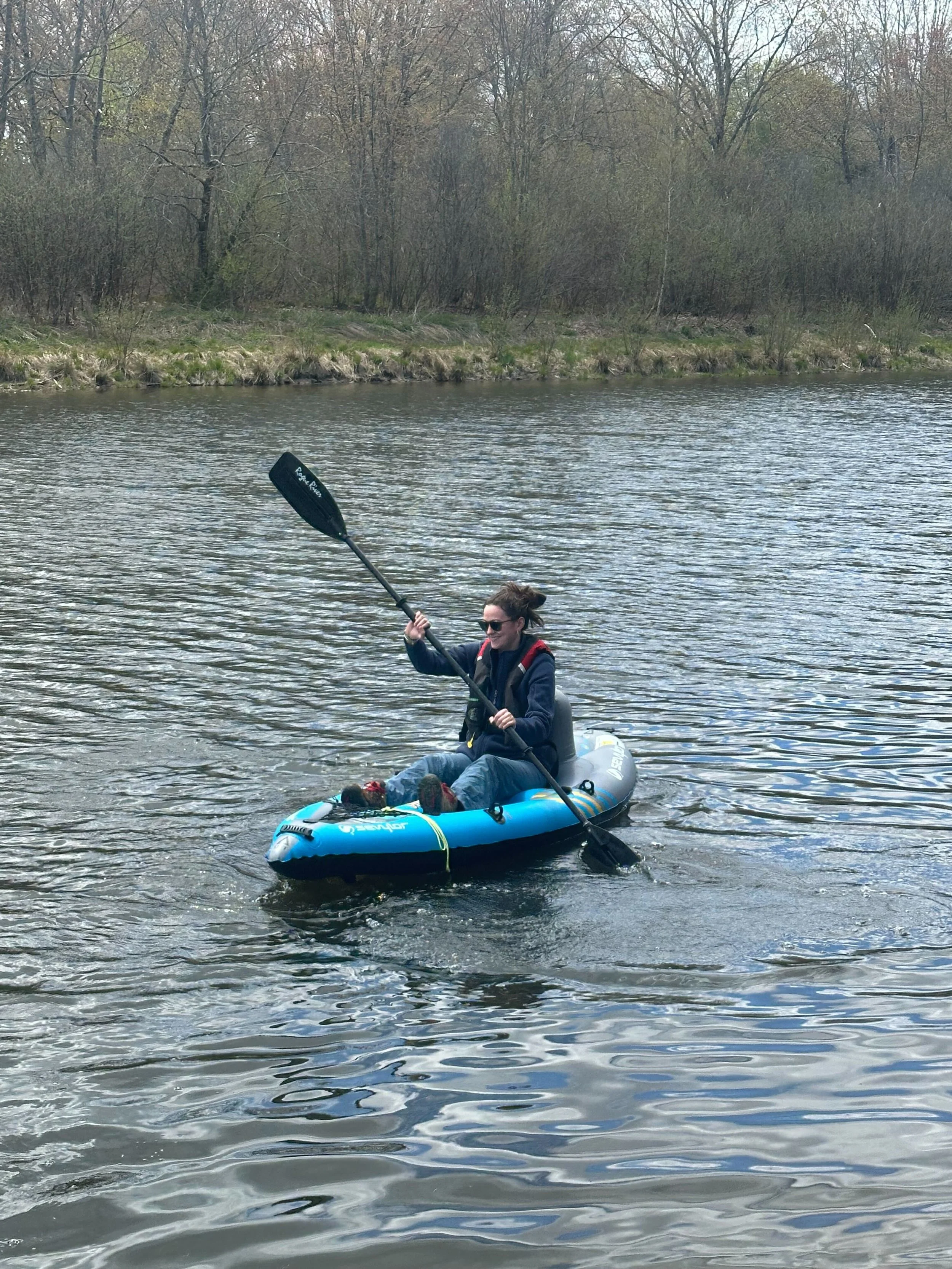
Clara enjoying a test-run of the kayak before she starts deploying loggers.
Important – If you encounter any of our buoys along the main stem of the river, please DO NOT interfere with them. These locations have been intentionally selected to coincide with our VRMP historical collection sites, allowing the logger to accurately measure up to 5 feet below the surface. Disturbing or handling the loggers may impact their measurements and the validity of our data.
The data we collect is sent to CBEP and added to their database for processing. Stay tuned for results on the 2026 field season this winter!
THANK YOU
Our water quality monitoring efforts, and especially these updates, would not be possible without the support of many organizations and individuals:
Casco Bay Estuary Partnership, for the equipment loan and technical training on this new gear
Maine Department of Environmental Protection, for training our volunteer samplers
Friends of Casco Bay, for their guidance and technical support
Greater Portland Council of Governments + Americorps, for matching us with a member of your Resilience Corps to make this program assessment and experimentation possible
And finally, to our VRMP volunteers—past and present— for your dedication to supporting the quality of our watershed. You have set baseline data for us to build on and compare to for years to come, and continue to be a crucial part of our sampling and testing efforts.