
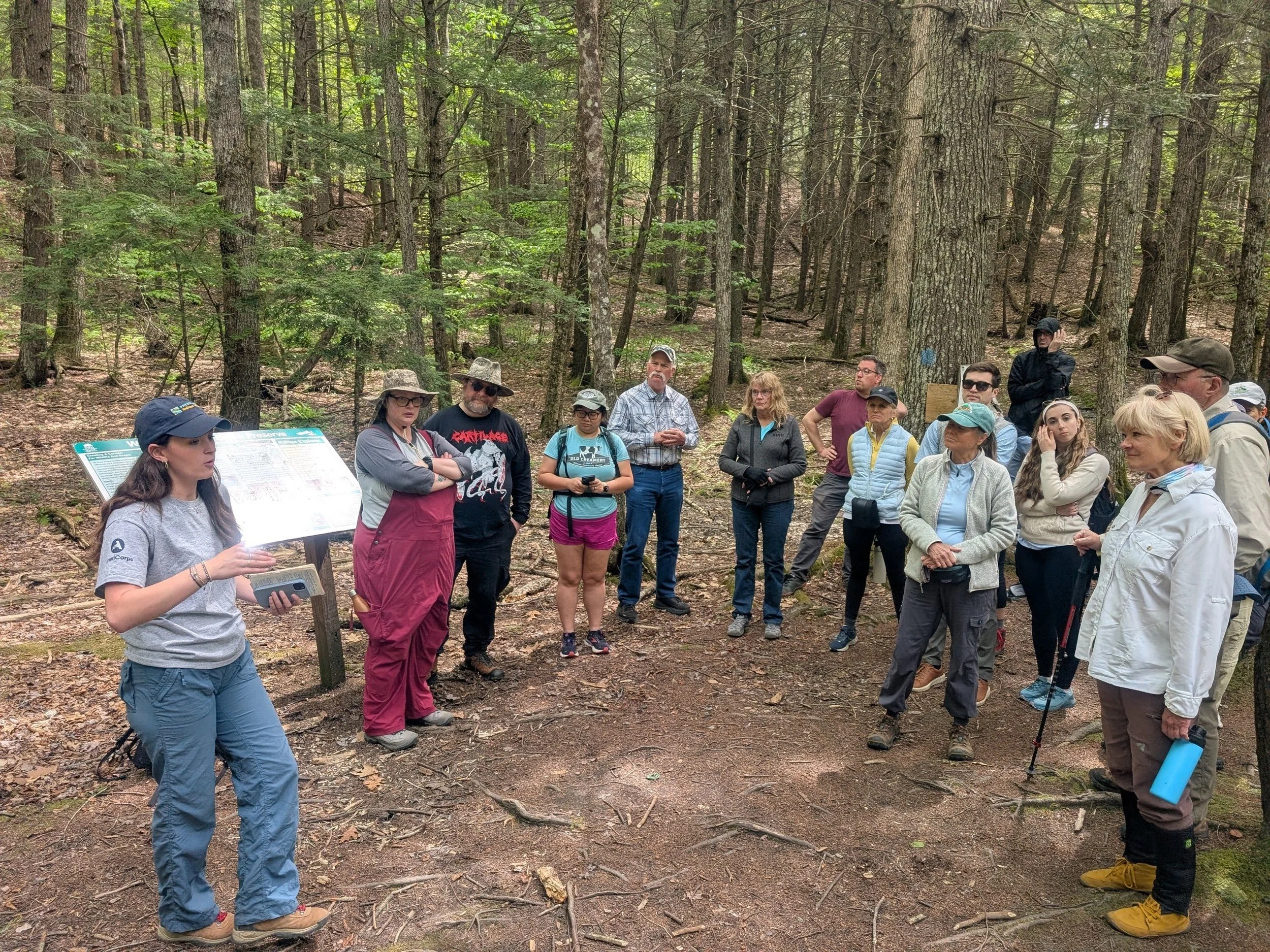
Hello everyone! I’m Clara Franzoni, the Regional Land Trust Fellow working with PRLT this year through the Greater Portland Council of Governments Resilience Corps AmeriCorps Program. Through the Resilience Corps, fellows across the Greater Portland region are serving with host sites like municipalities, nonprofits, and local organizations to increase capacity to promote climate action and organizational resiliency! As a Regional Land Trust Fellow, I am serving with PRLT for 11 months, supporting volunteer-led citizen science initiatives, expanding water quality monitoring throughout the Presumpscot River watershed, organizing and hosting public events, and engaging with community members about land conservation, acquisition efforts, and the diverse ecosystems found within our preserves.
If you are a member, volunteer, or attendee of any of PRLT’s programs or events, you may have met, emailed, or chatted with me already. If you haven’t, feel free to reach out, say hi, and ask more about the Resilience Corps or my service with PRLT!
As the weather warms up, the field season (and primetime for events) is in full swing. Here’s a peek into what I’m up to for one week in May, a week full of events, alewife monitoring, and water quality work!
Sunday
Sunday morning, I tabled at the Friends of the Mountain Division Trail’s “Chalk the Trail” event! The Mountain Division Trail runs right next to our Gambo Preserve along the Presumpscot River in Gorham. It was a fantastic morning of chalk doodles, bike rides, happy dogs, and chats with members of the public and our partners at Cumberland County Soil and Water Conservation District and Windham Parks and Recreation. Tabling at community events like these is a great way to collaborate with our partners and support their work, as well as expand our reach in the community.
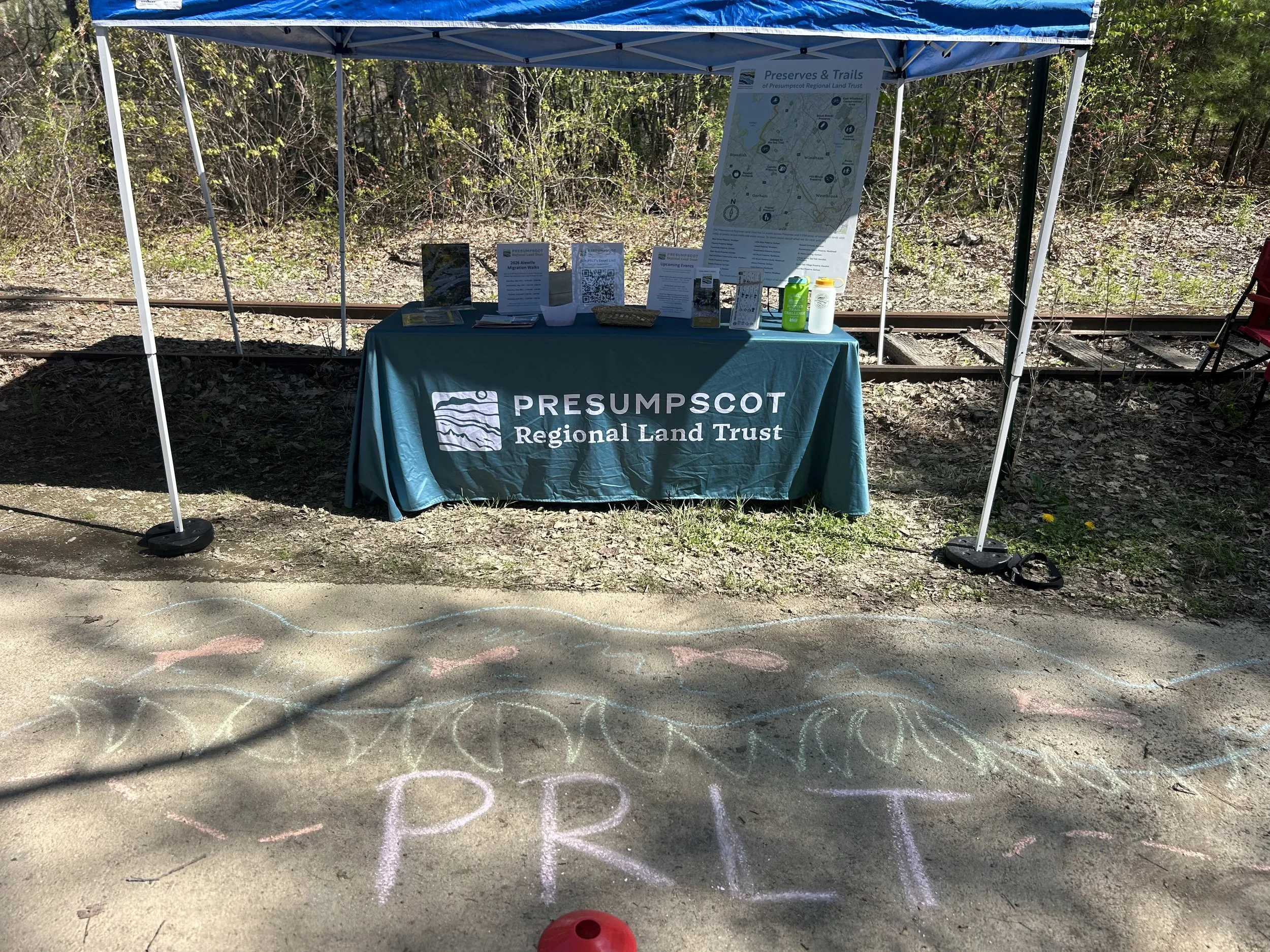
My attempt at some “PRLT” chalk art to resemble our logo….
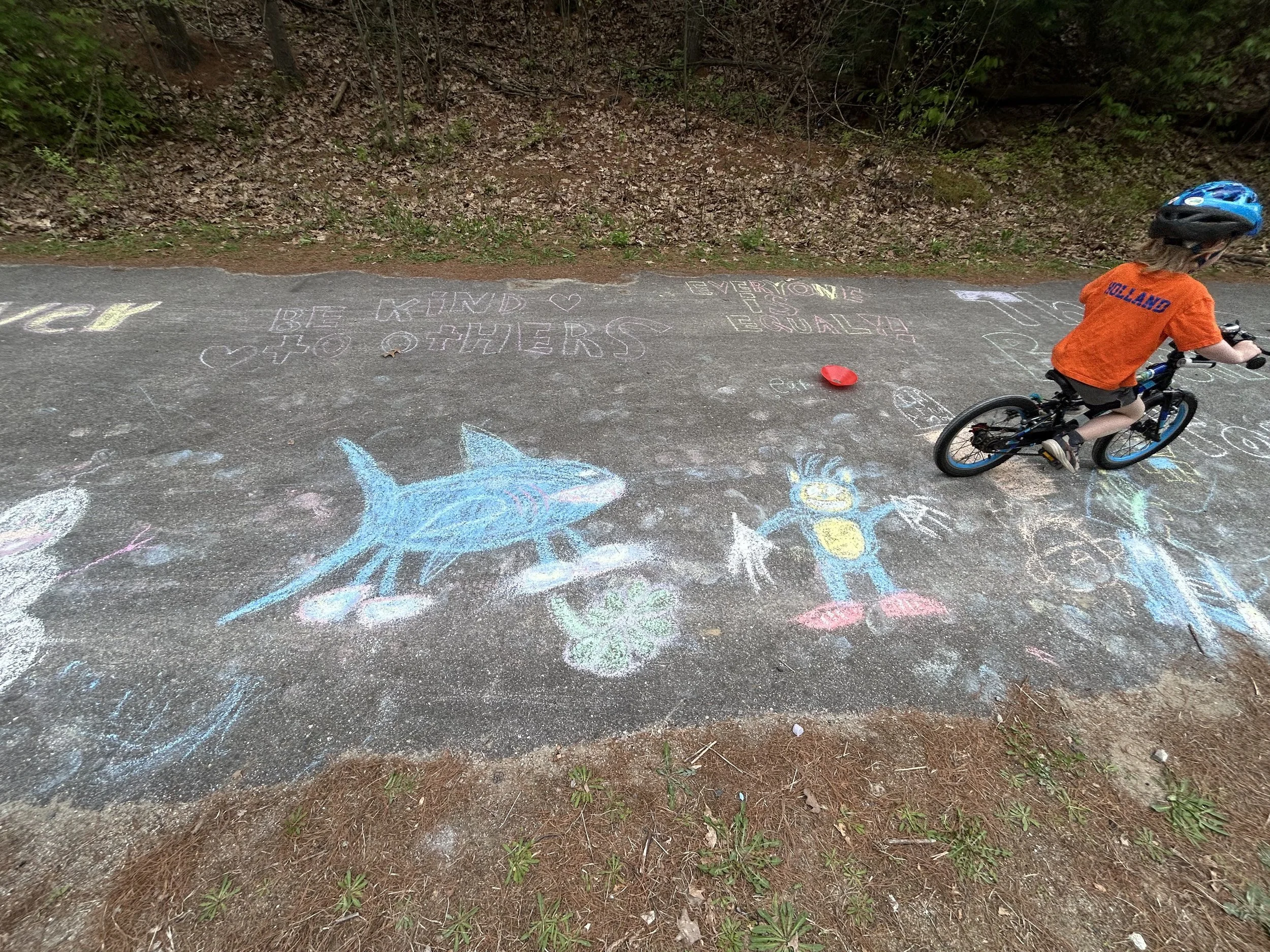
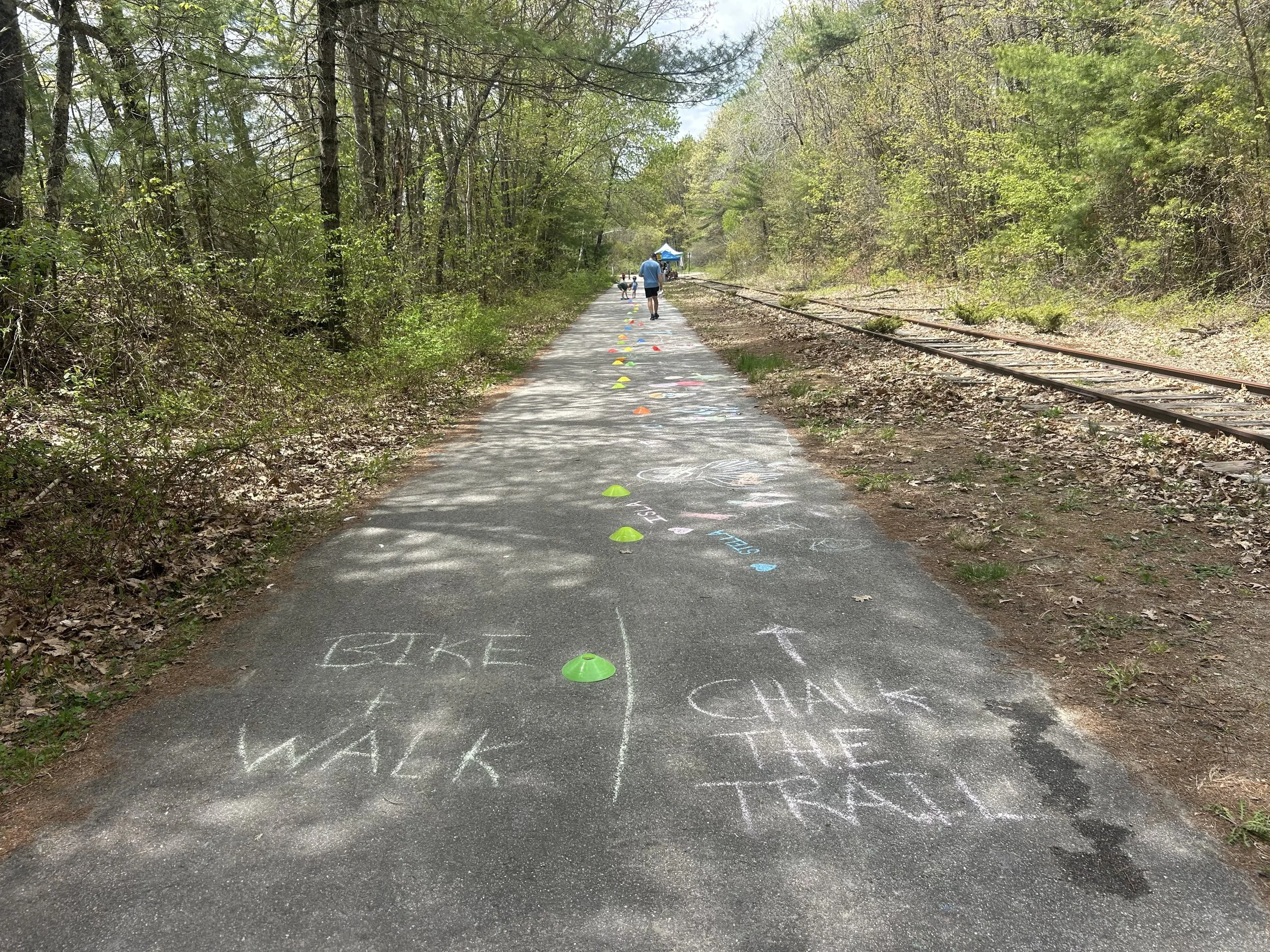
We split the trail between walking/biking and chalking to share the space with all trail users. We ended with a beautiful side full of chalk art for onlookers to see as they hiked!
Monday
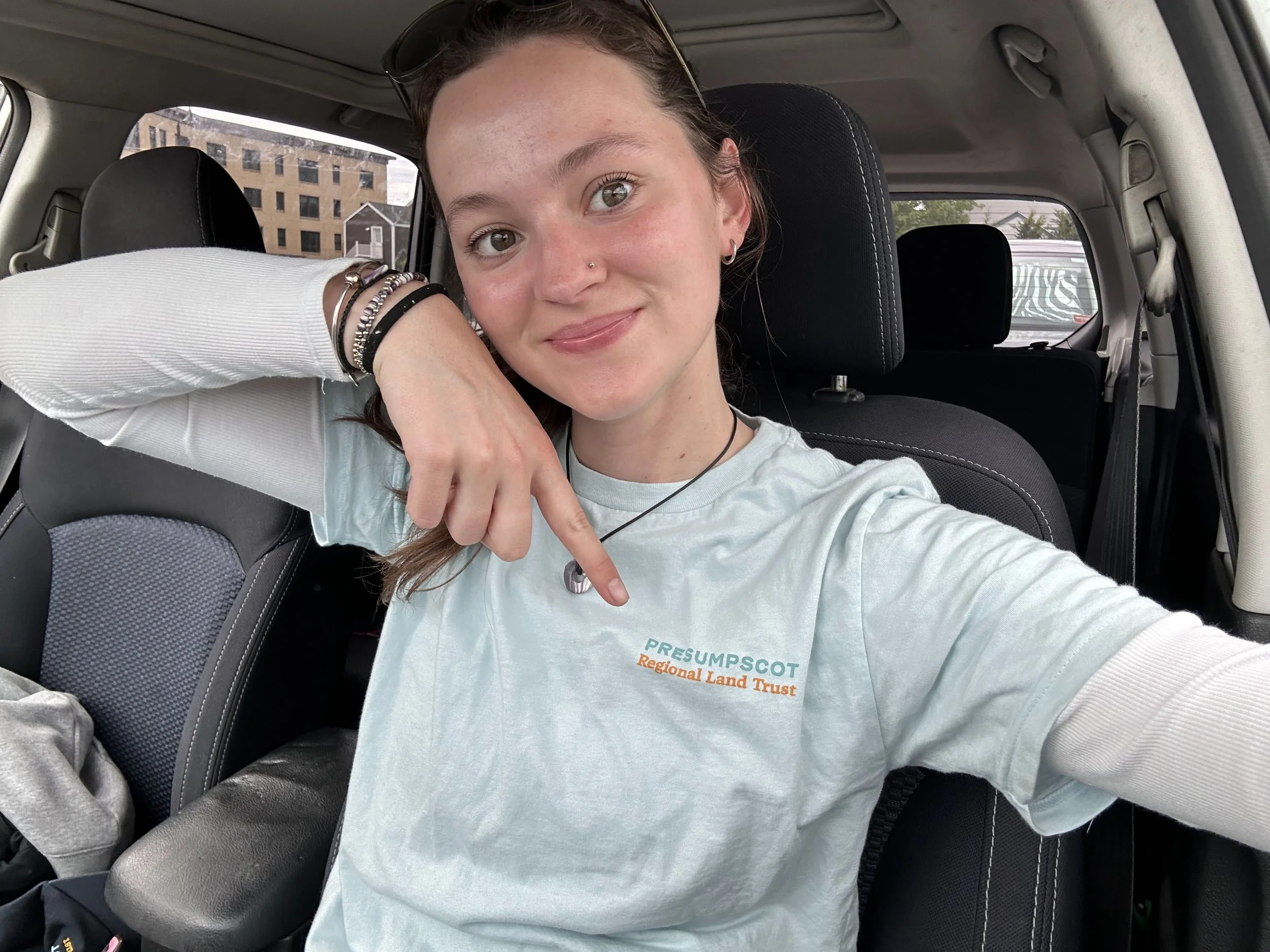
Got my PRLT merch on and ready for a busy Monday!
I started Monday morning at Mill Brook Preserve in Westbrook, where Lincoln Middle School was releasing a school of Brook Trout! The students had received fry from the Cumberland County Soil and Water Conservation District and raised the fish in their classroom. I led the students on a hike down the trail at Mill Brook Preserve, talking about PRLT’s work monitoring migratory fish, our water quality program, and our preserves. It was incredible to see the students release these small fish and connect the importance of clean water and protecting habitats to the success of their small fish population.
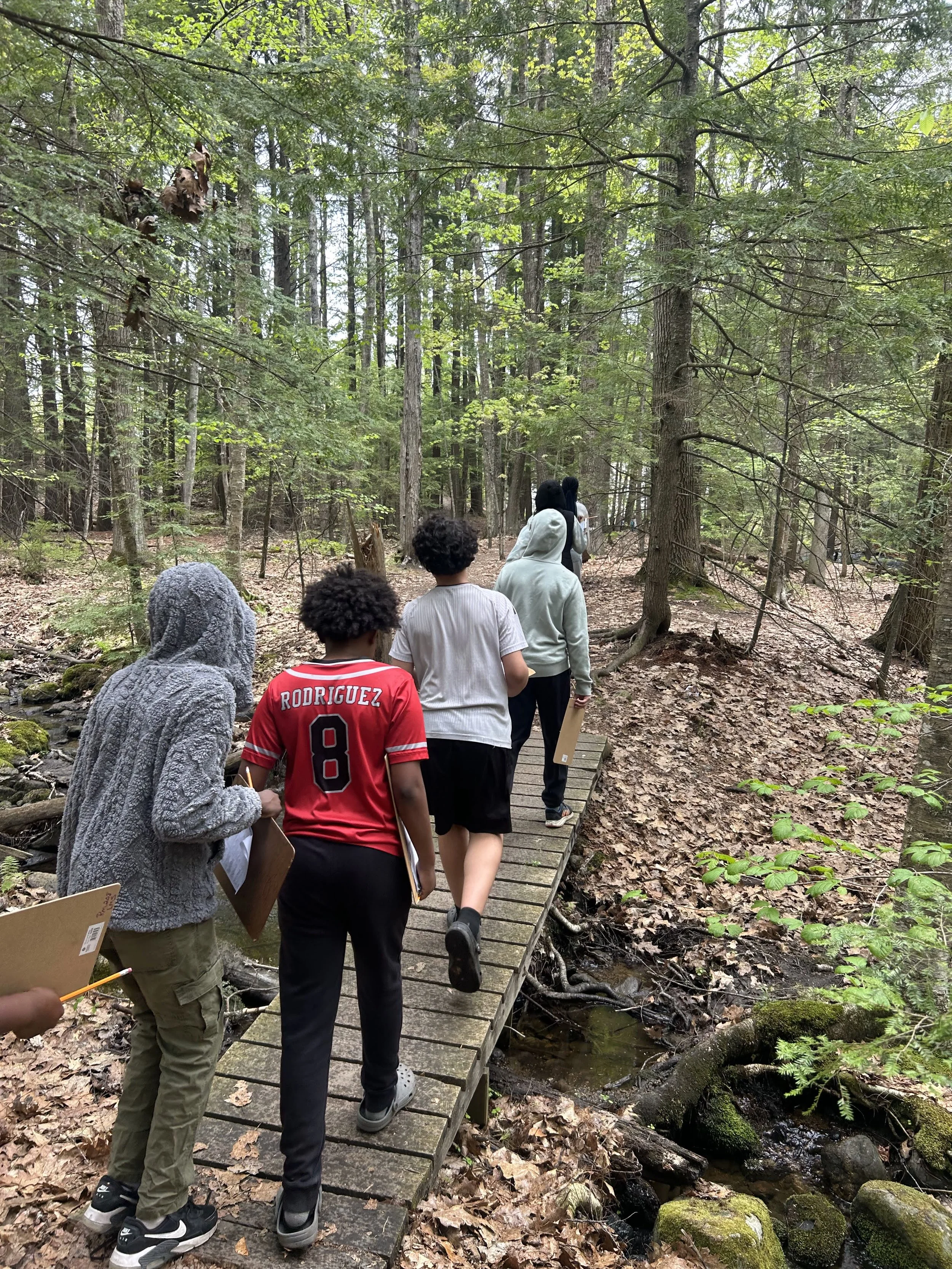
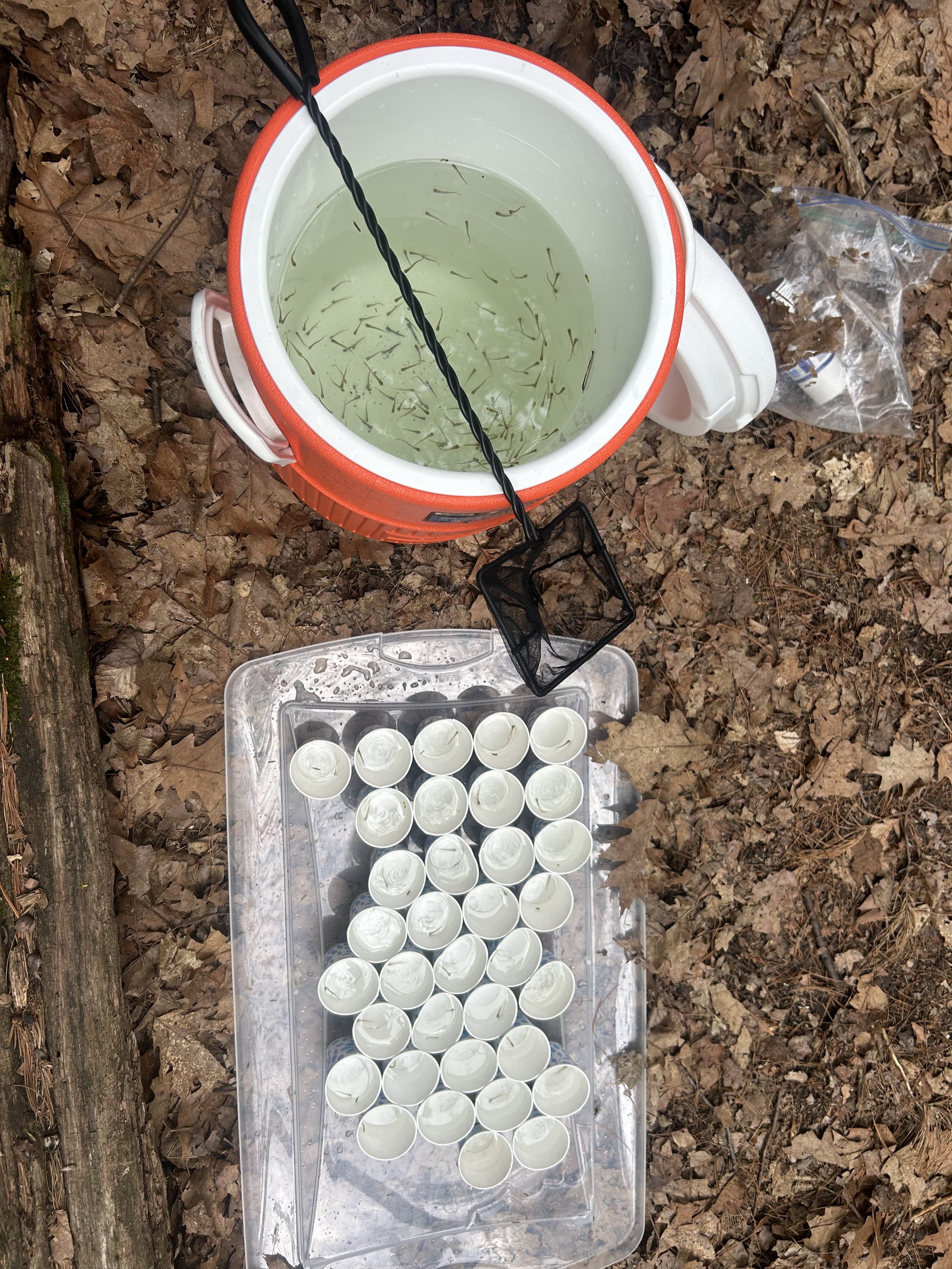
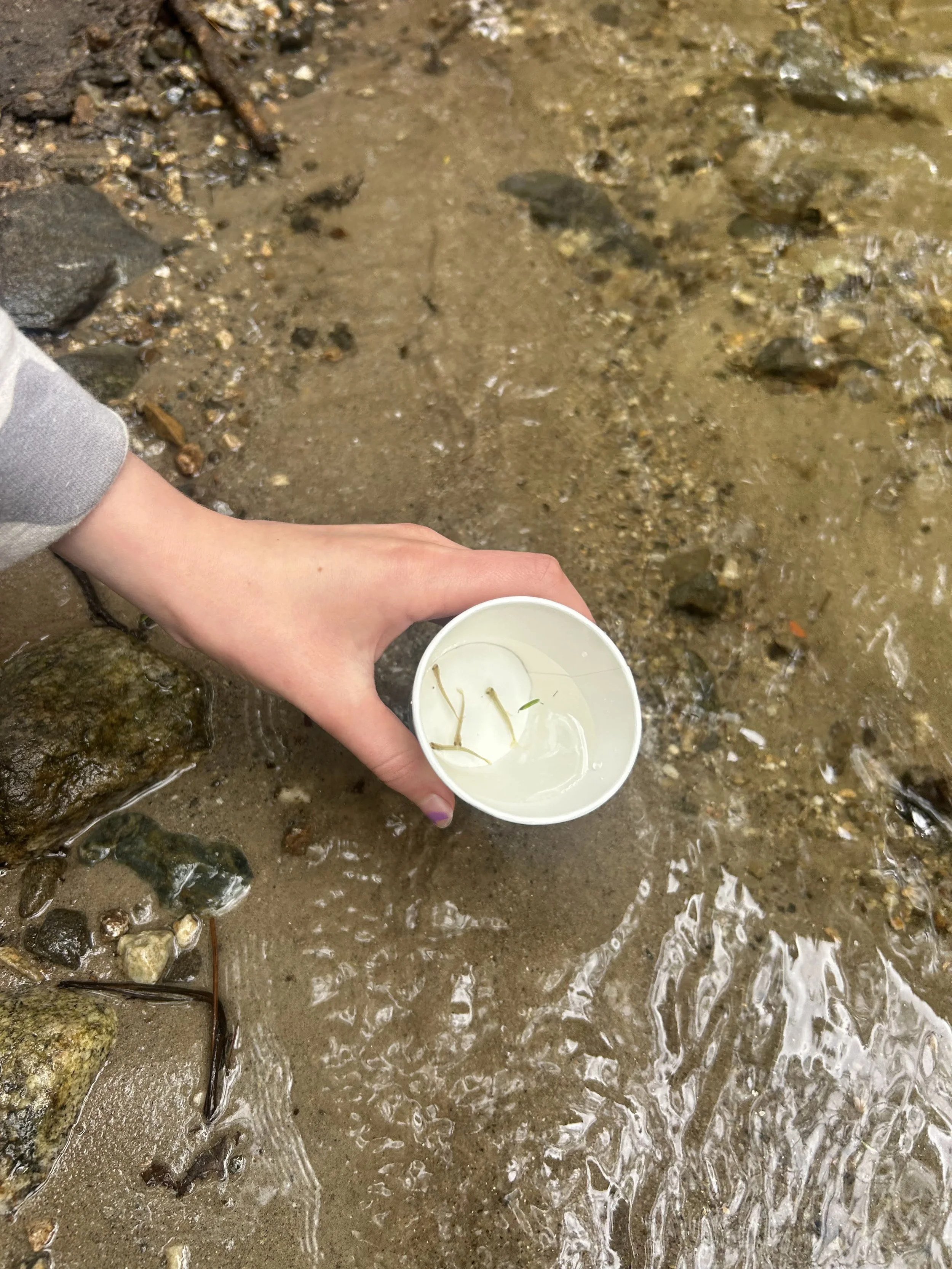
Walking students across Mill Brook Preserve's trails and bridges before watching them release their small school of Brook Trout!
After the trout release, I headed to the dam at Highland Lake to train new fish count volunteers. PRLT collaborates with the Maine Department of Marine Resources and University of Southern Maine to coordinate volunteers who monitor the fish ladder that allows fish to bypass the dam and enter Highland Lake. The volunteer’s role is to count each alewife that successfully uses the ladder to enter the lake and spawn.
I checked the water level of the fish ladder and demonstrated the process for counting and recording the number of fish during the volunteers' sessions. It was here that I saw my first alewife of the migration season! This meant that these fish were about to become my main priority for the next two weeks (I will be at Mill Brook every day next week, leading walks about the migration).
This sighting also marked the culmination of the incredible 11-mile journey from Casco Bay to Highland Lake that the alewife undertake each year (side note – “alewife,” without an “s,” can be used to discuss an individual fish or the species as a whole). Since the early 2000s, conservation efforts by various public organizations have worked to remove dams, reintroduce spawning alewife, and install fish ladders to allow these fish to complete their migration and access these areas that were for hundreds of years inaccessible. I rushed back to the office after this to inform our dedicated fish count volunteers that the migration had begun!
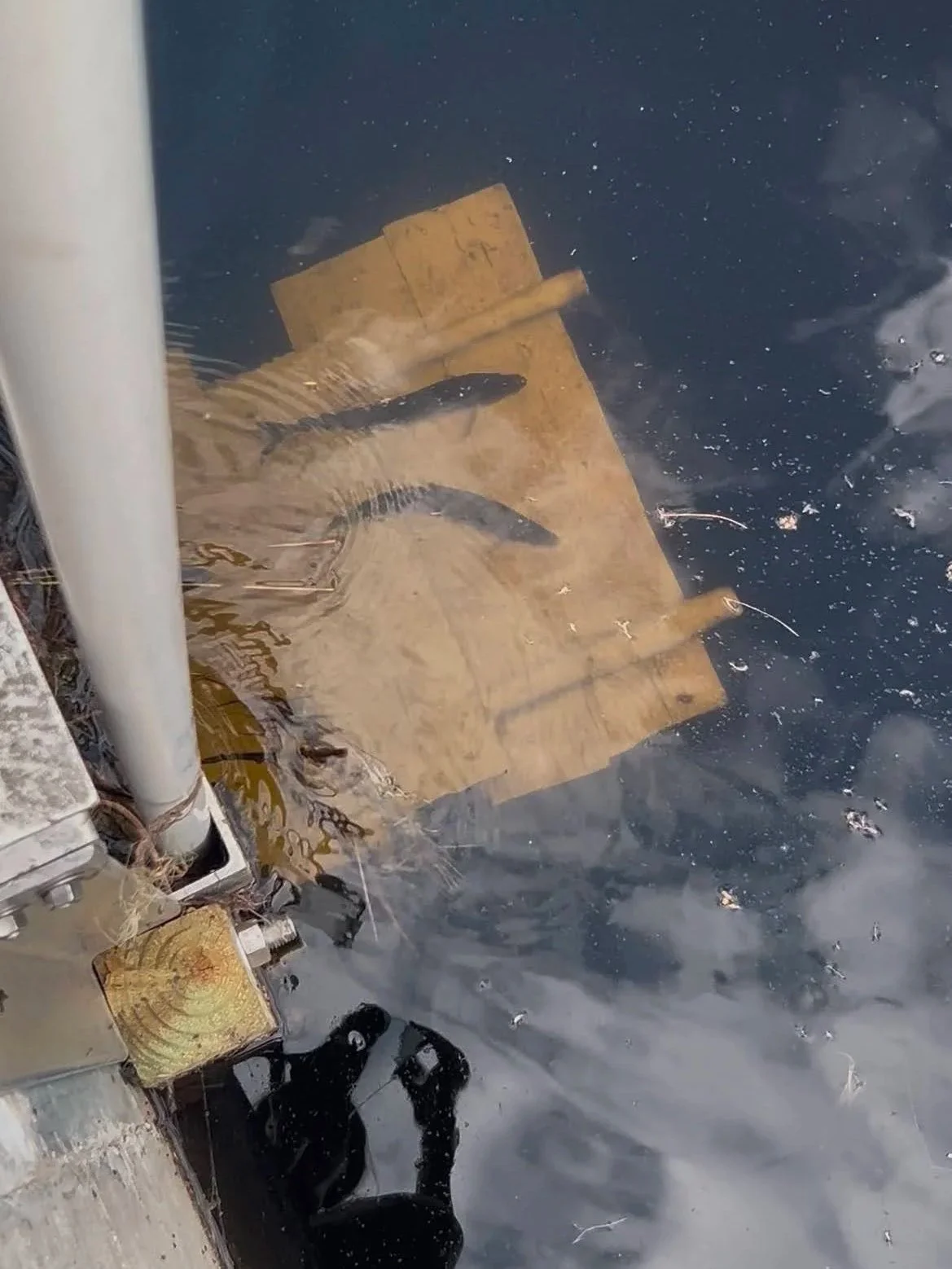
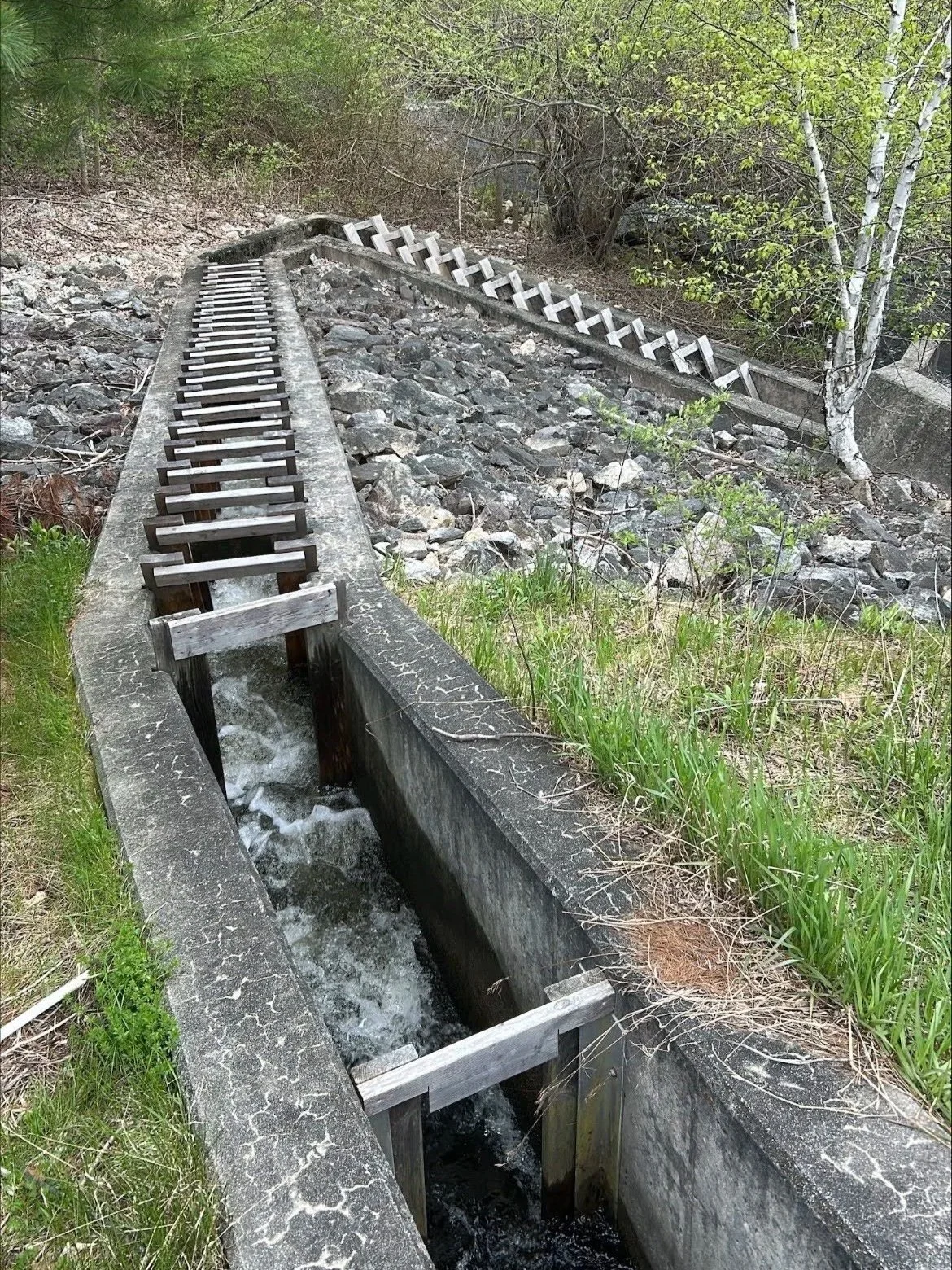
Pictures of the alewife entering the dam, and the fish ladder they use to swim upstream from Mill Brook into Highland Lake.
Monday afternoon also meant a pretty big day for our water quality program! While I was at the dam, Toby, our program manager and my supervisor, and Abigail, our Maine Conservation Corps steward, worked hard to get our Onset HOBO MX801 Series Water Data Loggers ready to deploy into the Presumpscot River Watershed (you can read all about the loggers and how they’re helping us monitor the river in this recent blog post).
We attached the meters to a line with a buoy and anchor, and Abigail and I spent the afternoon installing them at the 10 sites by kayak or wading. At each site, we marked the location and site ID, as well as the logger ID, before calibrating them using Onset’s phone app. We also ensured that the buoys displayed our contact information for anyone who may see them.
PRLT staff come out regularly to these sites to check on the meters and download the data, so if you see them, please leave the buoys alone! They are collecting valuable data. Feel free to contact us if you have any questions or concerns about our loggers and their placement in the river.
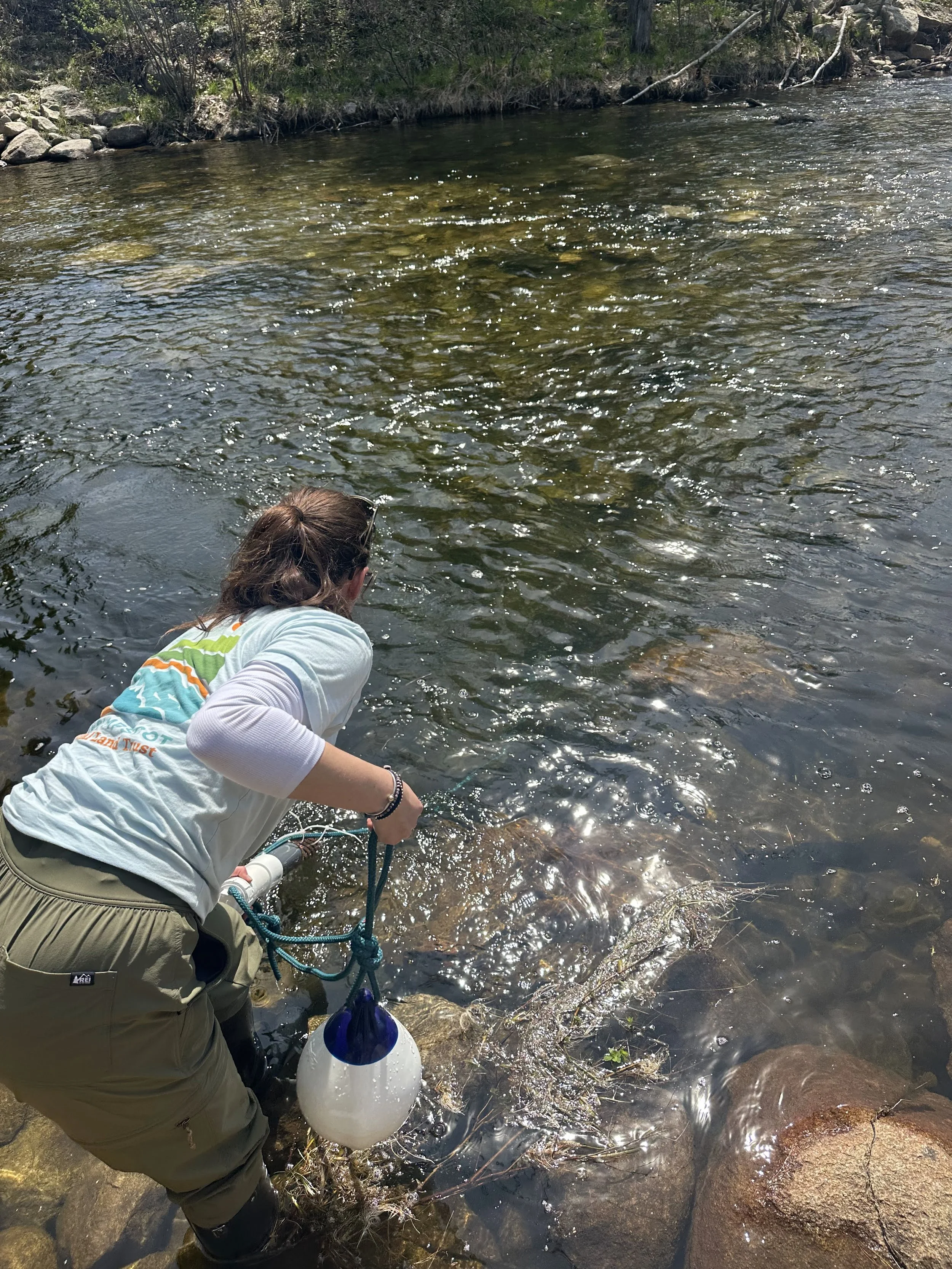
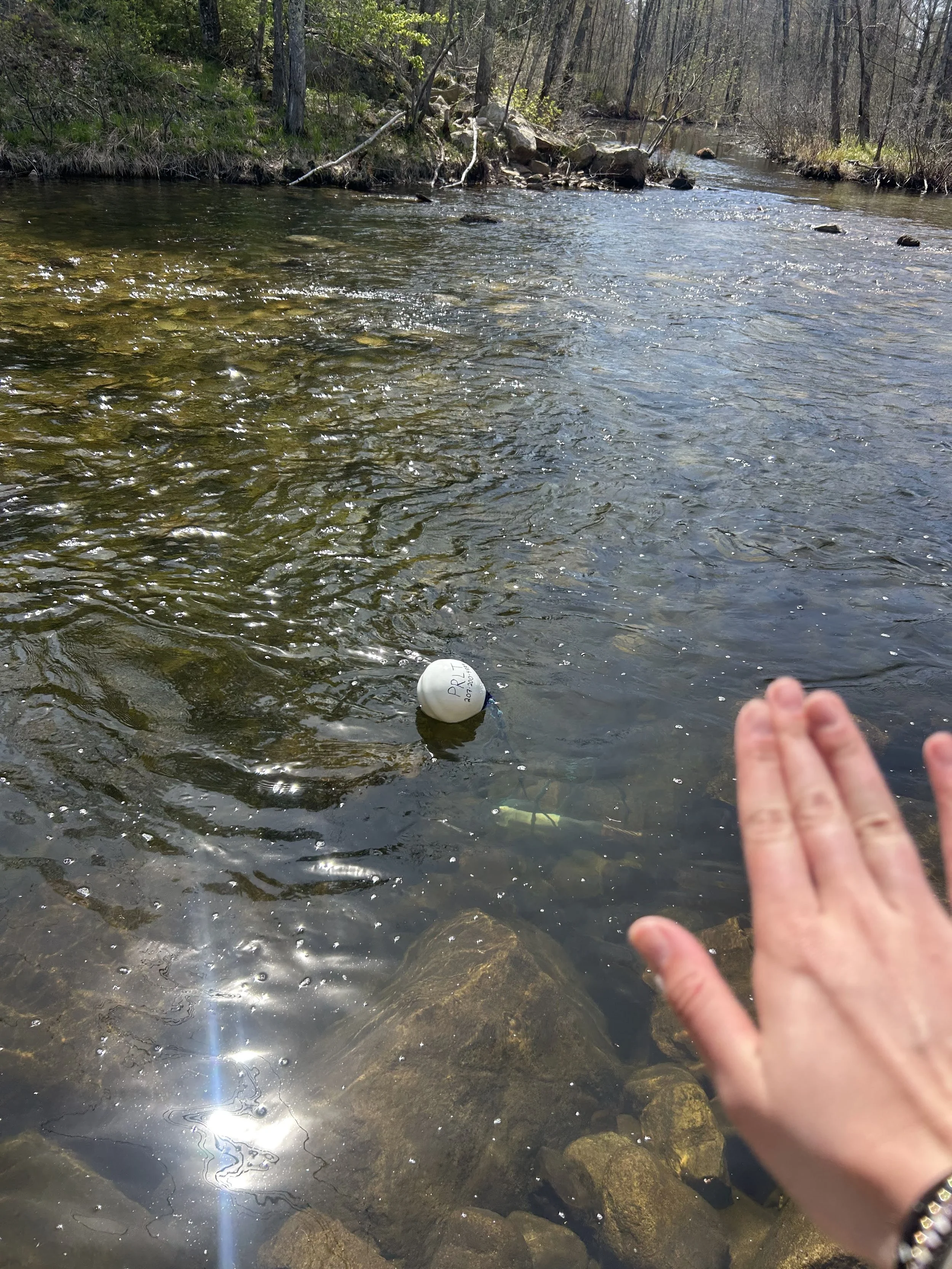
Wading into the river to deploy a logger; me waving goodbye until I come back soon to check on the meter and download the data it has collected.
Tuesday
Every Tuesday morning, PRLT holds our weekly staff meeting to review our work from the previous week and discuss our plans for the week to come. During the meeting, I shared updates on the volunteer fish counts, our logger deployment, and upcoming events.
In the afternoon, Abigail and I continued to deploy the continuous loggers by kayak along two sites on the Presumpscot River in downtown Westbrook.
Before finishing a busy (and very warm!) Tuesday, I stopped by the dam again to check on the alewife (I’m fully obsessed now) and to collect data sheets from the fish count volunteers.
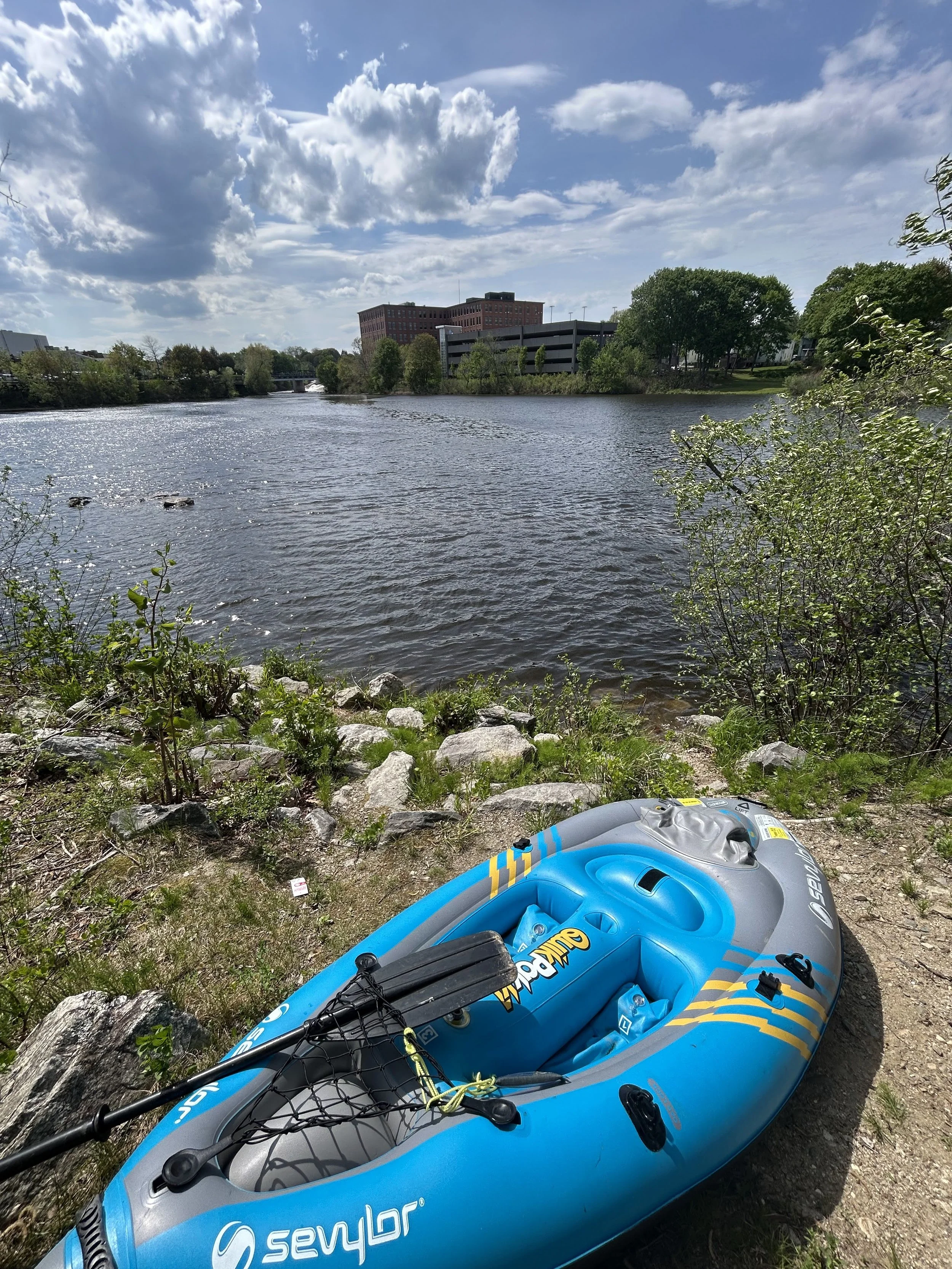
Sunny and 80ºF! Beautiful day for a (inflatable) kayak trip along the Presumpscot River in downtown Westbrook!
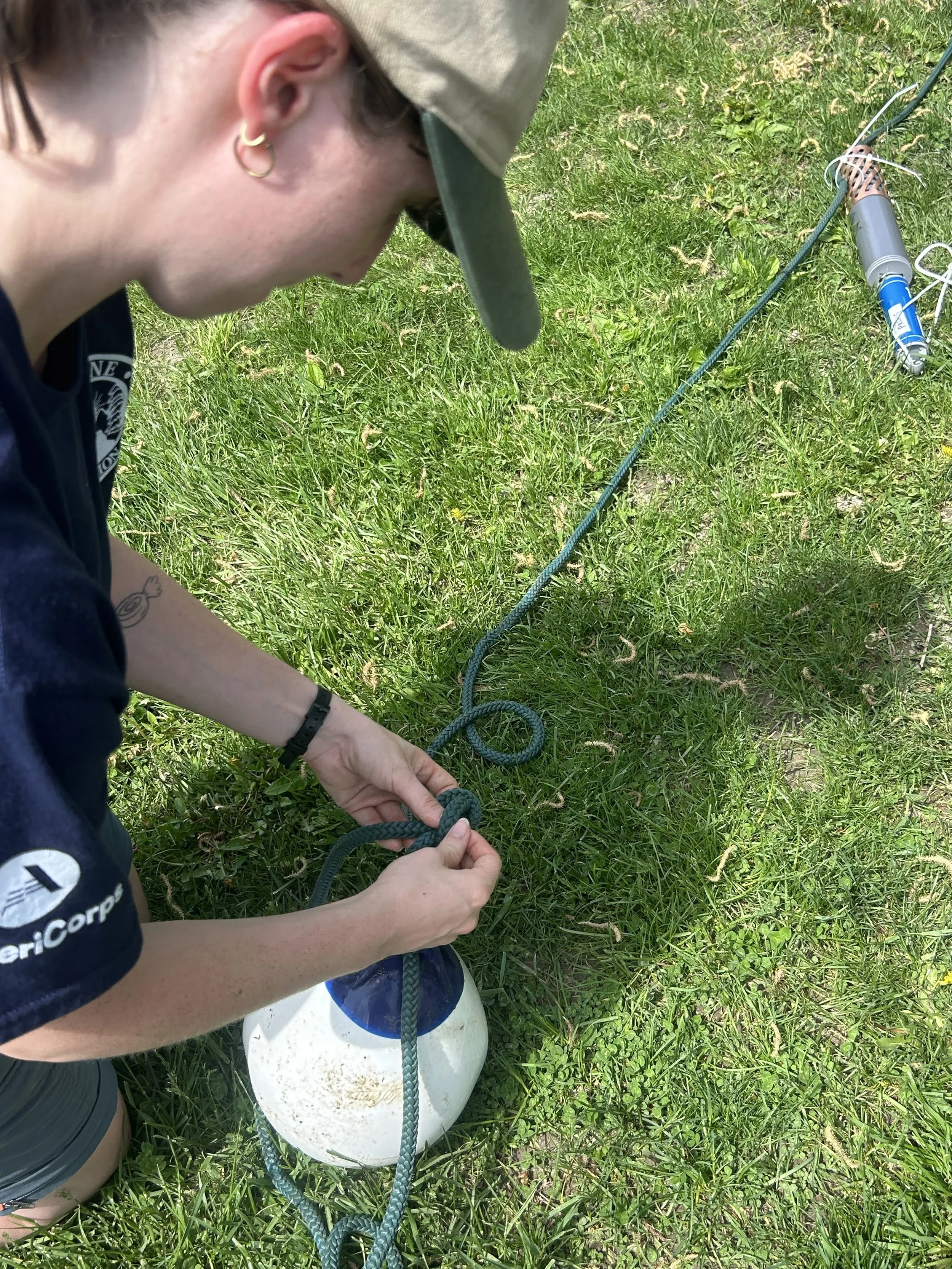
Abigail is giving me a quick knot-tying demonstration on our buoy (note to self: being a rock climber helps with getting really good at knots!)
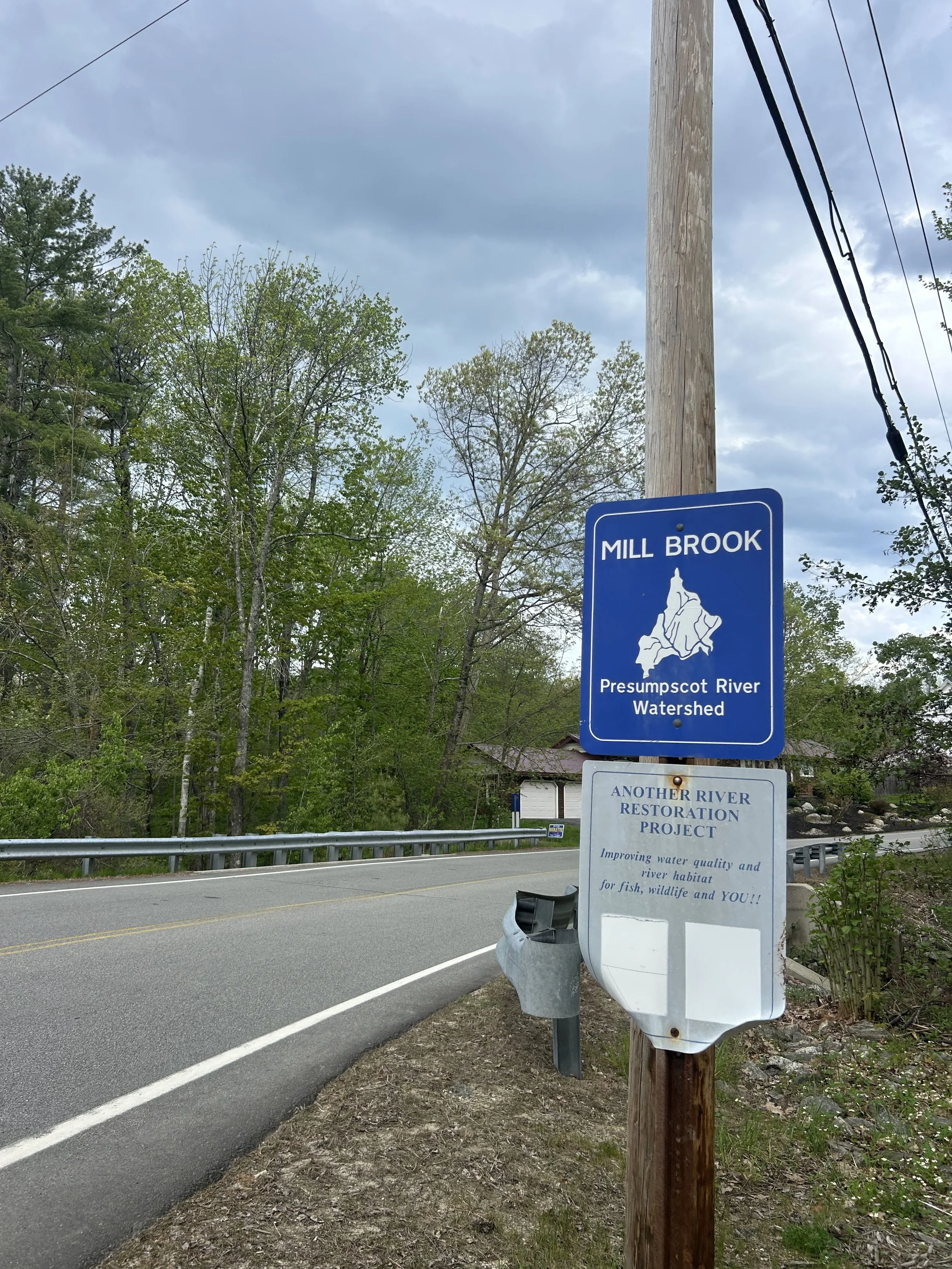
Signage near the dam indicating Mill Brook, the Presumpscot River Watershed, and the importance of river restoration for water quality and habitat for fish, wildlife, and you!
Wednesday
I spent Wednesday morning staying cool in the office while I emailed reminders to our fish count and water steward volunteers for their upcoming sessions. Our water steward volunteers go out to sites across the Presumpscot River watershed every two weeks to collect samples and data on water quality, while our fish count volunteers sign up for any open session during the alewife migration to count the fish at the dam.
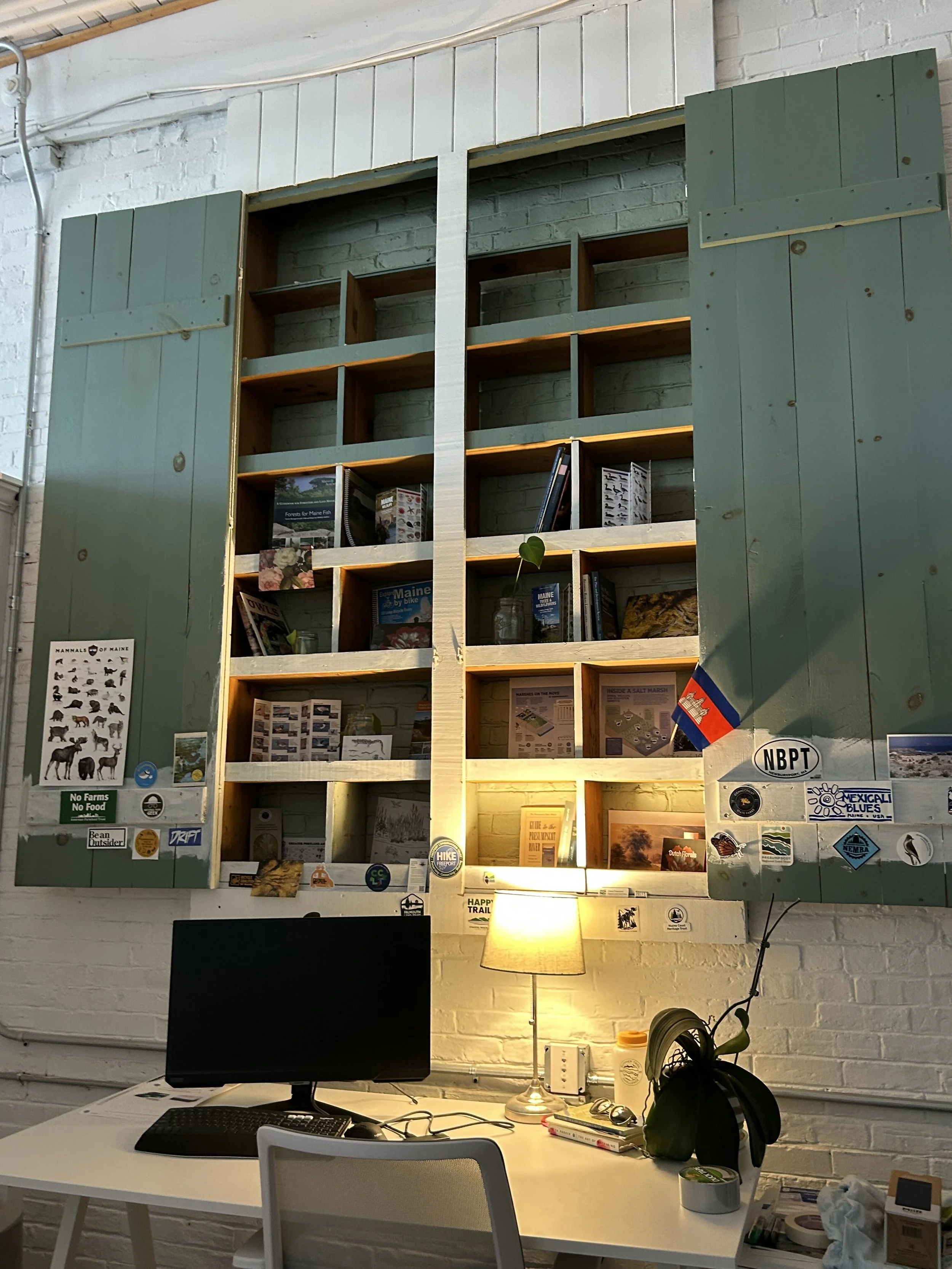
My desk at the PRLT office! We moved into a new office space in February, and I’ve been slowly filling the shelves and decorating the desk with things I collect from events and programs I attend!
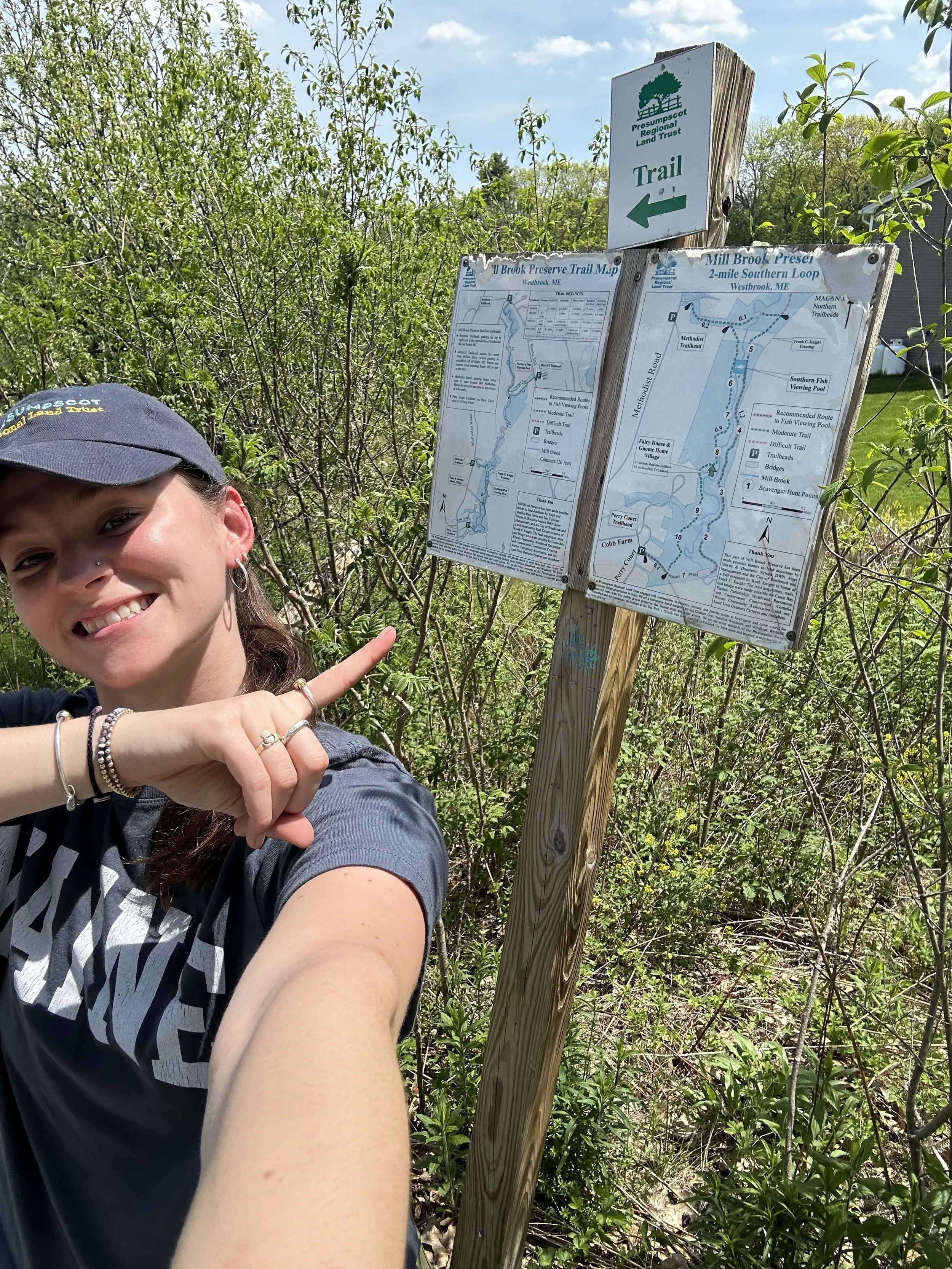
Me at one of the trailheads at Mill Brook Preserve!
In the afternoon, I met with staff from the Gulf of Maine Research Institute's Fisheries Ecology Lab to visit the alewife at Mill Brook Preserve in the southern viewing pool. GMRI staff including Samantha Bengs and Aaron Whitman have been training me on alewife ecology and their migration patterns so that I can lead public guided walks. As part of this training, they have also let me accompany them on monitoring site visits, which has helped me learn more about their scientific research on the alewife. I’ve been able to assist the staff as they collect water samples for testing eDNA, which aids in understanding the species and their abundance in Mill Brook at this time of year.
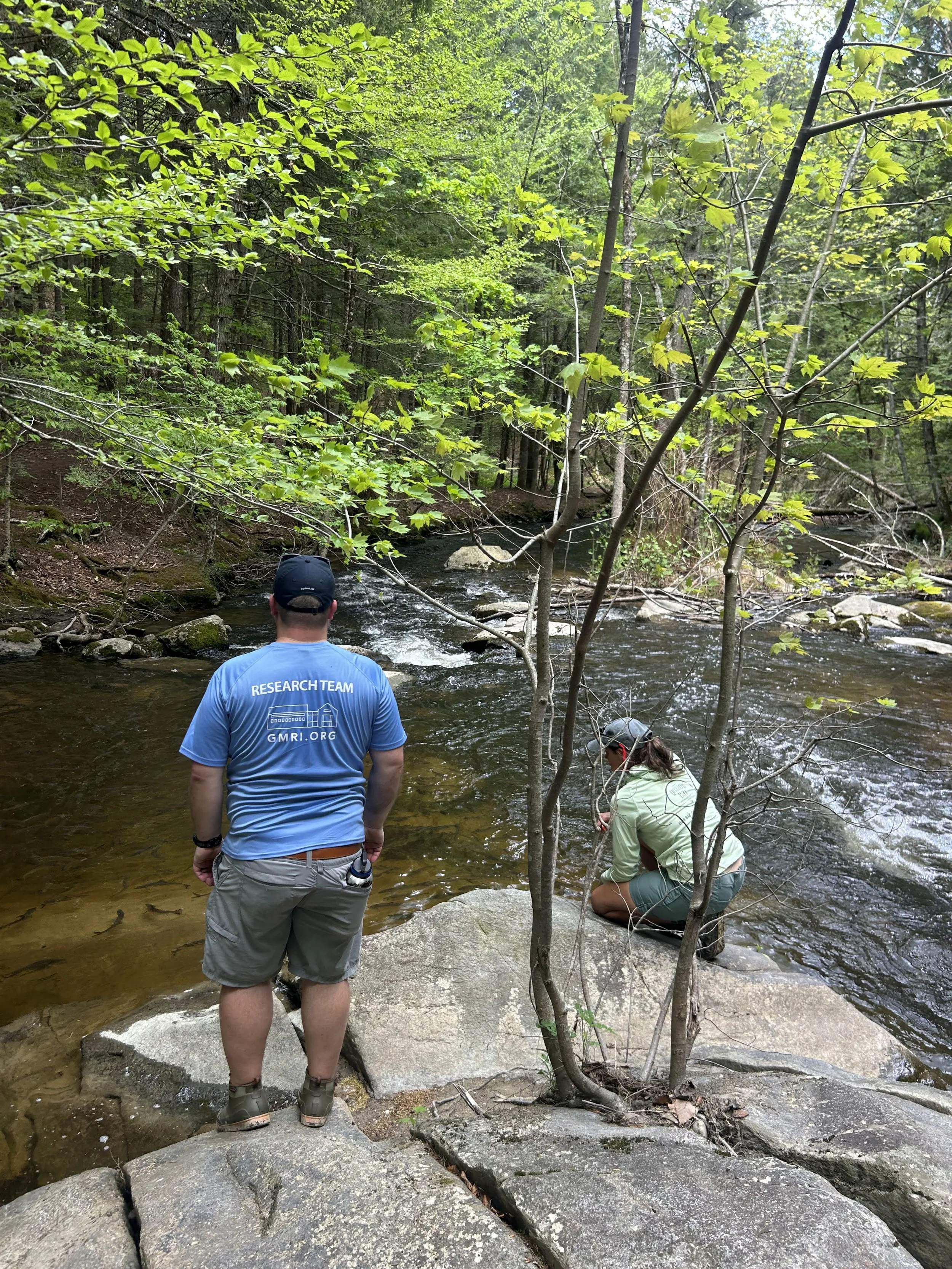
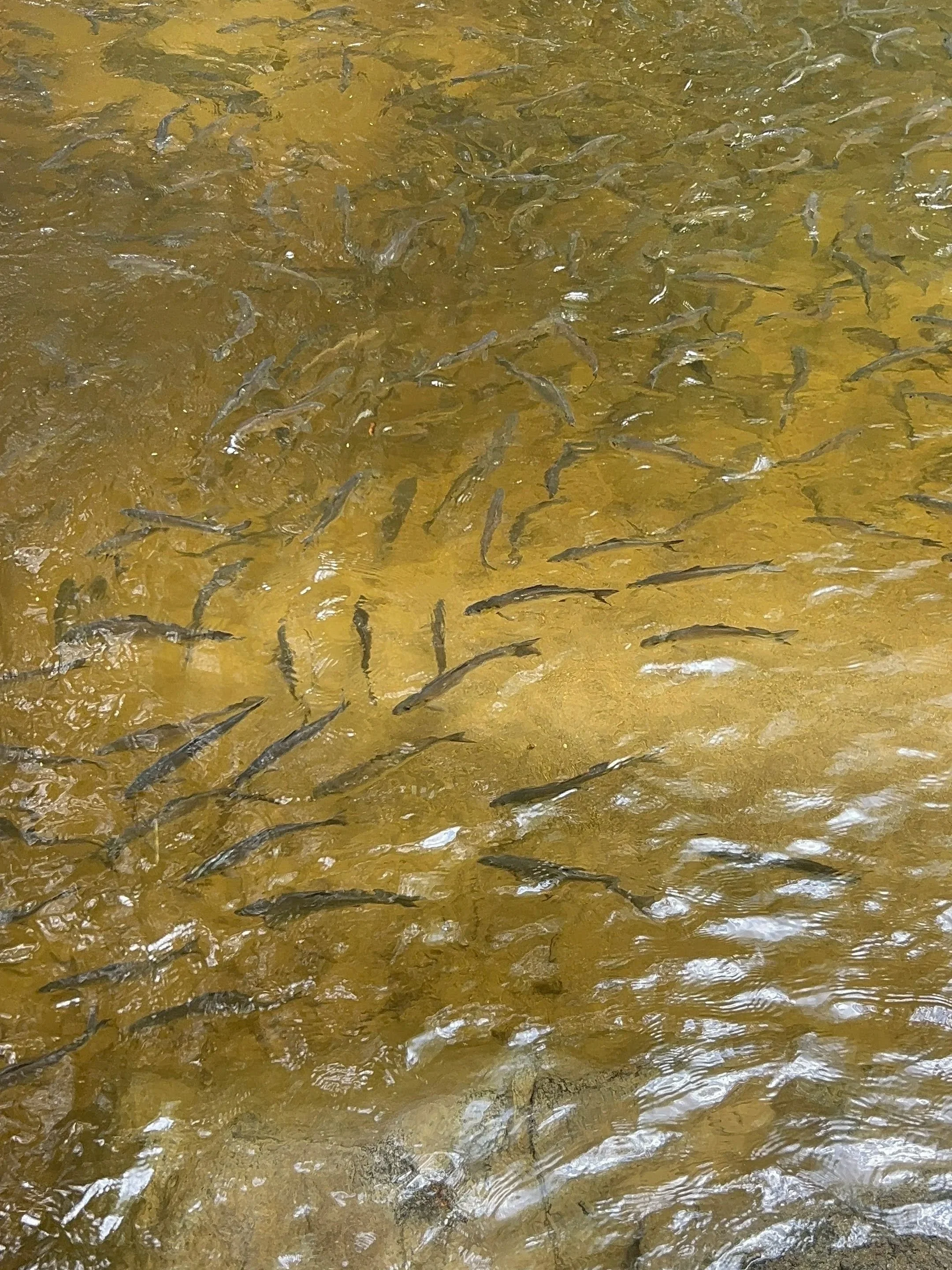
Viewing hundreds of alewife at the southern viewing pool with GMRI staff Aaron and Sam after we collected a water sample.
Thursday
Through the Resilience Corps program, each month the fellows come together for a Day of Service, volunteering with local organizations to help our community and represent GPCOG and AmeriCorps. This month, we had the opportunity to volunteer with Maine Needs.
As volunteers, we helped fulfil orders for clients by boxing up donated materials they requested. We also helped sort through the donated items brought in that morning and organized them in their designated spots. At the end of the service day, we reflected on the impact of the work, especially knowing our contributions helped families access essential items, which created a strong sense of purpose. It was rewarding to work alongside many other volunteers with Maine Needs, sharing the challenges and joys of making a difference together.
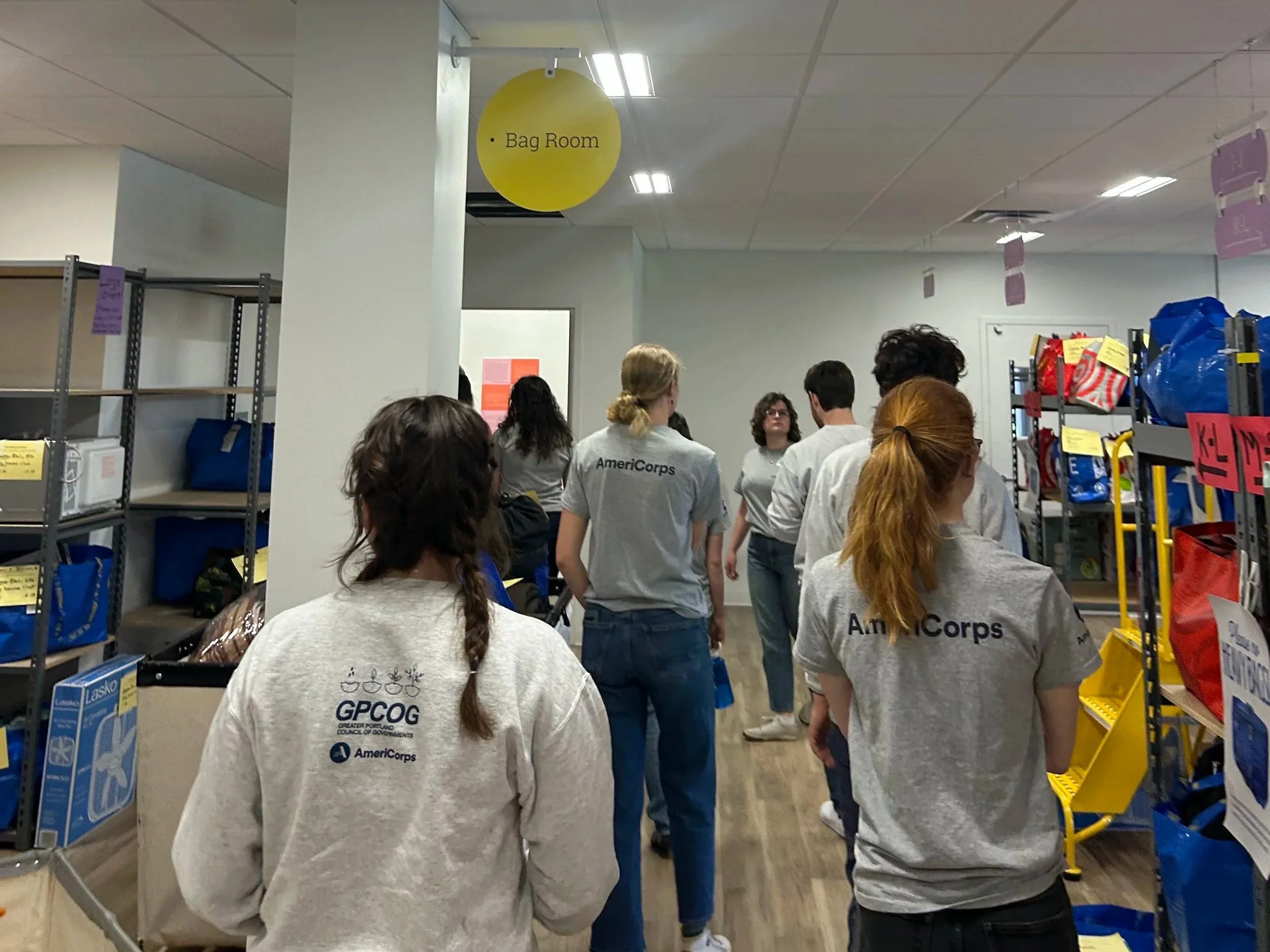
Getting a tour of the “Bag Room” in Maine Needs where completed bags of selected donated items are placed aside for clients to pick up later.
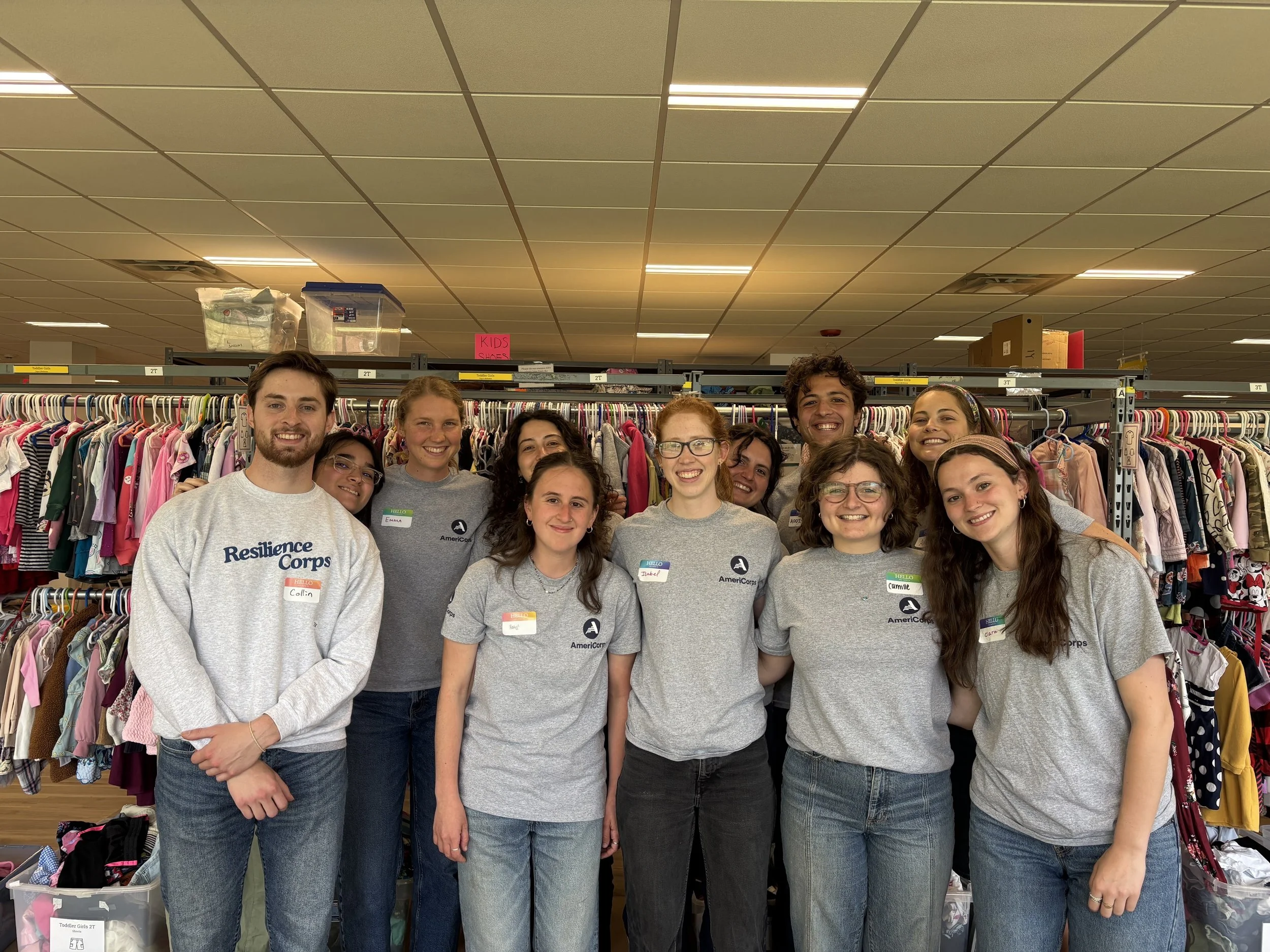
Me and the other Resilience Corps fellows at Maine Needs after our service day! We are standing in front of the rows of donated baby and children’s clothes, some of which we selected and sorted through for orders.
Friday
There’s no better way to start your day than with the birds! On Friday morning, I staffed a birding event at East Windham Conservation Area, led by Nick Lund (a.k.a. The Birdist) from Maine Audubon. Nick guided us through a wonderful morning of birding, sharing information about both migratory and resident bird species in the area, as well as their behaviors at this early time of the day. We had some great "looks" (as Nick referred to them) when the birds came into view close enough for us to clearly observe their characteristics and behaviors. It was an enjoyable morning for birders of all experience levels, and it helped me expand my new eBird life list!
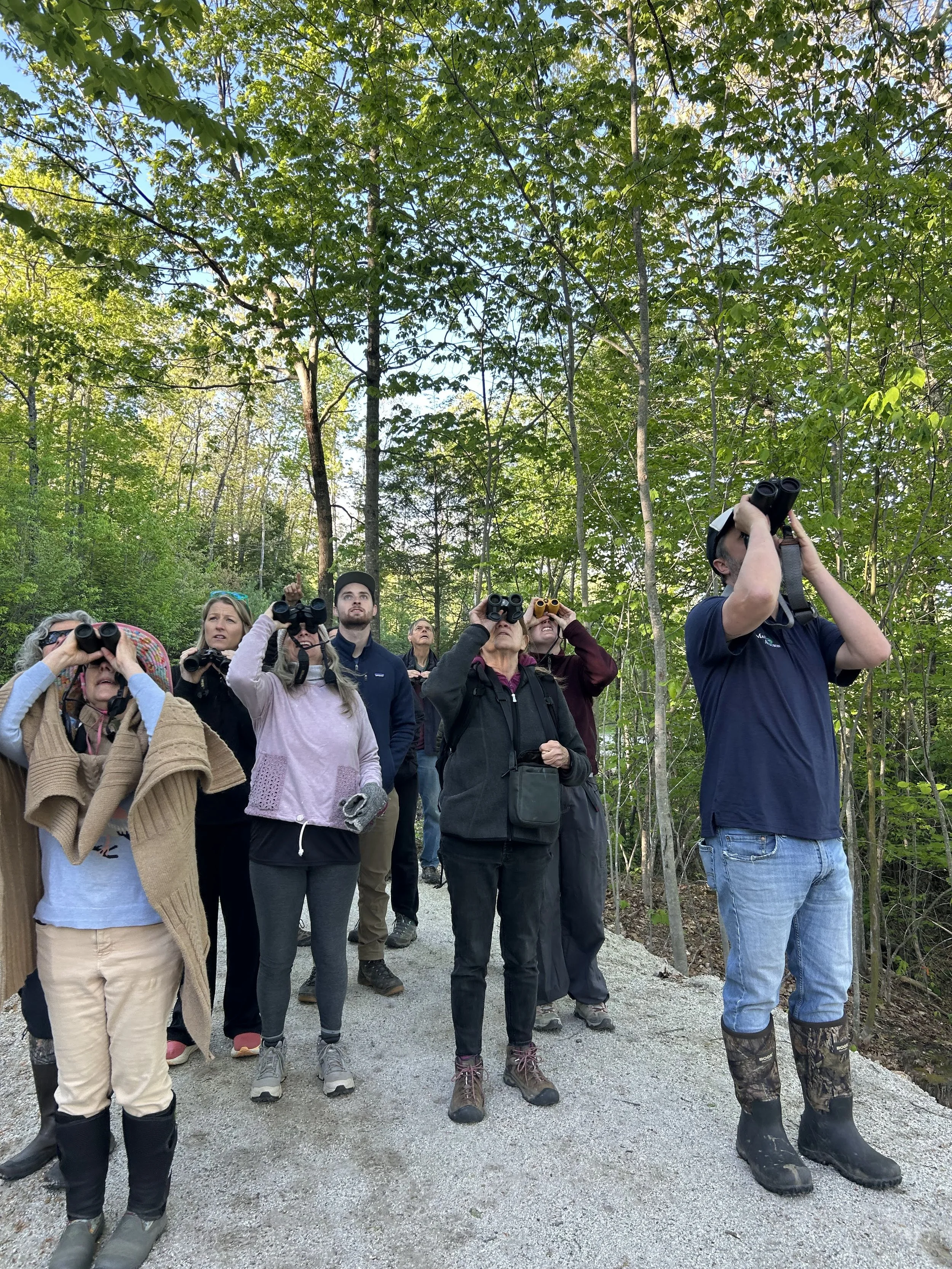
Nick Lund and our event attendees look at a warbler in the distance through binoculars.
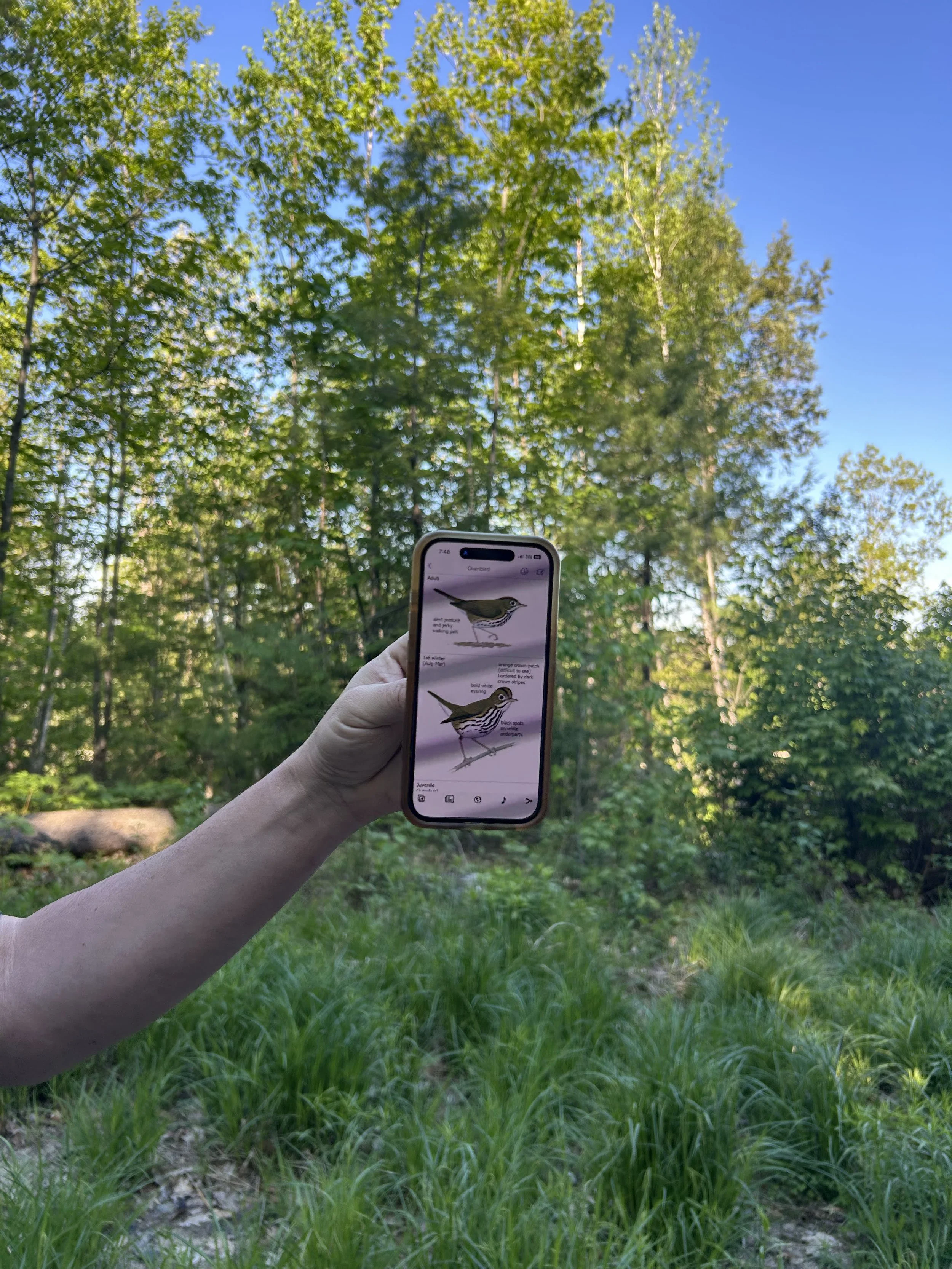
Nick shared helpful field guide illustrations of the birds, like the ovenbird shown here!
In the afternoon, I took a quick trip down to the southern viewing pool at Mill Brook Preserve to check on the fish before my first public alewife walk tomorrow! There were thousands of fish in the pool, and I saw even more swimming upstream on my way over. It’s an incredible experience, and I’m so glad I’ll be there so often to see it up close!
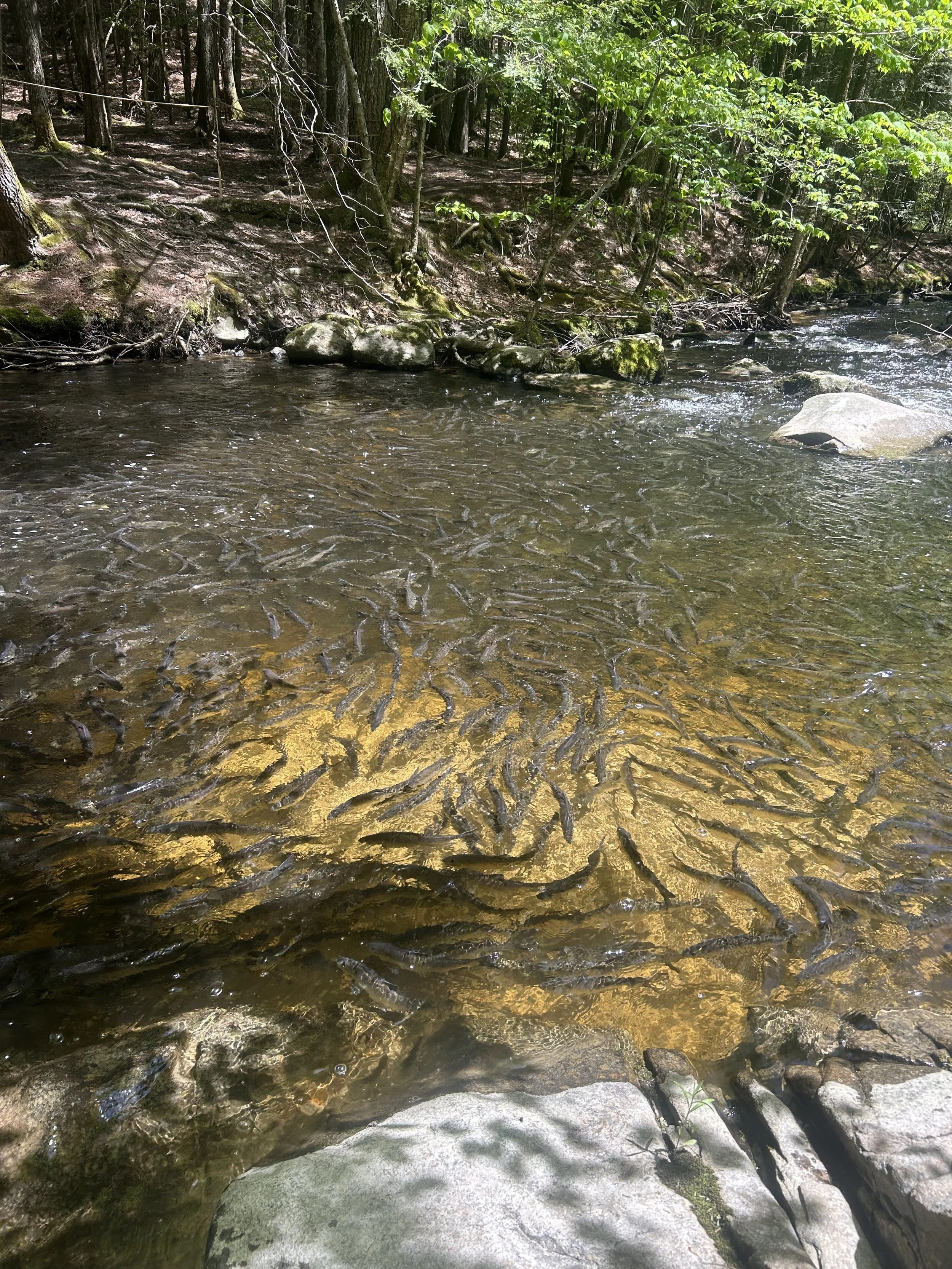
Thousands of fish in the southern pool on Friday afternoon!
SATURDAY
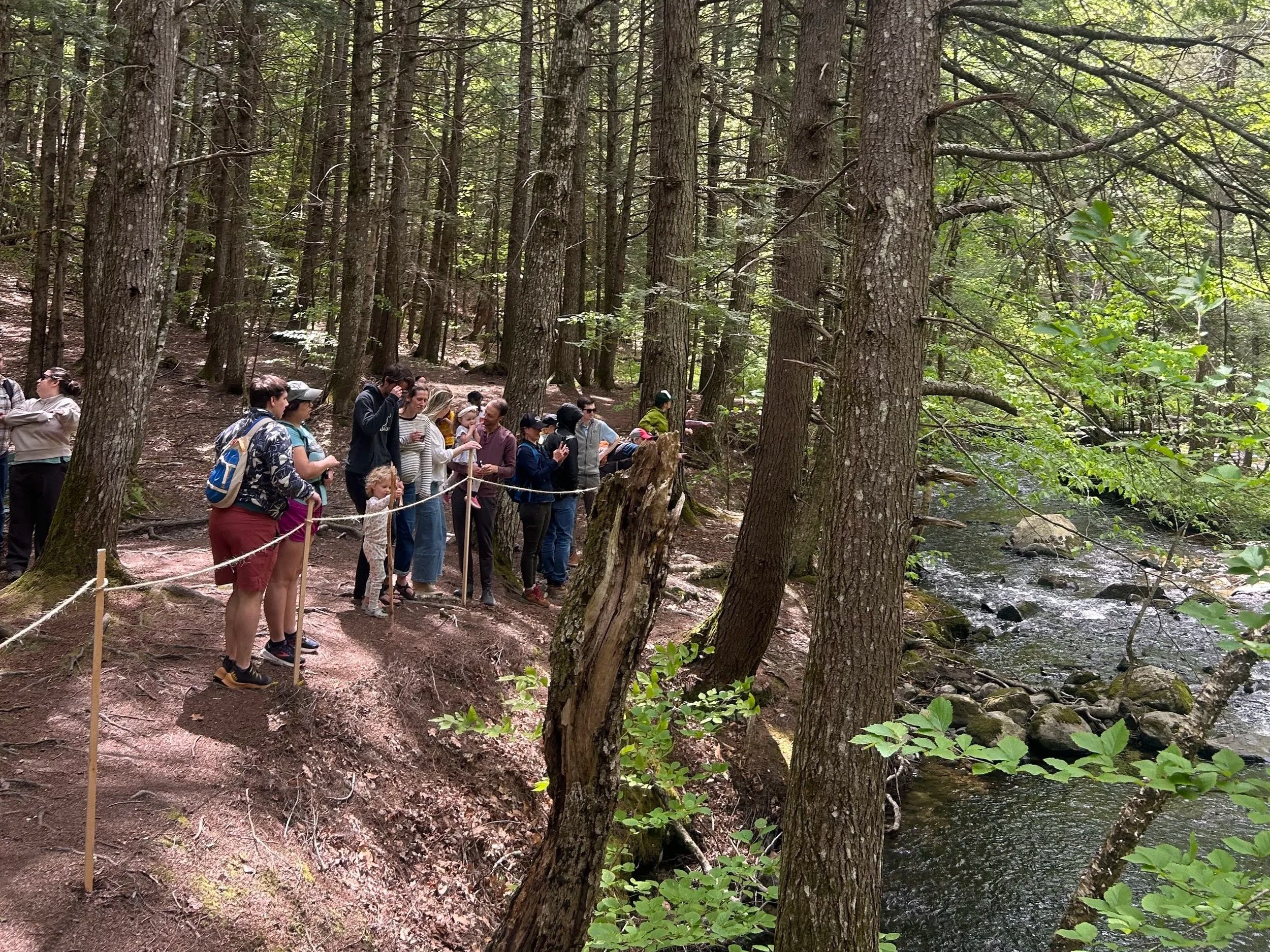
Attendees of our alewife migration walk gather at the southern viewing pool to see the fish and chat with me about their incredible migration.
Saturday was World Fish Migration Day! A perfect day to kick off my first public alewife walk in the morning at Mill Brook Preserve, along with joining our partners from Friends of the Presumpscot River, Portland Trails, Discover Downtown Westbrook, and Trout Unlimited for a migration celebration in downtown Westbrook.
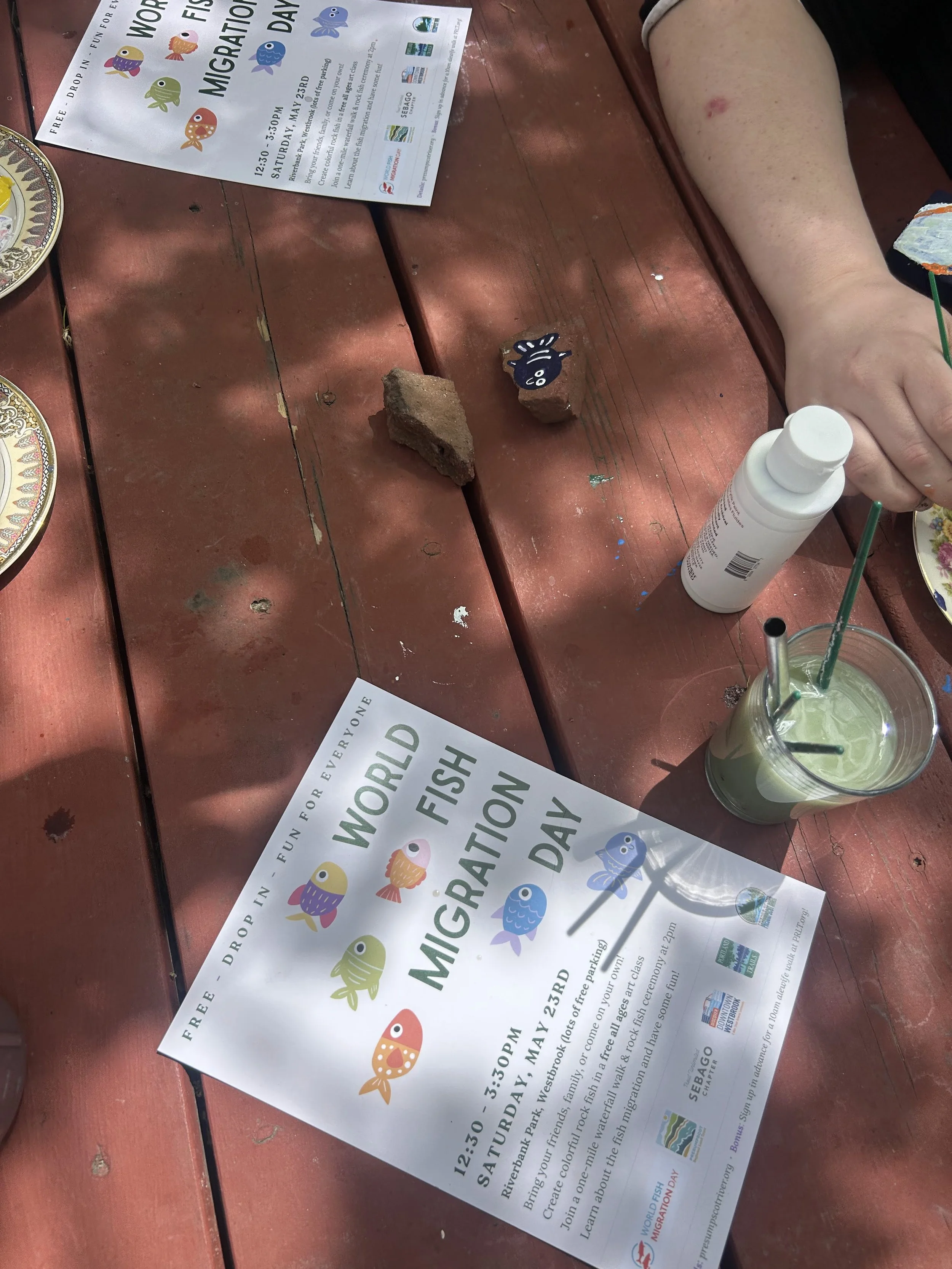
Painting shards of old bricks from the dam that was removed from Sacarappa Falls. We then “migrated” up the river from Riverbank Park to Sacarappa Park to chat more about migratory fish and river restoration.
It was a busy and full day all about the alewife, and not only was I able to share what I had learned throughout my research and hikes, but I also learned from community members who have seen fish migration and river restoration efforts change in their lifetimes.
As a new resident of Portland, I’ve learned so much about the local dedication to and interest in conservation and stewardship efforts in the area. I’ve met passionate volunteers, neighbors, and leaders who show up every day for their communities and are eager to learn more and find new ways to help protect their local environments. After a busy Saturday, I drove back to my hometown in Connecticut to visit my family for a couple of days. On the ride home, I reflected on this week and felt grateful for the opportunity I have through Resilience Corps and working with PRLT to be part of larger community conversations on conservation and stewardship, just like I dreamed of doing when I was growing up. This week, I had the opportunity to get outside, explore the trails, engage with our communities of all ages, and expand our important stewardship work. I’m hoping for many work weeks like this throughout the rest of my service term with PRLT!