
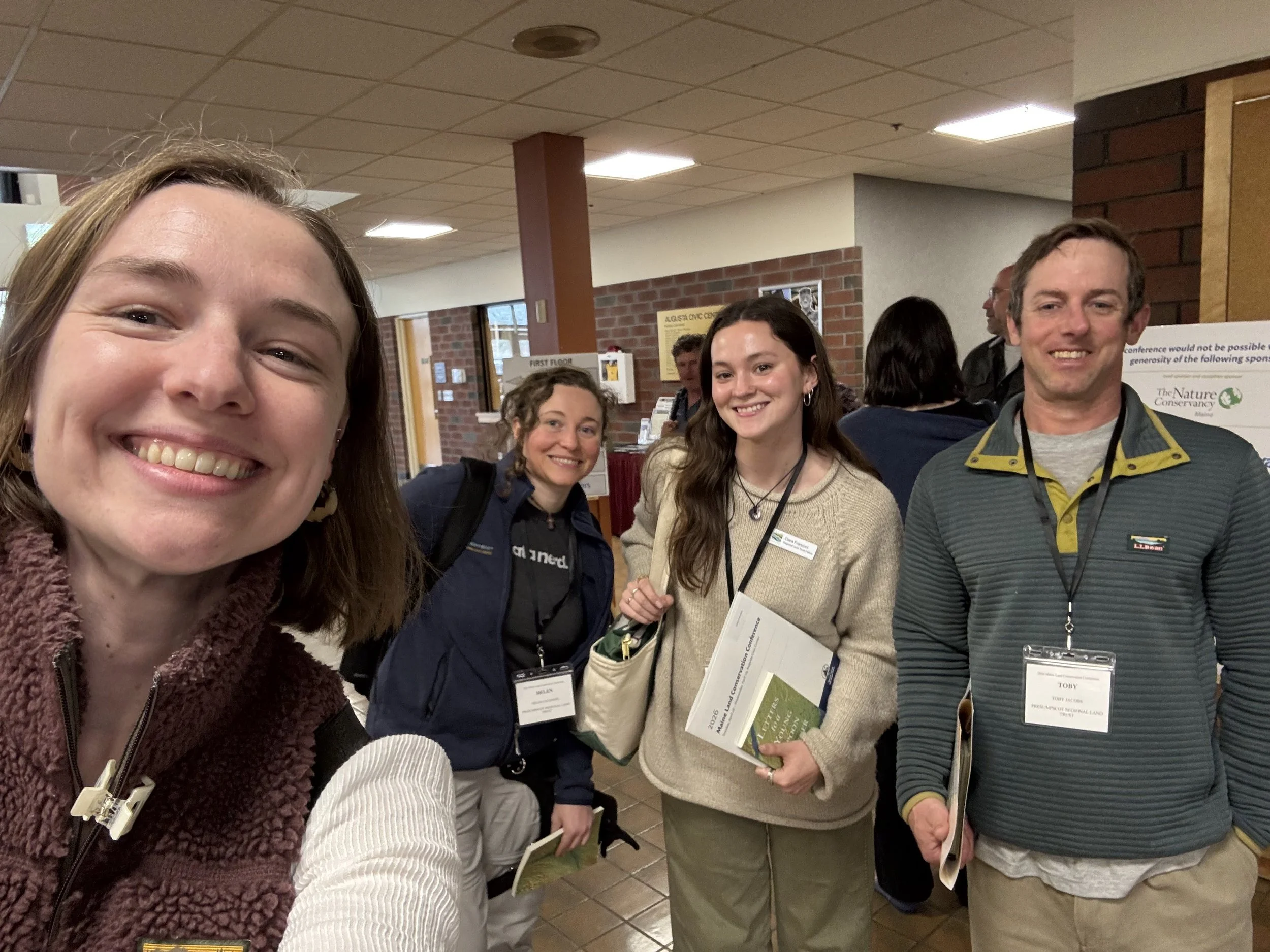
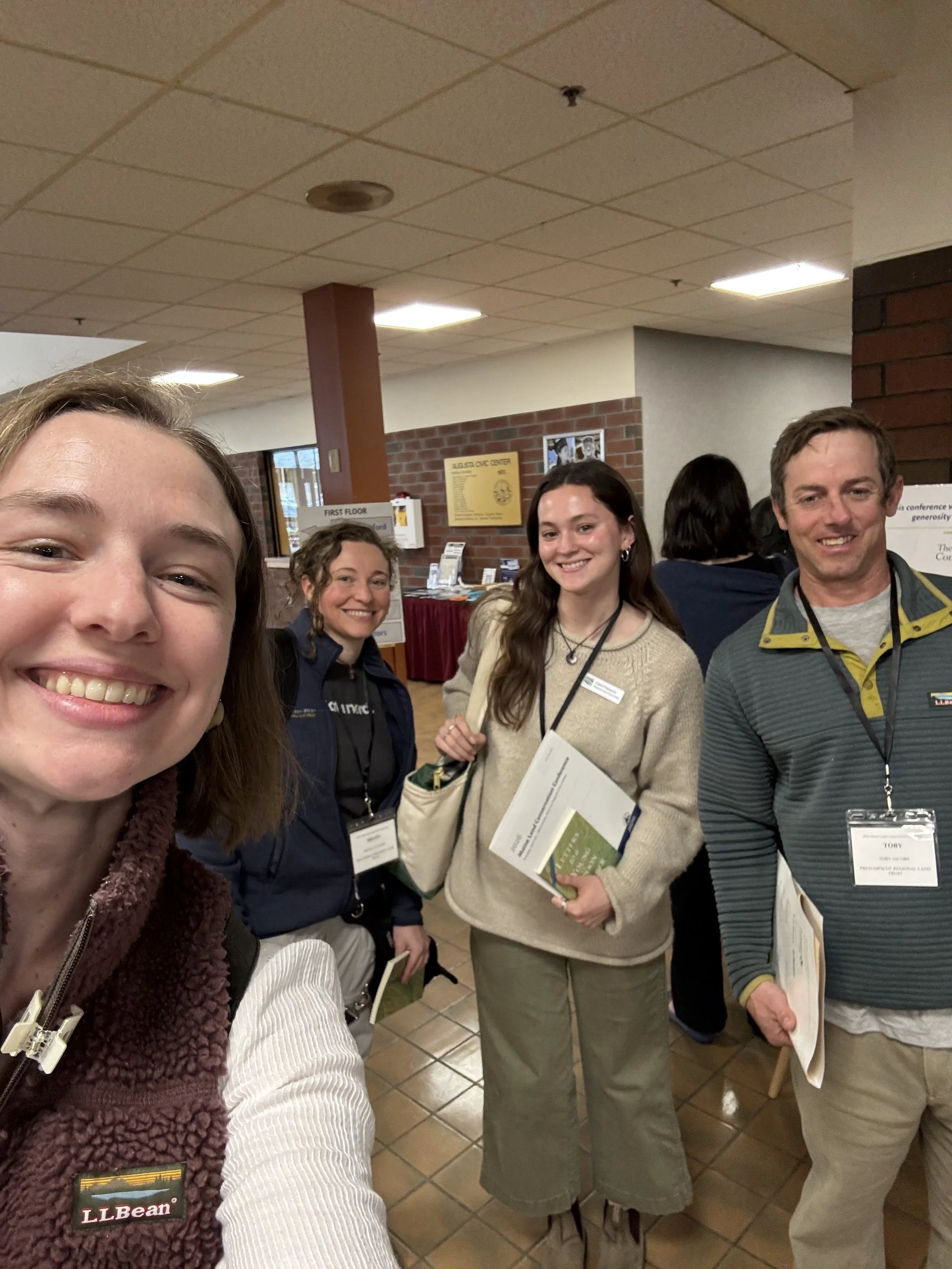
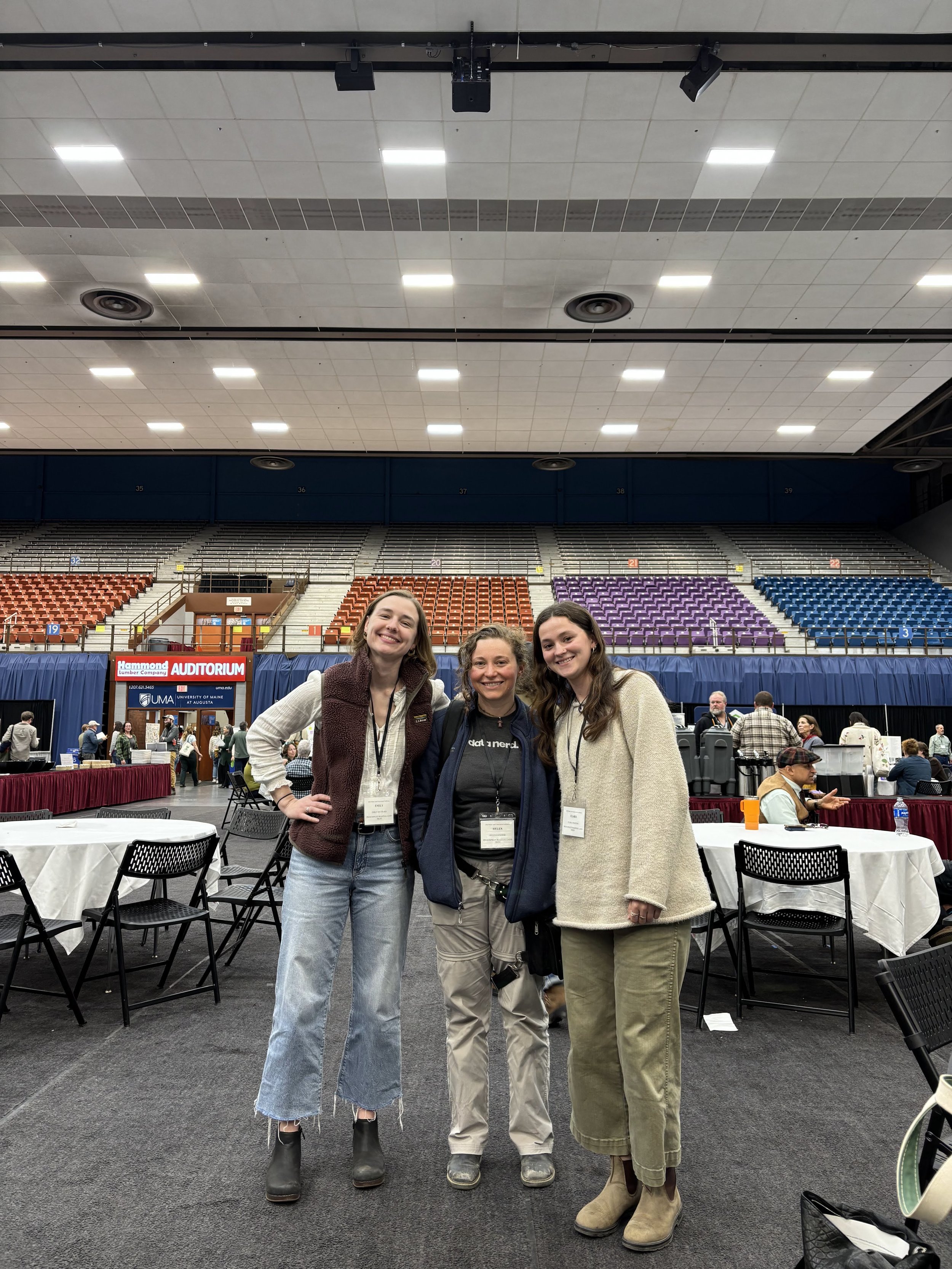
This week, members of our team attended Maine Coast Heritage Trust’s Maine Land Conservation Conference at the Augusta Civic Center. The conference theme this year was “The Evolution of Conservation” and how land trusts here and around the country are changing to meet the needs of local communities. Woven throughout the entire event were themes of relationship-building, moving together through change, and viewing people as the solution to shared problems.
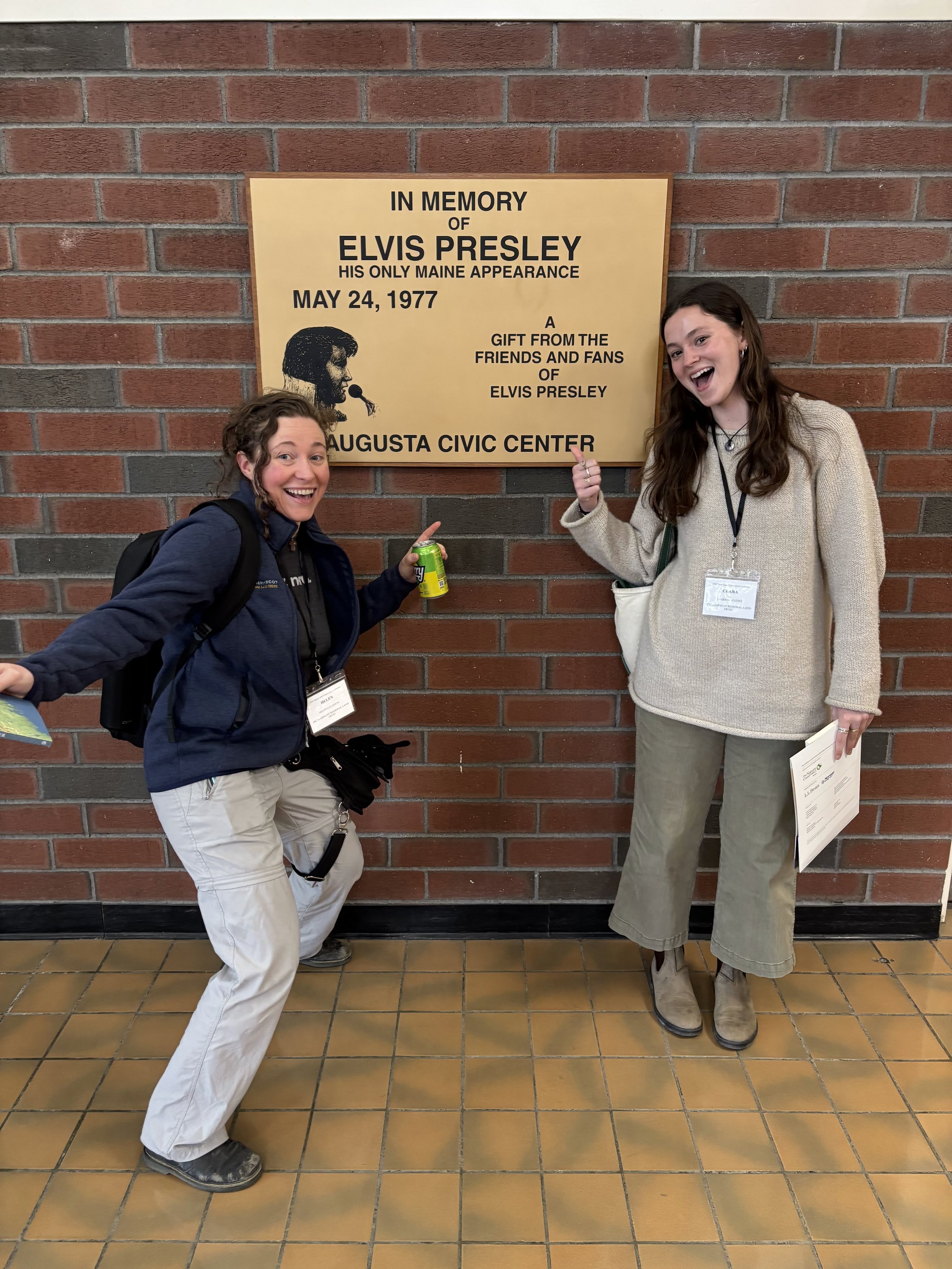
(And of course we saw the Elvis plaque)
Here are a few snapshots of what our staff took away from the workshops, panel discussions, and casual conversations with fellow conference-goers.
Toby, Program Manager:
The annual conference always offers great learning and networking opportunities around land stewardship and conservation, which are the two areas that my work focuses on most.
My morning session focused on digital conservation planning and invasive plant monitoring tools from The Nature Conservancy and Schoodic Institute, respectively. We just completed an update to our Conservation Plan to more efficiently and effectively find new lands projects, and having some of these resources available, such as TNC’s Climate Change Resilience modeling, was invaluable in that process. Hearing about the intricacies and planned updates to these tools helps us refine our own in-house tools and methods.
I also attended a session on invasive plant theory and practical removal strategies. Invasive plants have a major presence at some of our preserves, especially Little River and Rivermeadow, and it is always helpful to hear what others are doing to help guide our own monitoring and control efforts. With increased capacity from multiple seasonal staff this field season, we are eager to implement more targeted and deliberate invasive plant control.
Emily, Marketing and Development Manager:
Since my job focuses on communications and fundraising, I attended the sessions that would help me tell the stories of our land and how to create authentic ways of welcoming people of all backgrounds to our preserves. I’m excited to investigate how we can further formalize and expand our outdoor education opportunities, and how we can use gathering together outside as an antidote to loneliness and social isolation. I also had the pleasure of attending Cathy Kidman’s deep dive into leading through organizational change, a really phenomenal seminar on understanding and managing transitions, whether that be programming, mission, or staff. My big takeaway was a three question framework to guide discussion—What do we keep? What do we stop? What do we create?
Also – I was totally blown away by Karyn Knight Detering (aka Ideas Take Shape): she captured the feedback and conversations throughout the conference and translated them into compelling visual statements. So fascinating!
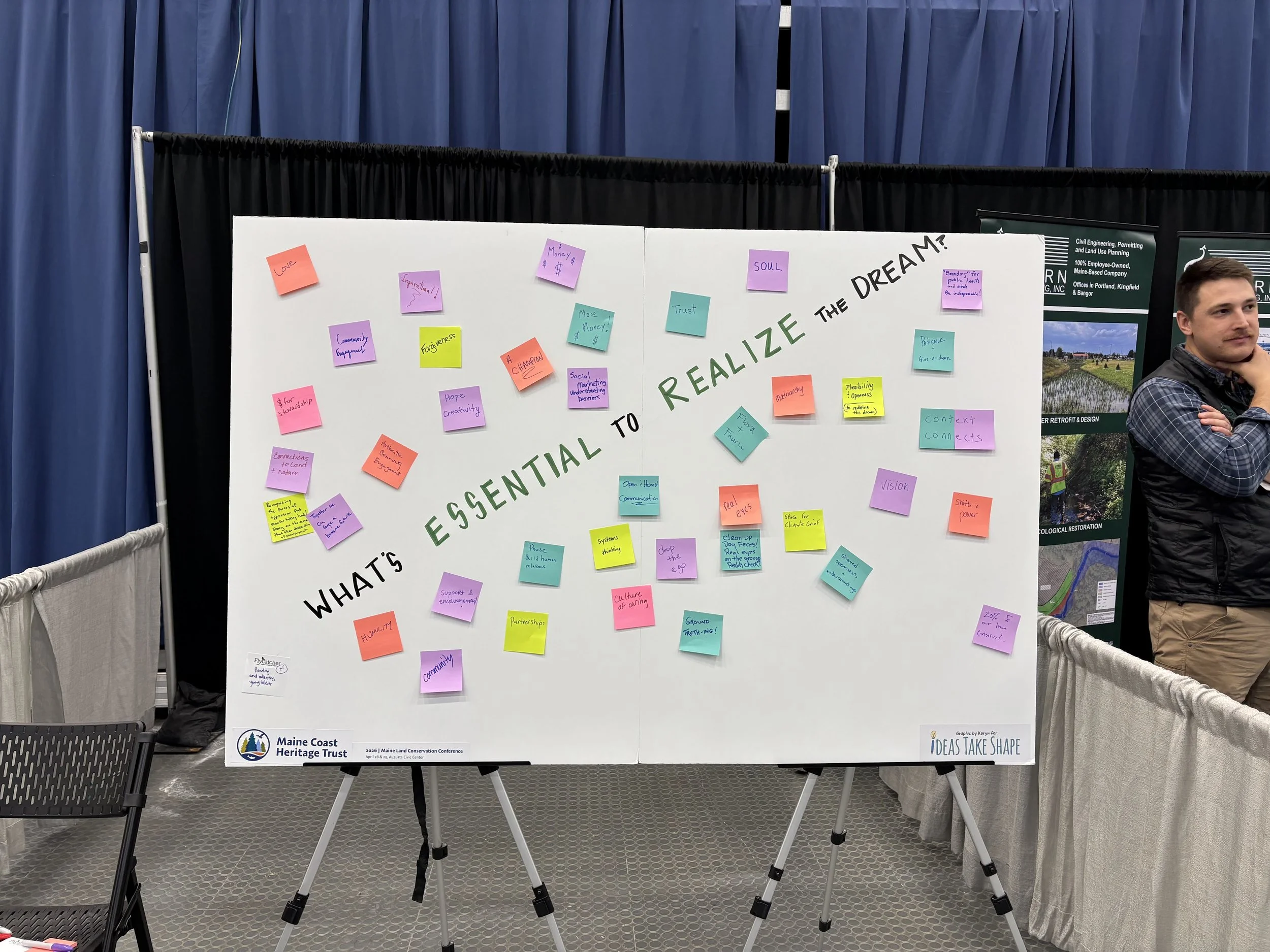
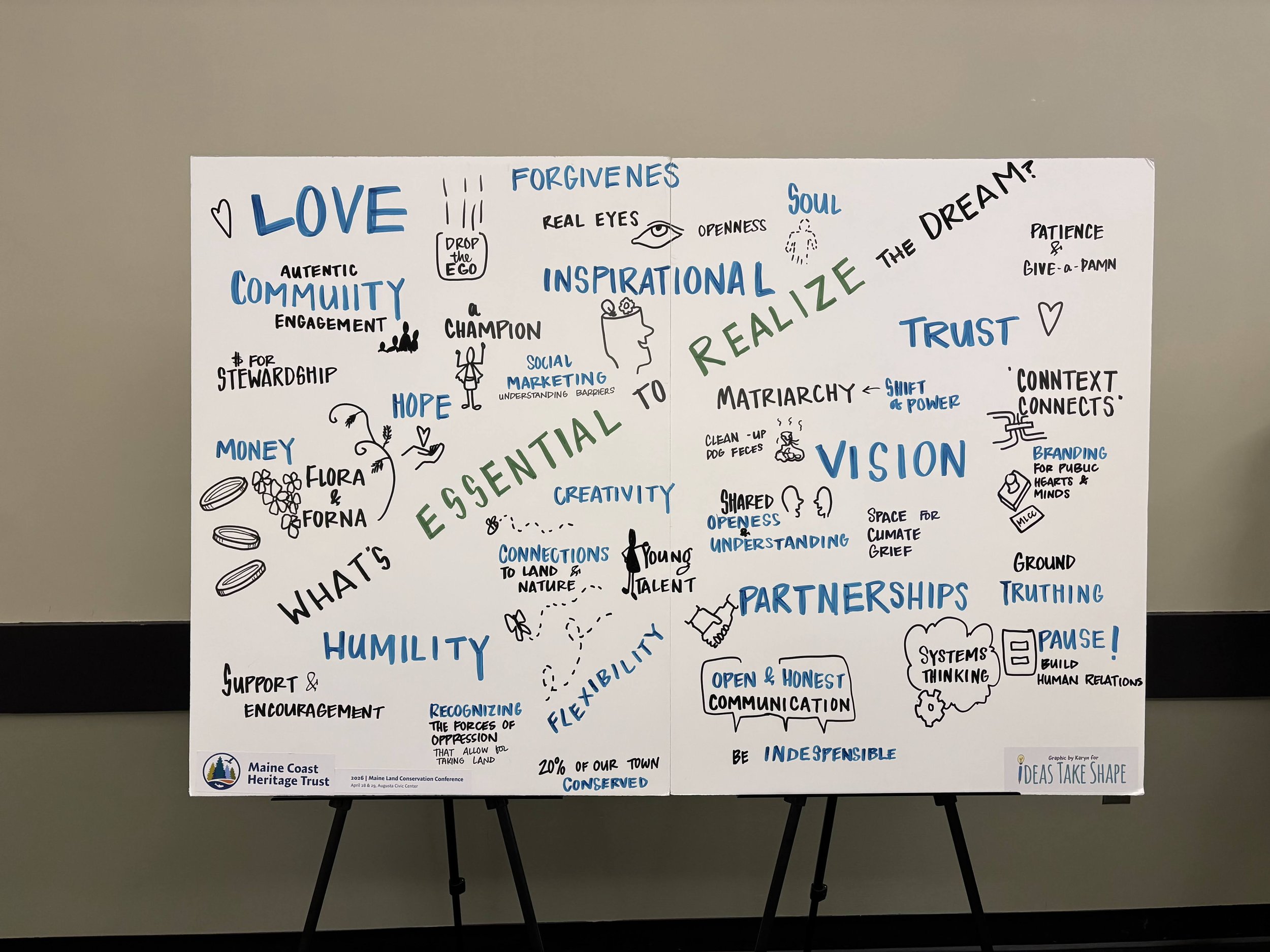
Karyn’s work turning a sticky note community brainstorm into a n illustrated journey
Helen, Development Coordinator:
The sessions I attended were aimed towards fundraising and bridge financing for land acquisition (much more exciting than it sounds). The first focused on navigating what presenter Maribeth Canning aptly called compounding volatility: the way uncertainty doesn't just stack up, it multiplies. The core lesson was that the best defenses are diversification and redundancy. The second flipped that around: rather than just protecting against risk, how do you plan ahead to know which risks are worth taking? The same discipline, it turns out, can both guard against what's outside our control and create room to reach past our limits.
This principle, that resilience and growth are collaborators rather than competitors, also showed up in the panel discussion at the plenary. The takeaway there was relational: rather than positioning ourselves as an organization that serves the community from the outside, be a neighbor. A neighbor shows up, listens, and pitches in where it matters to others, and in return, their neighbors (eventually, mostly) do the same. If we operate as a member of the community, that reciprocity becomes its own form of resilience, and a way to accomplish more in the long run than we ever could alone.
I came home eager to share what I learned, and with many more questions to ask. I am so grateful to PRLT for sending us to absorb and be inspired by the collective efforts of so many remarkable individuals and organizations from across the state.
Clara, Regional Land Trust Fellow (GPCOG/Americorps Resilience Corps):
As a Regional Land Trust Fellow at PRLT, I wanted to absorb different perspectives from the greater land trust universe on community integration and outreach, as well as innovations in conservation of lands for the future. In the discussions and workshops, I learned from case studies showing how conservation efforts, including land acquisitions and stewardship, can be guided by emerging community needs and adaptive problem-solving. At the morning workshop I attended on community forests, led by Trust for the Public Land, I was presented with public engagement strategies to bring community members to the table at every process of conservation: from finding land to designing trails, acquiring land, creating recreational opportunities, and stewardship. In my afternoon workshop on climate adaptation tools, I saw how the American Farmland Trust utilizes adaptation menus to help farmers identify their major concerns and feasible strategies to reduce climate stressors on their crops and lands. Throughout both sessions, I observed a focus on empowering local community members to voice concerns during conservation and adaptive planning, and to oversee solutions that benefit their communities, economies, and well-being. These lessons emphasized how land trusts can be better neighbors by integrating local insights from both inside and outside conservation spaces and maintaining lasting partnerships in perpetuity with their conserved lands. I was able to speak with representatives from various fields, including education, consulting, Indigenous science and practices, agriculture, government, students, writers, and local attendees. Each conversation was fueled by our unique backgrounds and passions, driving discussions towards our dreams and ideas for the future of conservation. I hope throughout the rest of my service year with PRLT, I’m able to meet more of our communities through our volunteer initiatives, events, and out on the preserves, and learn how PRLT can be a better neighbor!
We’re looking forward to bringing these learnings back to PRLT and continuing to be in touch with our broader land trust community to keep thinking about how we can be good neighbors and stewards to the places we care for.