
Building and maintaining trails is one of the most essential ways that PRLT benefits the communities we serve. Though trails may sometimes seem to just “appear” in our preserves, it takes a lot of time, energy, and no small amount of funding to make them safe, interesting, and sustainable. So what does it cost to build a mile of trail?
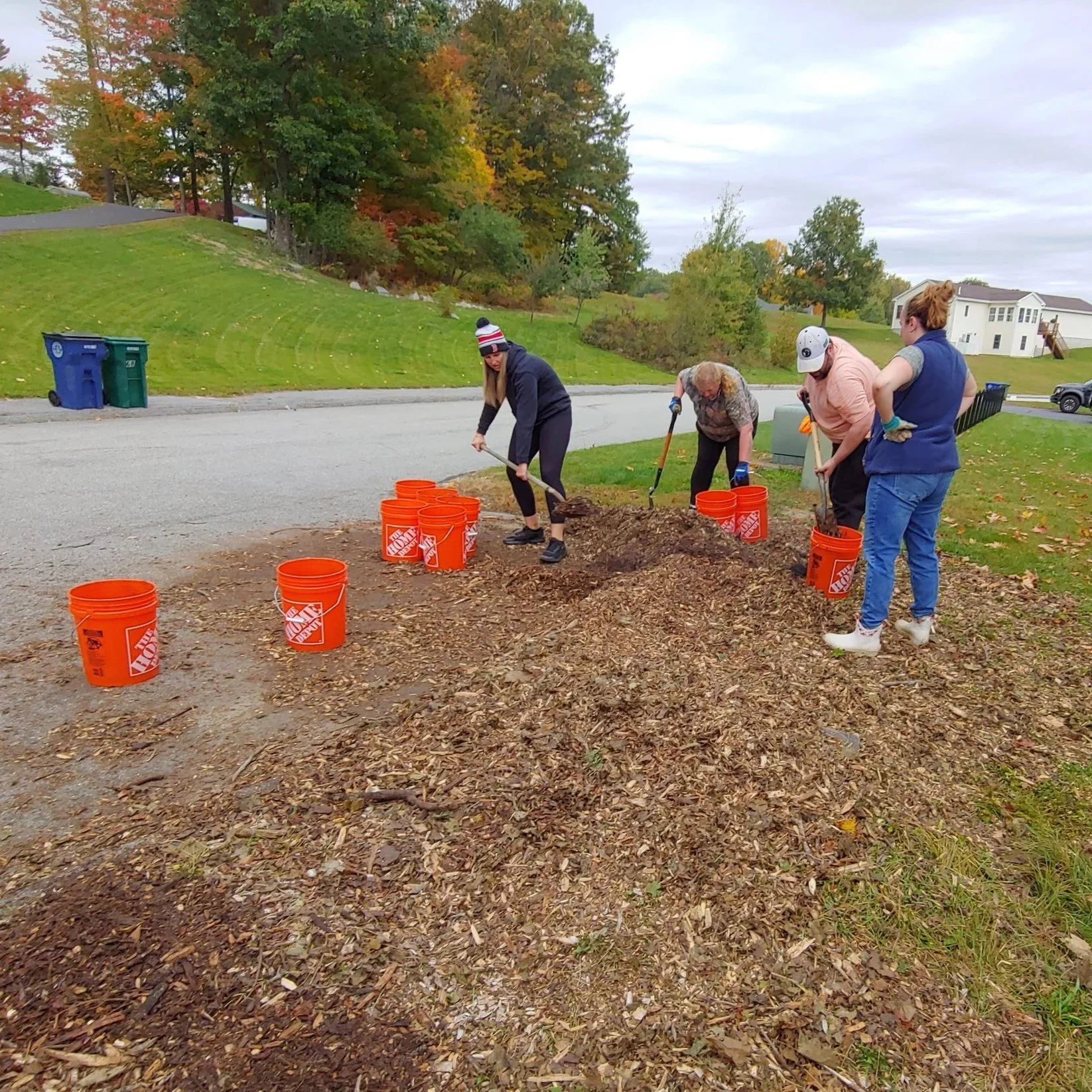
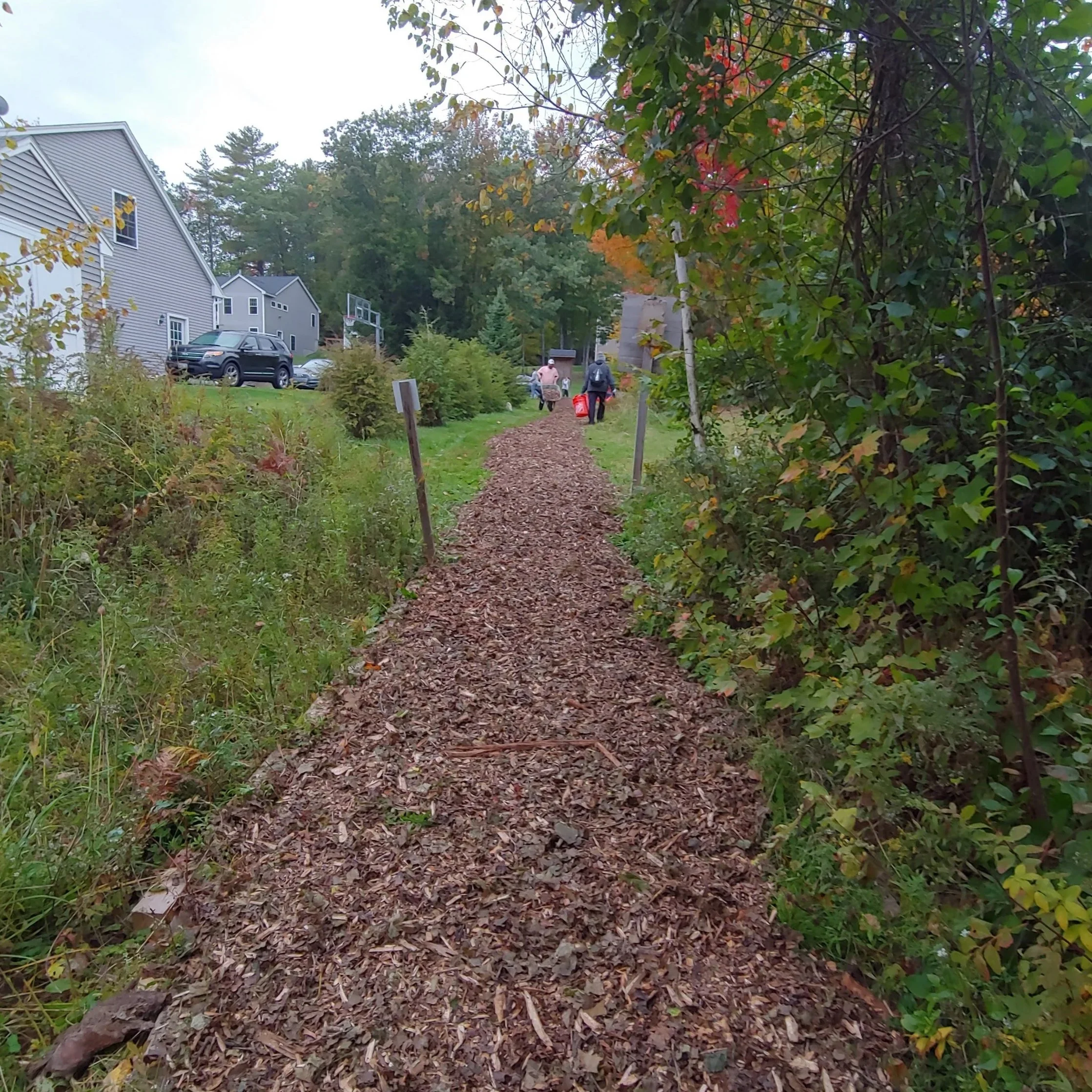
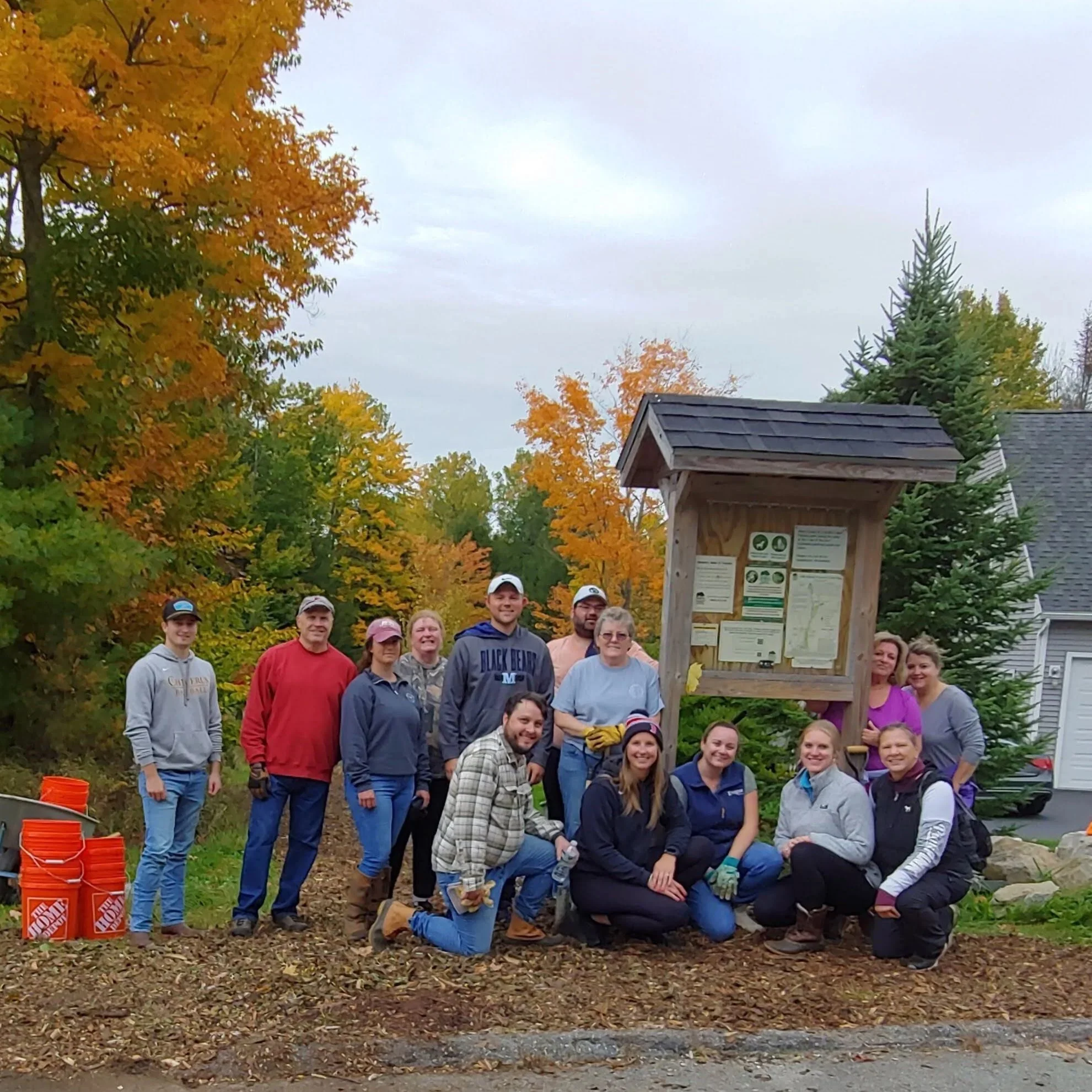
Volunteers woodchipping a trail and parking area – Perry Court Trailhead at Mill Brook Preserve, October 2022
Every good trail starts with lots of planning. The planning and scouting process often takes as much or more time than the actual construction of the trail! First, PRLT staff review Geographic Information System (a.k.a. GIS) maps to look at topography and water bodies to ensure that the trail stays away from any sensitive ecological features like vernal pools. This is followed by extensive scouting in the field, flagging a route for the trail while identifying points of interest as well as areas to avoid. At the end of this process, the full foot-by-foot route of the trail is marked with orange flagging hanging from branches. Scouting, planning, and flagging a typical mile of trail costs $500-$1,000 in staff time.
The next piece is what most people think of when they hear the word “trailwork,” and that is building or “cutting” the trail corridor:
limbs and small vegetation in the flagged path need to be removed;
larger logs across the trail need to be cut with a handsaw or chainsaw;
any high grass needs to be mowed;
large rocks and other obstructions need to be relocated
sometimes the ground itself needs to be reshaped to a flat surface, such as when the trail passes along a steep hillside; and finally
leaves and smaller sticks are raked to more completely define the course of a new trail.
Clearing a typical mile of trail without any major challenges will cost about $3,000 in staff time.
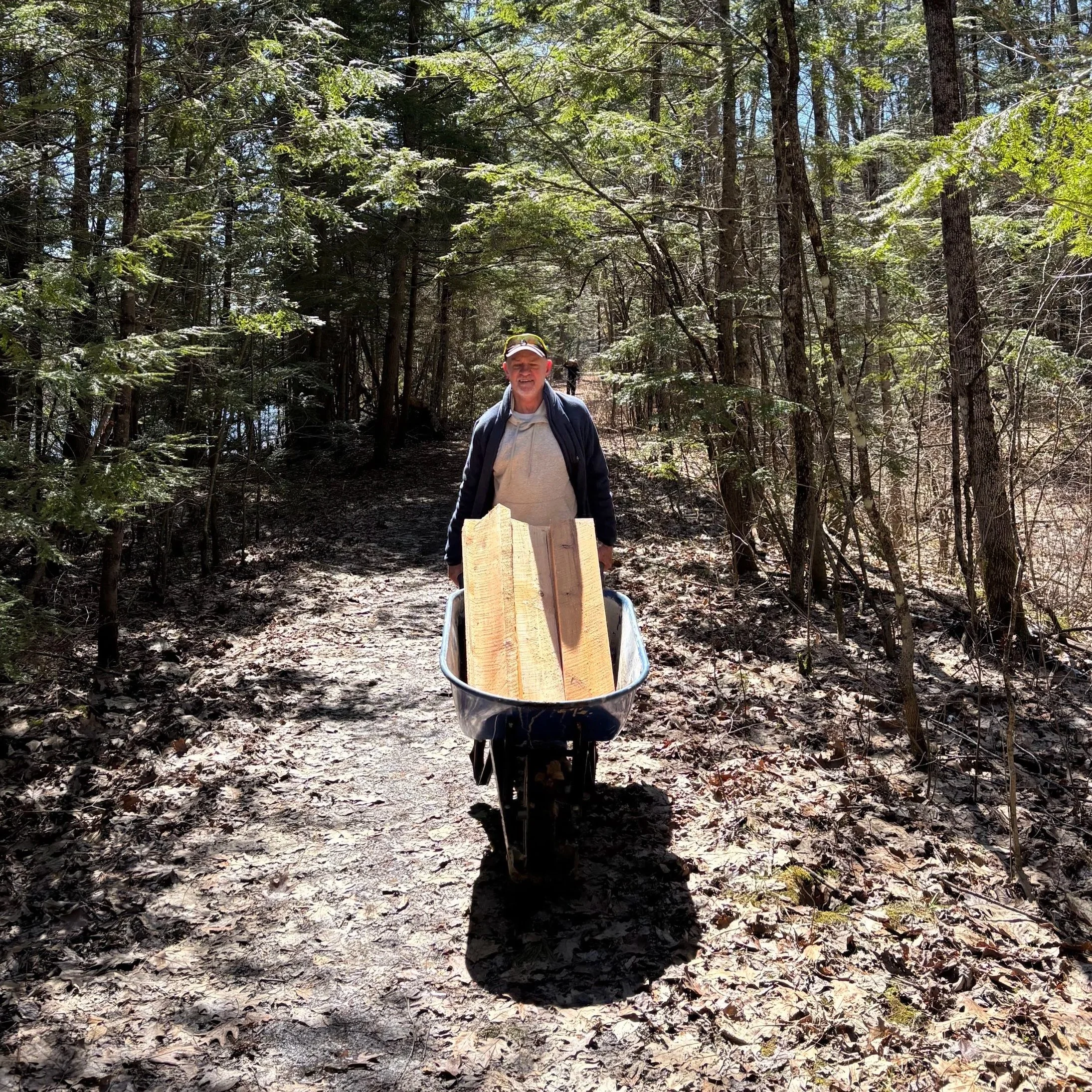
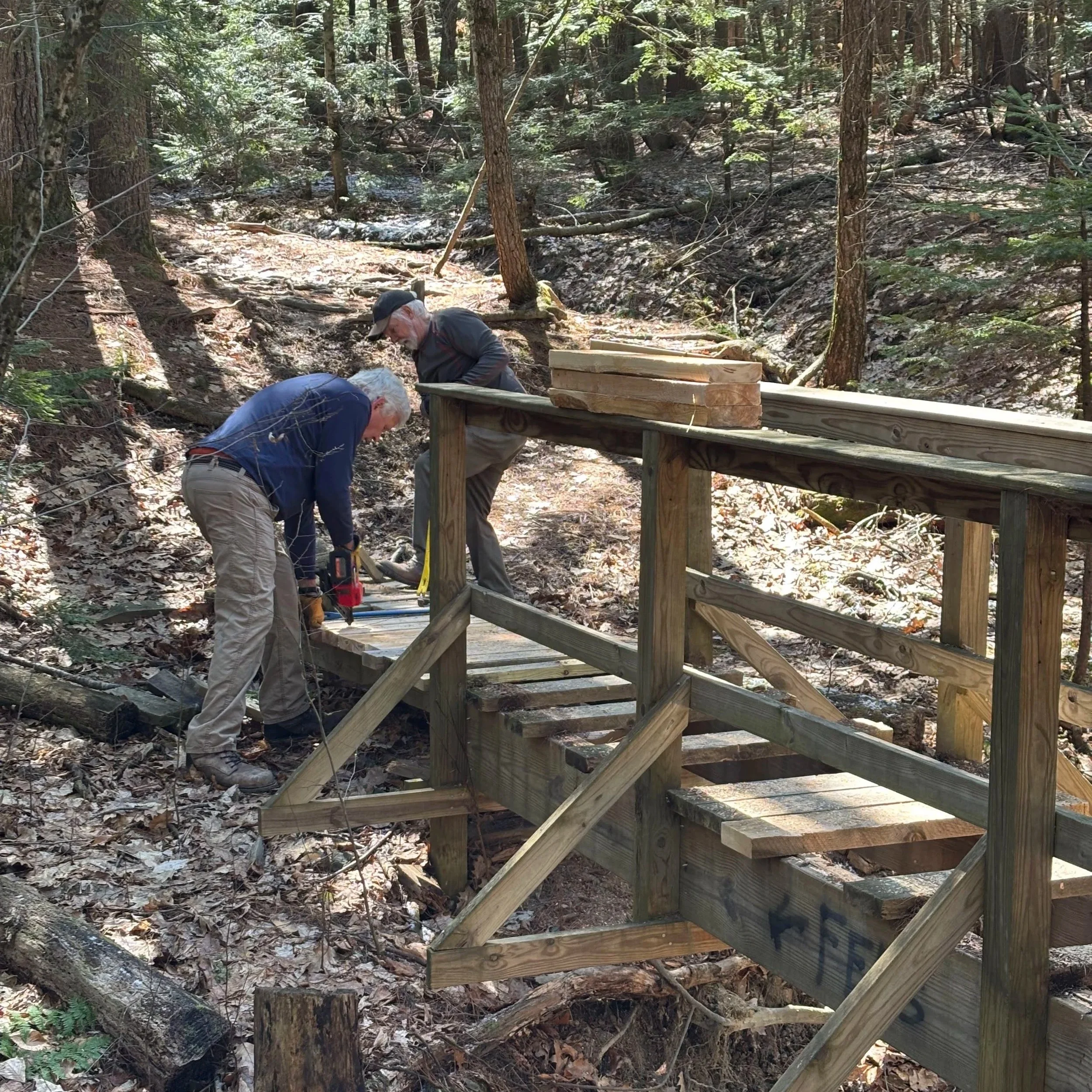
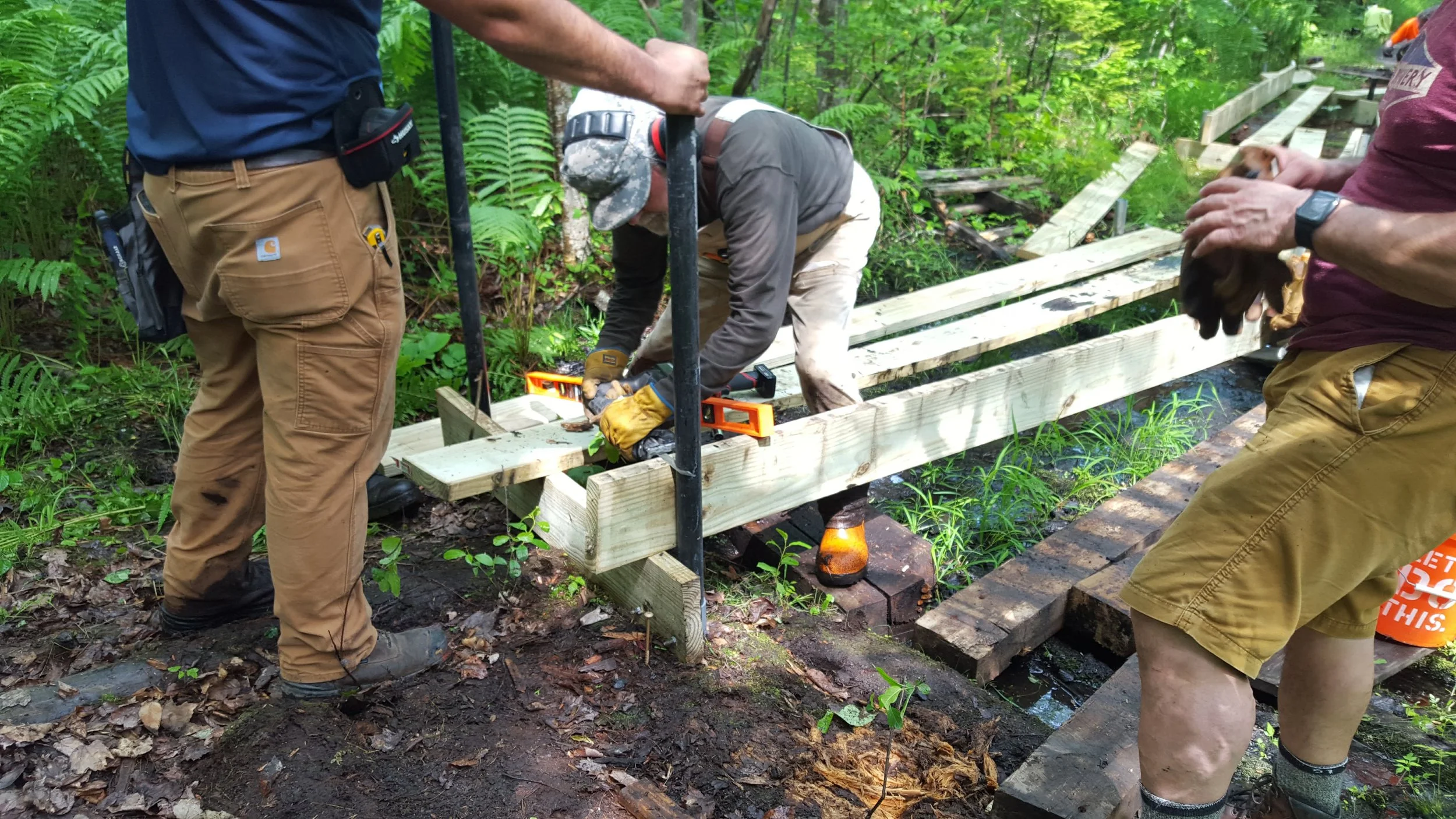
Volunteers re-decking a bridge – Hawkes Preserve, April 2026
Though this piece varies widely depending on the terrain of the land that a trail passes through, materials are typically a major cost. Extended low areas require long bog bridges, while shorter but steeper gaps are covered by span bridges. A typical 12-foot bridge costs about $150 in materials between the lumber and fasteners. Raised boardwalks like we built last year at Rivermeadow Nature Preserve have many more component parts and are roughly double the cost. On average, a mile of trail will usually cost at least $1,000 in bridge materials.
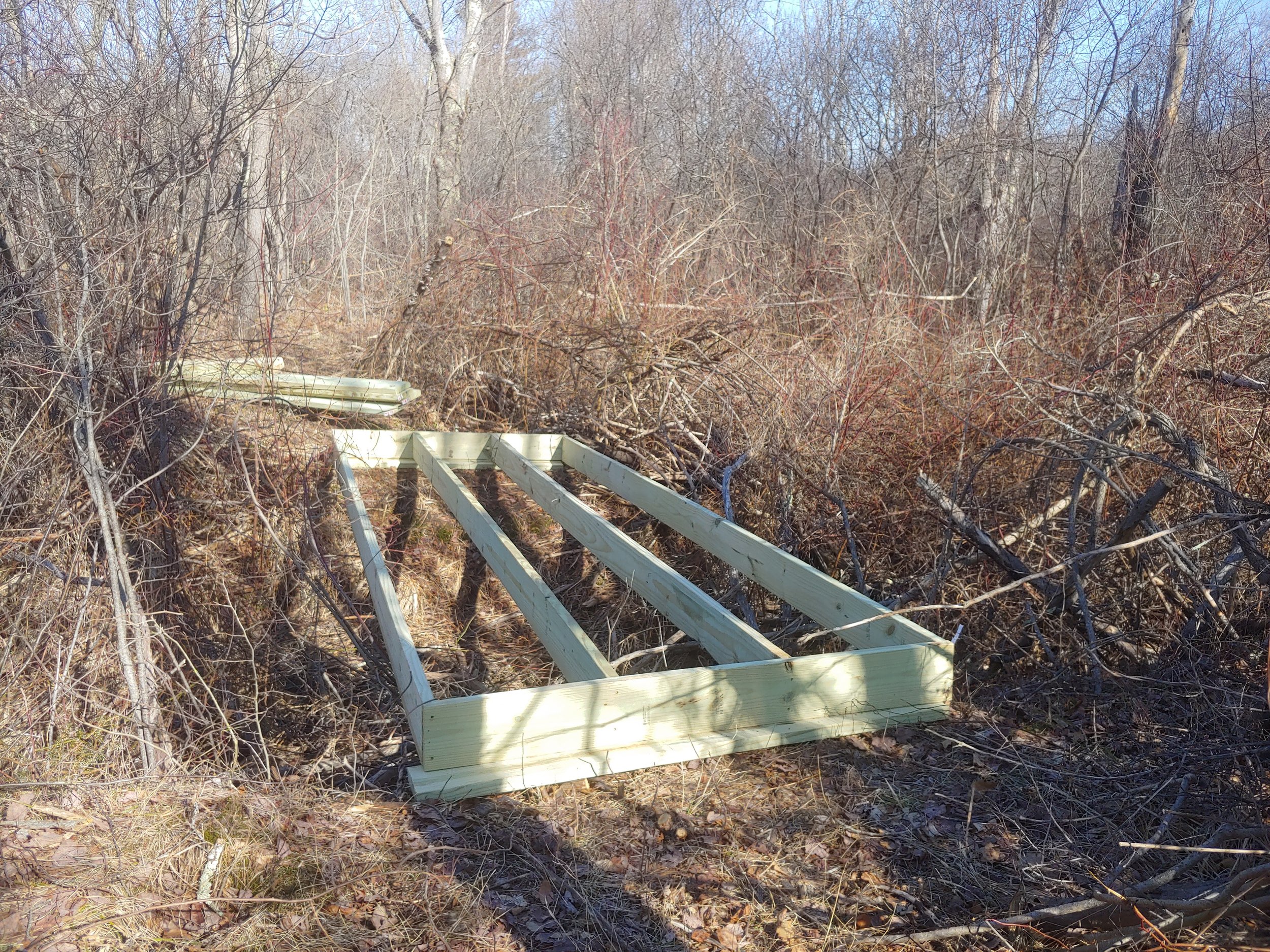
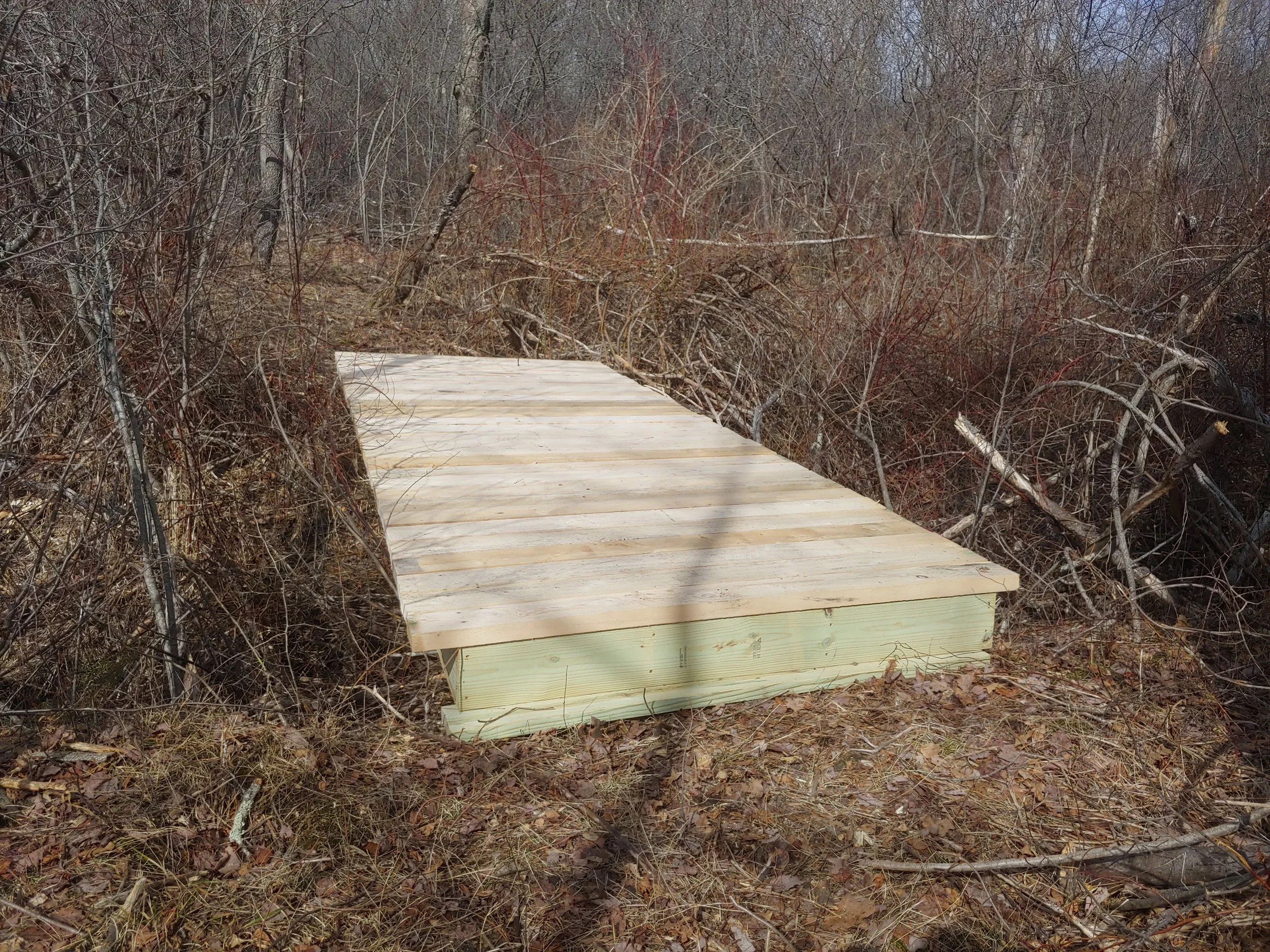
Building a bridge: in process, and the final result – Pride Preserve, February 2024
Once a trail is fully built, it still requires good signage before it can offer users a fun and safe experience. In addition to any information at the trailhead, a trail requires a clear map at each intersection and lots of directional arrow signs throughout. Painted or plastic blazes every few hundred feet are also key wayfinding on excessively confusing and/or remote trails. Boundary signs are also key for safety and maintaining good relationships with our preserve neighbors. Finally, we make and post special signs for a variety of reasons, such as scenic points of interest (like the alewife viewing pool at Mill Brook Preserve) or areas that require extra caution (like the historic quarry at East Windham Conservation Area). Signage costs—designing, printing, and posting—for a mile of trail are about $750.
There is no getting around the fact that effective trail construction is expensive! Obvious walking corridors, sturdy structures, and clear signage are all essential elements of an enjoyable trail experience, and they are well worth the cost. We are grateful to our many enthusiastic trail work volunteers for helping to maximize our capacity and keep these costs down, and thank you to all of our members, sponsors, and grantors for making construction of our trails possible!
If you want to directly contribute to making this work possible, you can make a gift to our Path Forward Fund. The Path Forward Fund reinforces that caring for special places isn’t just about conservation—it’s about tending to what we love, together. Supporting this fund allows us to:
repair boardwalks, bridges, and eroded trail sections
replace broken trail signs and install new markers for safety
remove invasive species and improve habitat along our trail corridors
make trails more accessible for people of all ages and abilities
Join us in ensuring that future generations can step onto these trails you know and love, and that they can feel the same sense of welcome and wonder that you’ve felt in the outdoors.