
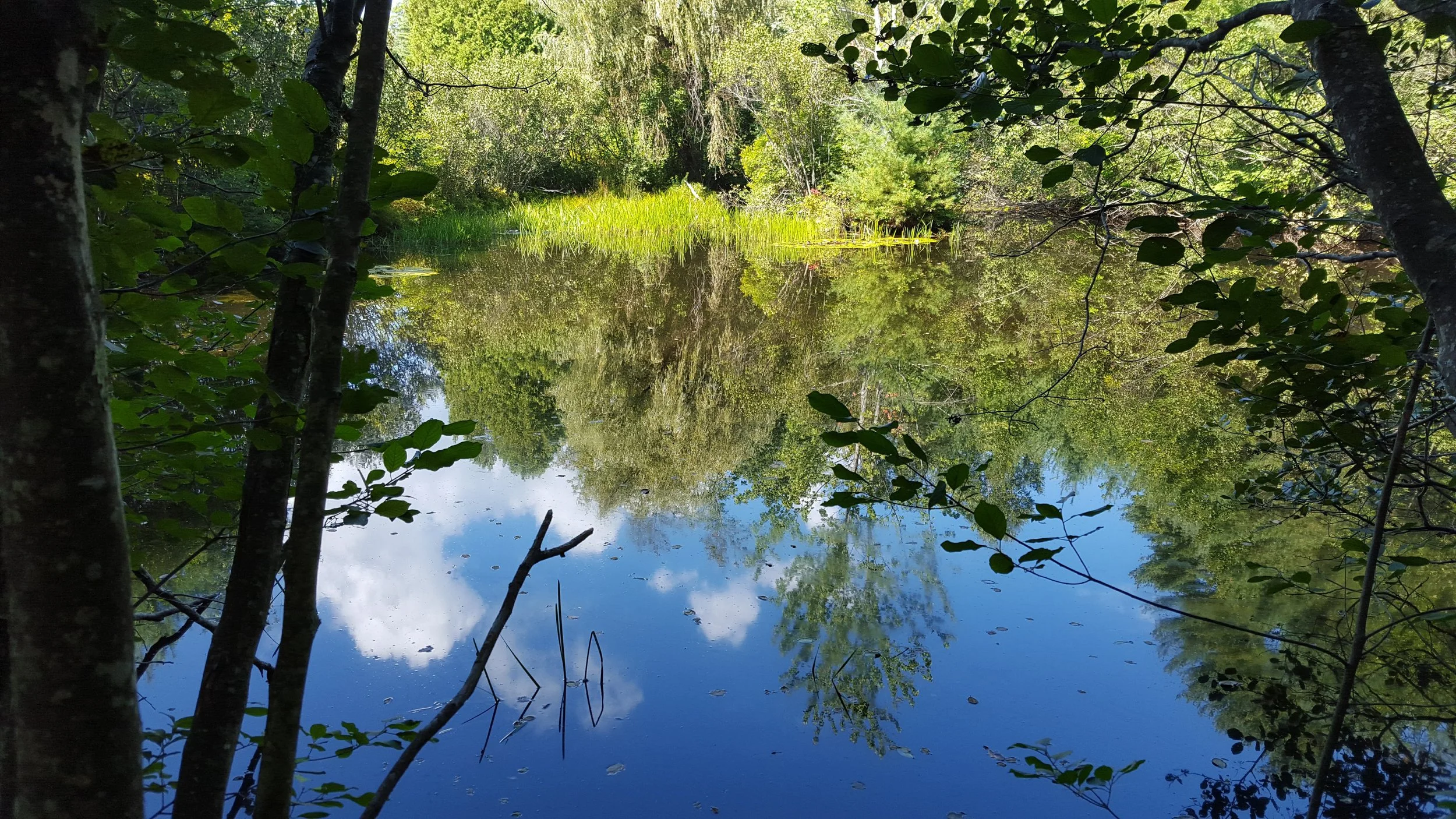
What comes to mind when you think about invasive species in Maine? Is it insects like the emerald ash borer, enveloping vines like Oriental bittersweet, or aquatic menaces like Eurasian milfoil? How about the common aquarium goldfish? Unfortunately, goldfish are exactly what have become a major nuisance at Pride Preserve in Westbrook, and a problem that has proved very difficult to solve.
Goldfish (a.k.a. Carassius auratus, a freshwater fish native to Asia) in our local ponds are an issue for a number of reasons. First and foremost, they are voracious predators of native eggs and smaller fish. You’ve probably heard that goldfish will grow larger based on their surroundings, and without the restriction of a tank, these fish can grow up to 12 inches in length. To support this growth as well as their rapid reproduction, goldfish never stop eating.
Goldfish also are not deterred by factors that limit other fish species of their size. They can survive with very little water and very poor water conditions. Persisting in shallow water means that summer droughts have little negative effect on their population. Being able to tolerate high temperatures and low dissolved oxygen levels ensures that they have no competition from larger native fish that cannot abide these conditions.
This all means goldfish are a big problem when they show up in a local pond (presumably after being dumped there by an aquarium owner) and we must take measures to remove them. Seeking to avoid dramatic changes to the Pride Preserve pond ecosystem (such as draining or poisoning the water), we have tried a number of low-impact approaches to eliminate the goldfish, with varying success. Even in just a few feet of water and mud, these fish have proven wary and elusive. Wading after them on foot with net in hand proved fruitless, as did pursuing them in a small inflatable kayak. Fishing for them from shore with rod and reel (corn is the recommended bait), though a fun activity for some school-age volunteers, was also ultimately unsuccessful. We were able to catch about ten fish using a sturdier canoe and dip net, though this required patience and was very time-consuming. We had high hopes for a metal minnow trap baited with bread, but this also proved to be ineffective.
There are several lessons to take from the situation at Pride Preserve, but the main one is how difficult it can be to control invasive species. Though goldfish are perhaps a unique pest, our efforts around them reflect the huge amount of time, energy, and creativity required to combat more common foes in our region like phragmites or green crabs. One fortunate difference in this case is that the infestation is relatively small and self-contained and thus stands a chance of being completely eliminated. The unfortunate side is that the situation was directly caused by someone’s decision to dump these fish in this pond, and therefore the current situation was completely avoidable. So, even if the gargantuan and multi-faceted problem of invasive species in Maine can never be fully solved, a good first step is to take personal responsibility to not make things any worse.